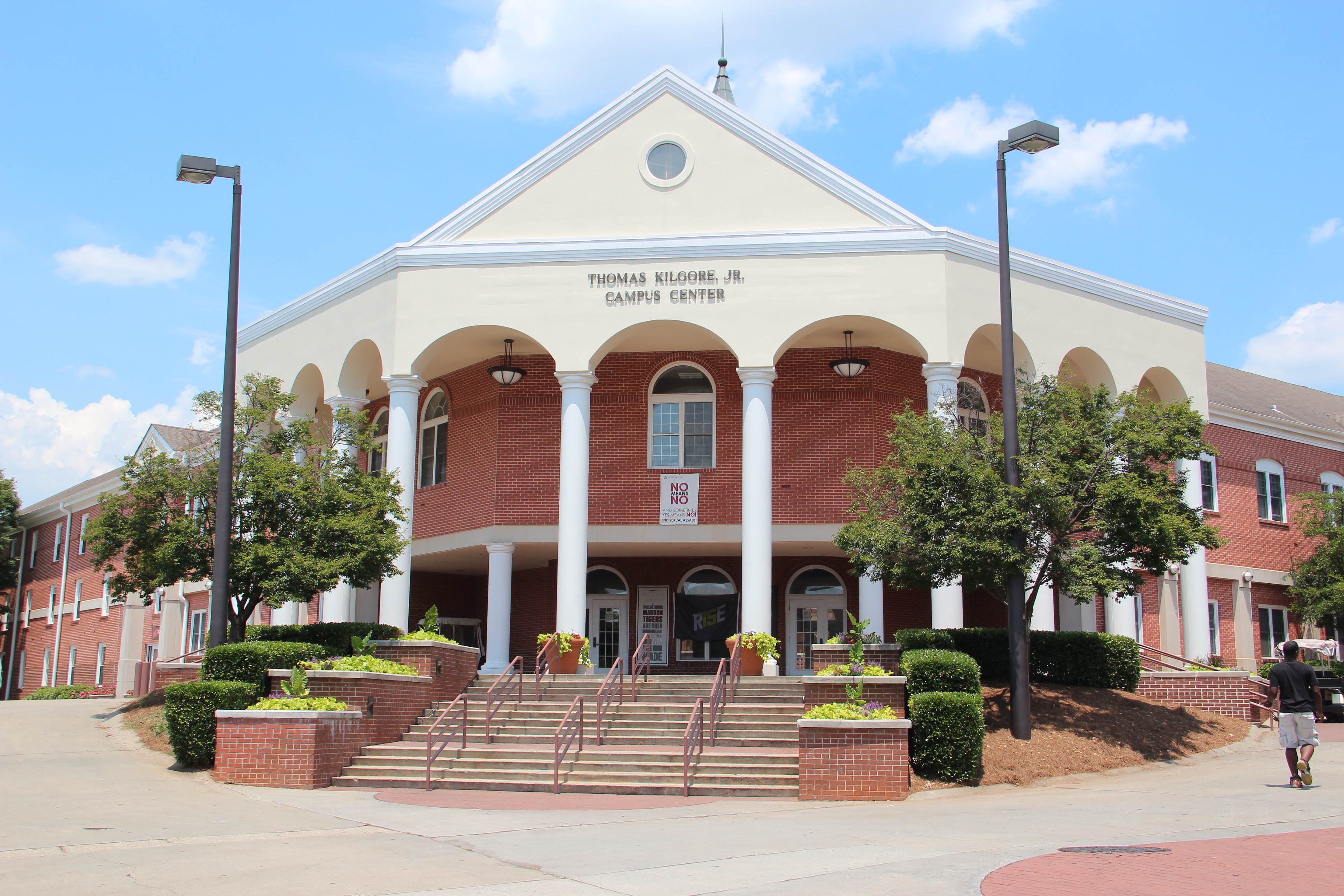
Morehouse College
Martin Luther King Jr. arrived at Morehouse College in 1944, a fifteen-year-old who had skipped two grades. He graduated in 1948 with a degree in sociology, already shaped by the mentorship of college president Benjamin Mays, whose weekly chapel talks on racial justice would echo in King's own sermons and speeches for the rest of his life. That particular thread -- a student transformed by a mentor, who then transforms the world -- runs through the entire history of Morehouse, a college that has produced more bachelor's degrees for Black men than any other institution in the United States.
Born from a Church Basement
Two years after the Civil War ended, William Jefferson White -- an Atlanta Baptist minister and cabinetmaker -- founded the Augusta Institute in 1867 to educate formerly enslaved African Americans who had been denied literacy by slave laws. The institute's first president was the Reverend Joseph T. Robert, an anti-slavery Baptist minister from South Carolina and an 1828 graduate of Brown University, whose son Henry Martyn Robert would later write Robert's Rules of Order. Robert raised funds, taught the classes, and held the fragile institution together. In 1879, the school moved to Atlanta and was renamed Atlanta Baptist Seminary. In 1906, John Hope became its first African-American president, expanding enrollment and academic ambition. The college received its present name in 1913, honoring Henry Lyman Morehouse, the corresponding secretary for the American Baptist Home Mission Society who had championed education for freedmen.
A Crucible for Leaders
The roster of Morehouse alumni reads like a who's who of African-American achievement. Beyond King, the college produced filmmaker Spike Lee, Olympic gold medalist Edwin Moses, U.S. Senator Raphael Warnock, civil rights activist Julian Bond, actor Samuel L. Jackson, and Surgeon General David Satcher. The school has produced six Rhodes Scholars -- more than any other HBCU -- along with 11 Fulbright Scholars and five Marshall Scholars. A 2008 National Science Foundation study ranked Morehouse fifth among all 3,000-plus U.S. colleges in producing African Americans who eventually earned PhDs in STEM fields. The college sits at the heart of the Atlanta University Center consortium, alongside Spelman College, Clark Atlanta University, and the Morehouse School of Medicine, sharing resources including the Robert W. Woodruff Library.
The King Collection and Living Memory
Morehouse guards 10,000 original documents written by Martin Luther King Jr., including his 1964 Nobel Prize acceptance speech. The Library of Congress valued the collection between $28 and $30 million. When King's family scheduled the papers for public auction in 2006, private donors in Atlanta intervened with a $32 million pre-auction bid, and Atlanta mayor Shirley Franklin announced a new civil rights museum -- now the National Center for Civil and Human Rights -- to house them. On campus, a bronze statue of King stands at the entrance plaza of the Martin Luther King Jr. International Chapel. Nearby, an obelisk dedicated to theologian Howard Thurman contains his and his wife's remains along with a carillon. Behind Graves Hall, a marble monument marks the graves of president Benjamin Mays and his wife, with a time capsule set to be opened in May 2095.
Modern Generosity
In May 2019, billionaire Robert F. Smith stunned the graduating class by announcing he would pay off every senior's educational loan debt -- roughly $34 million, one of the largest single donations from a living donor to an HBCU. The following year brought even more: Netflix co-founder Reed Hastings and his wife Patty Quillin donated $40 million in June 2020, and philanthropist MacKenzie Scott gave $20 million in July 2020. Oprah Winfrey's support stretches back to 1990, when she pledged to put 100 men through Morehouse; by 2019, her cumulative donations reached $25 million, funding over 400 "Oprah Scholars." In 2013, President Barack Obama became the first sitting president in three-quarters of a century to deliver a commencement address in Georgia, receiving an honorary Doctor of Laws from Morehouse.
The House of Funk and Campus Life
Morehouse's campus near downtown Atlanta holds a 9,000-seat football stadium, the 5,700-seat Forbes Arena built for the 1996 Olympic Games, and the Ray Charles Performing Arts Center dedicated in 2010. The Morehouse Marching Band, known as the House of Funk, blends hip-hop, pop, and traditional marching music with choreography -- they performed at Super Bowl XXVIII, the 2013 NCAA Men's National Championship halftime show, and Atlanta Falcons home games. The college's debate team won an international championship in 2017 by defeating Vanderbilt University in the Lafayette Debates. The student body of approximately 2,250 men -- 70 percent from outside Georgia -- carries forward a culture defined by the Five Wells: Well-Read, Well-Spoken, Well-Traveled, Well-Dressed, and Well-Balanced.
From the Air
Located at 33.747N, 84.415W in Atlanta's West End neighborhood, Morehouse College sits within the Atlanta University Center cluster of campuses visible as a dense grouping of institutional buildings southwest of downtown Atlanta. The B.T. Harvey Stadium and Forbes Arena are visible rooftop landmarks. Nearby airports include Hartsfield-Jackson Atlanta International Airport (KATL) approximately 7 miles south, Fulton County Airport/Charlie Brown Field (KFTY) 8 miles northwest, and DeKalb-Peachtree Airport (KPDK) 12 miles northeast. Best viewed at 2,000-4,000 feet AGL. The downtown Atlanta skyline to the northeast provides orientation.