Morelia
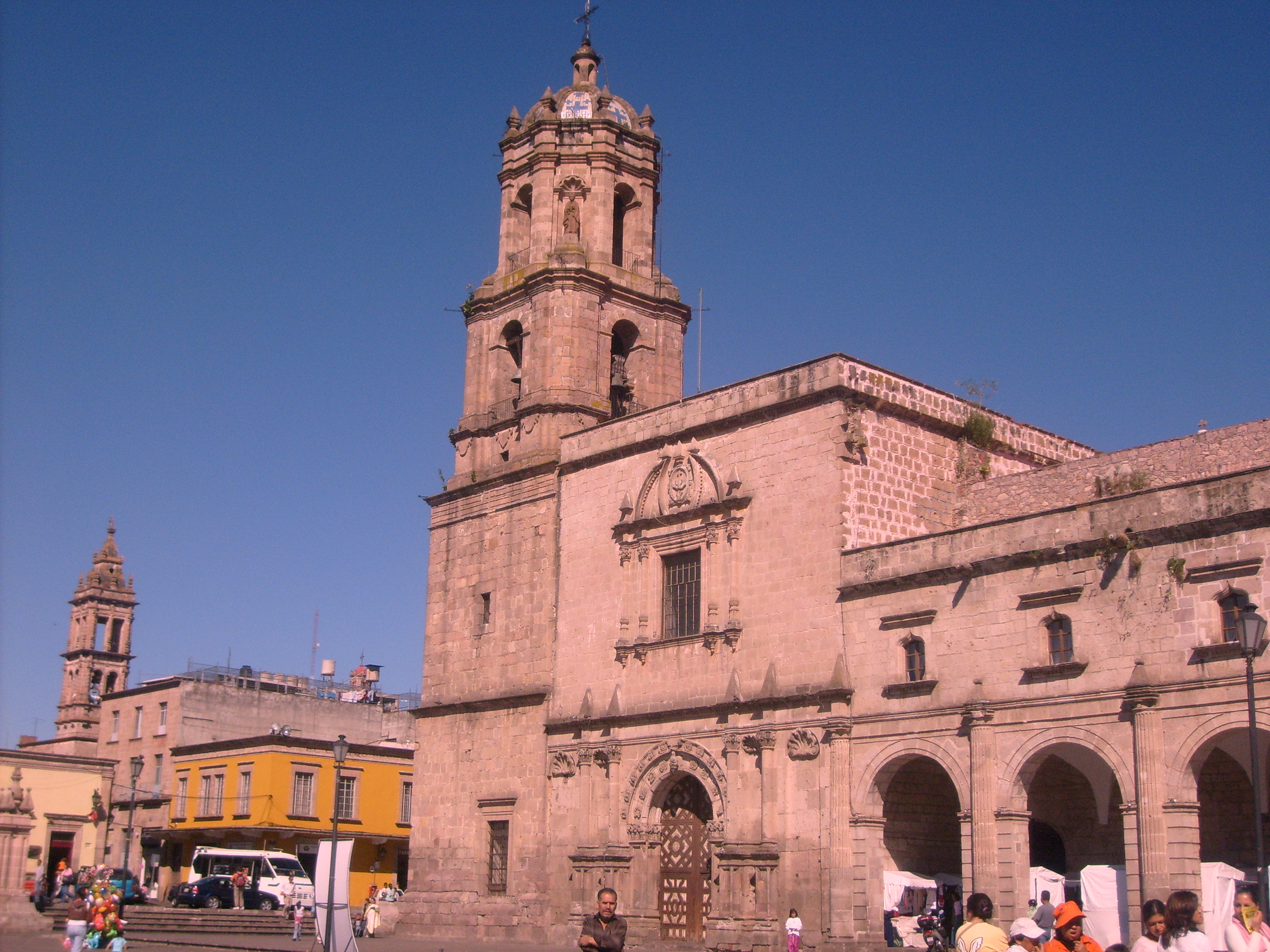
Nearly every building in Morelia's historic center glows the same warm shade of pink. The cantera stone quarried from nearby hills has been the city's signature material since Spanish colonists laid out these streets in 1541, and the effect is striking: over 1,113 historic structures, spanning five centuries of architectural fashion, share a single rosy palette that unifies Baroque facades, Neoclassical government palaces, and arched aqueduct spans into one coherent cityscape. It is the kind of visual harmony that most cities lose to progress. Morelia, the capital of Michoacan, has fought to keep it.
A Plan That Outlasted Empires
When the city was founded in 1541 under the name Valladolid, its planners thought ahead. The streets were drawn wide for the era, gently curved rather than rigidly squared, and arranged to allow elongation as the population grew. That foresight paid off across centuries. The original layout survives nearly intact today, an unusual feat for a Latin American city that has grown to over 743,000 residents. The grandest construction came in the 18th century, when the cathedral's Baroque facade and bell towers were completed, the Colegio Seminario rose to become what is now the State Government Palace, and the city's landmark aqueduct was built with 253 arches to carry fresh water to residents. In 1956, Morelia enacted preservation regulations for its colonial core. By 1991, UNESCO had seen enough to grant World Heritage status to the entire historic center.
The Cathedral and Its Plazas
The Cathedral of the Divine Savior anchors the city's heart, its twin towers ranking as the second tallest Baroque towers in Mexico. Built over the course of the 17th and 18th centuries, the cathedral blends Neoclassical, Herreresque, and Baroque elements into a single imposing structure. Around it radiate three plazas: the Plaza de Armas (officially the Plaza de los Martires, though locals ignore the rename), the Juarez Plaza, and the Melchor Ocampo Plaza. The Plaza de Armas has been the civic center since the 16th century, redesigned and renamed multiple times as political winds shifted. Surrounded by arcaded portals, it remains the place where Morelians gather for festivals, protests, and ordinary evenings alike. In front of the aqueduct stands the Fuente de las Tarascas, one of the city's most photographed fountains, installed in its current form in 1984.
Birthplace of Revolutionaries
Morelia's role in Mexican history extends well beyond architecture. The city was renamed in 1828 to honor Jose Maria Morelos, one of the key leaders of Mexico's independence movement, who was born here. So was Agustin de Iturbide, the army general who became Mexico's first emperor, and Josefa Ortiz de Dominguez, the insurgent whose clandestine warnings helped spark the independence conspiracy. Centuries later, the city produced two presidents: Pascual Ortiz Rubio, who served from 1930 to 1932, and Felipe Calderon, president from 2006 to 2012. The Universidad Michoacana de San Nicolas de Hidalgo, one of Mexico's top ten public universities, traces its lineage to colonial-era institutions like the Colegio de San Nicolas and the Colegio de las Rosas, making Morelia a city where intellectual and political ambition have long been intertwined.
Music, Orchids, and Salsa Dancing
Every year since 1988, the Festival Internacional de Musica de Morelia has pursued the dream of making the city the "Salzburg of the Americas." More than forty concerts feature over 500 artists, drawing performers from the London Symphony Orchestra to Mexico's own Orquesta Sinfonica de Mineria. A different country serves as special guest each year. But music is only one thread in Morelia's cultural fabric. The Orquidario de Morelia houses approximately 3,400 orchid species across three greenhouses, managed by the federal environmental agency as a conservation program. The Museo Regional Michoacano, founded in 1886 and housed in a building that once belonged to Emperor Maximilian I, displays pre-Hispanic artifacts alongside colonial art, including murals by Alfredo Zalce and Federico Cantu. Every March, the SalsaMich festival brings salsa dancers from across Mexico to compete in the city's colonial plazas for three days.
From the Air
Located at 19.70N, 101.19W in central Michoacan state at approximately 1,920 meters elevation. The city's pink stone historic center is visible from altitude as a compact, distinct urban core. Morelia International Airport (ICAO: MMMM, IATA: MLM) serves the city with domestic and international flights. The city lies three to four hours west of Mexico City by road and is surrounded by the municipalities of Tarimbaro, Charo, and Tzintzuntzan.