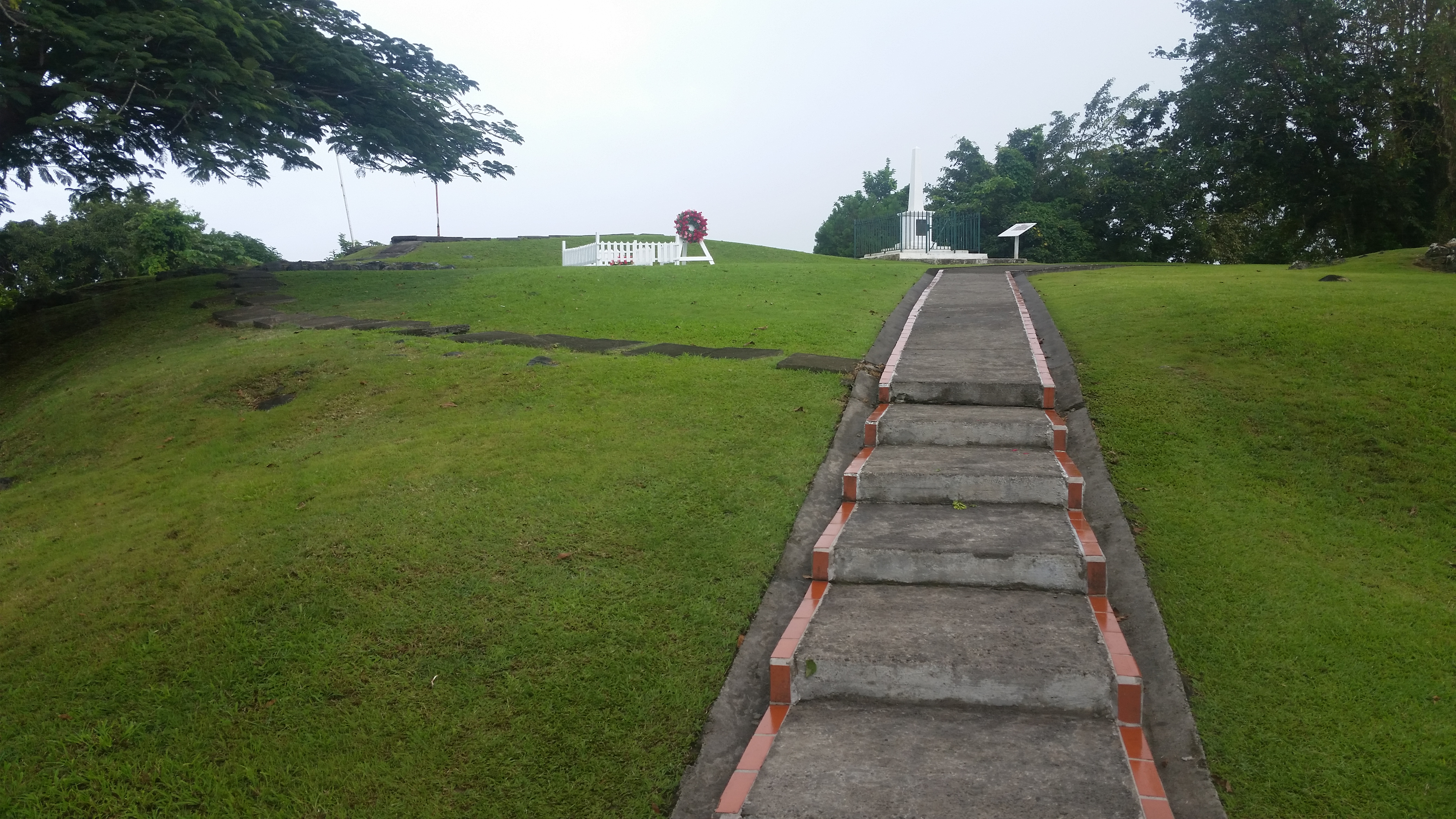
Morne Fortune
Count the flags. Between 1765 and 1803, the hilltop fortress south of Castries changed hands at least five times -- French, then British, then French again, then British, then French once more under the Treaty of Amiens, and finally British for good after Lieutenant-General William Grinfield took it from French Governor Antoine Nogues in June 1803. Morne Fortune, whose name translates roughly as "hill of good fortune," has had a turbulent history that makes its name feel ironic. Originally called Morne Dubuc, the hill was renamed in 1765 when the French relocated their military headquarters here from Vigie Height. They built the Citadelle du Morne Fortune, completed in 1784, and for the next four decades the fortress attracted every army operating in the eastern Caribbean. Today, the old military buildings sit within a listed historical area, and the hilltop that once bristled with cannon now houses a university campus and the official residence of Saint Lucia's governor-general.
A Fort Nobody Could Keep
The strategic logic of Morne Fortune is visible at a glance. The hill commands the approach to Castries, the island's capital and primary port. Whoever held the summit controlled access to the harbor below. The French understood this first, establishing their citadel here in the 1780s. The British understood it equally well, and the fort's history reads like a ledger of conquest. It was captured by British forces on April 1, 1794. The French retook it in June 1795. The British stormed it again on May 24, 1796, in an assault led by soldiers of the 27th Inniskilling Regiment of Foot -- an engagement fierce enough that a memorial to the regiment still stands on the hilltop. France regained possession through diplomacy in 1802, courtesy of the Treaty of Amiens, only to lose it again in June 1803 when Grinfield defeated Nogues. After that, the British held Morne Fortune until Saint Lucian independence in 1979.
The Inniskilling Memorial
The monument to the 27th Inniskilling Regiment is the hill's most solemn landmark. The regiment's assault on May 24, 1796, was the kind of engagement that earns a place in regimental lore -- a direct attack on entrenched positions, uphill, against a fortified enemy. The Inniskillings took the fort, and the memorial they left behind has outlasted the empire they served. It stands among the original French fortifications, which themselves still crown the summit: stone walls, gun emplacements, and the shells of military buildings that now form part of a listed historical area managed by the Saint Lucia National Trust. The juxtaposition is striking -- French architecture commemorated by a British monument, all preserved by an independent Caribbean nation. History on Morne Fortune is layered like geological strata, each period leaving its mark on the one beneath.
From Barracks to Lecture Halls
The transformation of Morne Fortune from military garrison to educational campus captures Saint Lucia's postcolonial trajectory. The hilltop now hosts the Saint Lucian campus of the University of the West Indies and Sir Arthur Lewis Community College -- the latter named for the Saint Lucian economist who shared the 1979 Nobel Prize in Economics. The old military buildings have been repurposed, their thick stone walls now sheltering classrooms and administrative offices instead of powder magazines and officer quarters. On the hill's northern flank sits Government House, the official residence of the Governor-General of Saint Lucia, positioned to take advantage of views that once served a military purpose: from Morne Fortune, you can see across Castries harbor and out to the Caribbean beyond. The views remain spectacular. The reasons for caring about them have changed entirely.
A Poet's Final Resting Place
Morne Fortune gained a quieter distinction when Derek Walcott, the Saint Lucian poet and playwright who won the 1992 Nobel Prize in Literature, was buried here near the Shipley Battery on Fort Charlotte. Walcott, who spent much of his life writing about the Caribbean's layered colonial history, now rests on the very hilltop where that history was contested with muskets and bayonets. His grave sits within sight of the Inniskilling Monument -- the soldier's memorial and the poet's grave sharing the same contested ground. It is a fitting coincidence for a writer who spent his career exploring what it means to inherit a landscape shaped by other people's wars. Morne Fortune, a hill fought over by empires that no longer exist, is now remembered as much for the words written about it as for the battles fought on it.
From the Air
Located at 13.99°N, 60.99°W, immediately south of Castries, Saint Lucia's capital. The hilltop is clearly visible from the air as an elevated area with a mix of historical fortifications and modern buildings, rising above the dense urban fabric of Castries to its north. Castries harbor -- the deep natural port that made the hilltop strategically vital -- is directly below to the northwest. Government House is on the northern slope. The Vigie peninsula, where the French originally based their military operations before relocating to Morne Fortune, extends northwest from Castries. Nearest airport: George F. L. Charles Airport (TLPC) sits on the Vigie peninsula, less than 3km north. Hewanorra International Airport (TLPL) is at the island's southern end. The summit is approximately 260m / 850ft elevation.