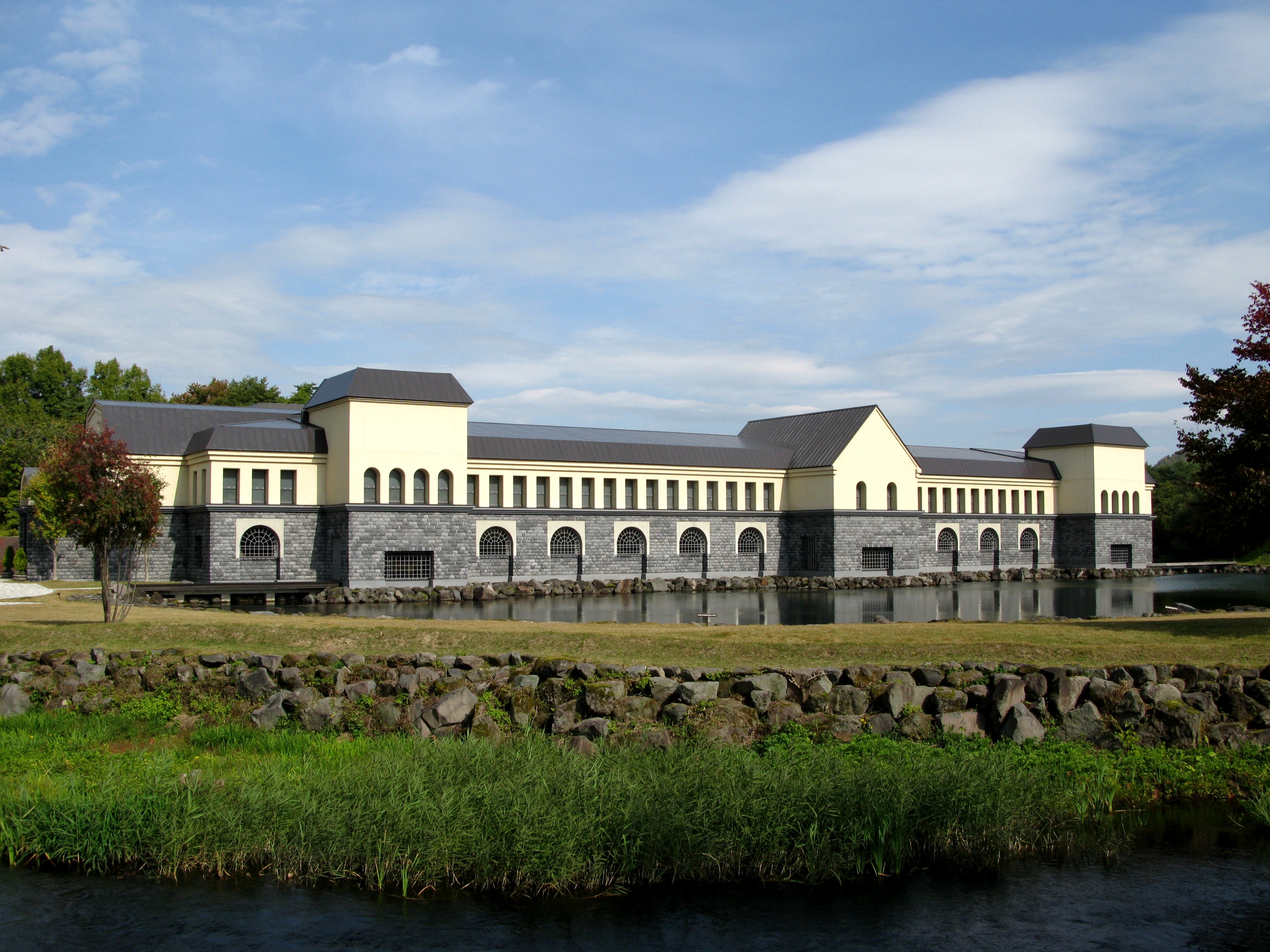
Morohashi Museum of Modern Art
The website address says it all: Dali.jp. Inside Bandai-Asahi National Park, where volcanic peaks and forested highlands seem an unlikely setting for surrealist art, a museum shaped like a stable holds approximately 340 works by Salvador Dali -- paintings, sculptures, and prints that make it the third largest Dali collection on Earth and the only dedicated Dali museum in all of Asia. The Morohashi Museum of Modern Art exists because one Japanese entrepreneur fell so deeply under the spell of melting clocks and burning giraffes that he spent a decade buying Dalis at Christie's and Sotheby's, then built a museum in his home prefecture to share them with the world.
The Collector's Obsession
Teizo Morohashi made his fortune as the founder of XEBIO Corporation, a sports and apparel retailer headquartered in Koriyama, Fukushima. But his private passion was Salvador Dali and the broader surrealist movement. Beginning in 1991, Morohashi embarked on an ambitious collecting campaign, acquiring Dali works through the world's leading auction houses, Christie's and Sotheby's. He did not limit himself to a single medium: oils, watercolors, sketches, prints, and sculptures all entered his growing collection, alongside works by Henri Matisse, Marc Chagall, and Pablo Picasso. By the mid-1990s, the collection had outgrown any private display. Morohashi decided to build a museum on a 55,000-square-meter site within Bandai-Asahi National Park, near the multi-colored volcanic ponds of Goshiki-numa and with views of Mount Bandai. Construction began in 1997, finished in 1998, and the museum opened to the public in 1999. Morohashi donated the entire collection, the land, and the buildings to a public-interest foundation.
Melting Clocks in the Mountains
The collection's approximately 340 Dali pieces rank it behind only the Salvador Dali Museum in St. Petersburg, Florida, and the Dali Theatre and Museum in Figueres, Spain, where the artist was born. The paintings span Dali's career: Cabaret Scene from his early years, The Battle of Tetouan with its grand historical ambition, The Three Sphinxes of Bikini channeling Cold War anxiety, and Portrait of Gala and the Lobster capturing his lifelong muse. The sculptures are equally striking. Profile of Time features one of Dali's signature melting clocks rendered in bronze. Venus with Drawers reimagines classical beauty with pull-out compartments in the torso. Alice in Wonderland stands tall and strange, and Tribute to Newton replaces the physicist's body with a hollow void. Arranged across 2,000 square meters of gallery space inside a building whose stable-like architecture grounds the surreal contents in something deliberately rustic, the effect is disorienting in the best sense.
Beyond Dali
While Dali dominates the collection, the museum also holds around 30 works by other Western masters that trace the arc from Impressionism through Surrealism. Camille Pissarro, Pierre-Auguste Renoir, and Alfred Sisley represent the Impressionist foundations. Paul Cezanne and Vincent van Gogh bridge the gap to Post-Impressionism. Henri Matisse, Georges Rouault, and Pierre Bonnard carry the story into the early twentieth century. Then come the Surrealists and modernists: Pablo Picasso, Joan Miro, Max Ernst, Giorgio de Chirico, and Marc Chagall. The Japanese-French painter Tsuguharu Foujita, who found fame in 1920s Paris, rounds out the collection. Together, these works give visitors a compressed history of modern Western painting before they enter the main Dali galleries, providing the artistic context that makes Dali's radical departures feel even more dramatic.
Surrealism Meets Volcanic Landscape
The museum's setting is as improbable as a Dali canvas. Bandai-Asahi National Park is defined by the aftermath of Mount Bandai's 1888 eruption, which reshaped the northern highlands into a surreal topography of cratered hills, emerald ponds, and forests reclaiming volcanic debris. The Goshiki-numa ponds nearby shift color with the seasons, their mineral-rich waters turning shades of cobalt, turquoise, and rust. The museum building, designed to echo a stable, sits low against this landscape, its understated exterior giving no hint of the fantastical art within. Today the museum is directed by Eiji Morohashi, Teizo's eldest son, who continues his father's vision. The juxtaposition works: Dali's dreamscapes feel strangely at home in a landscape that nature itself sculpted through eruption, collapse, and slow regeneration.
From the Air
The Morohashi Museum of Modern Art is located at 37.654N, 140.096E within Bandai-Asahi National Park in Fukushima Prefecture. From the air, look for the cluster of Goshiki-numa colored ponds just to the east, with the scarred northern face of Mount Bandai to the south. The museum building itself is low-profile and may not be individually visible, but the Urabandai lake district surrounding it is unmistakable. The nearest airport is Fukushima Airport (RJSF), approximately 80 km south. Recommended viewing altitude is 5,000-8,000 feet to appreciate the volcanic landscape context. Lake Hibara, the largest of the eruption-formed lakes, lies just to the north.