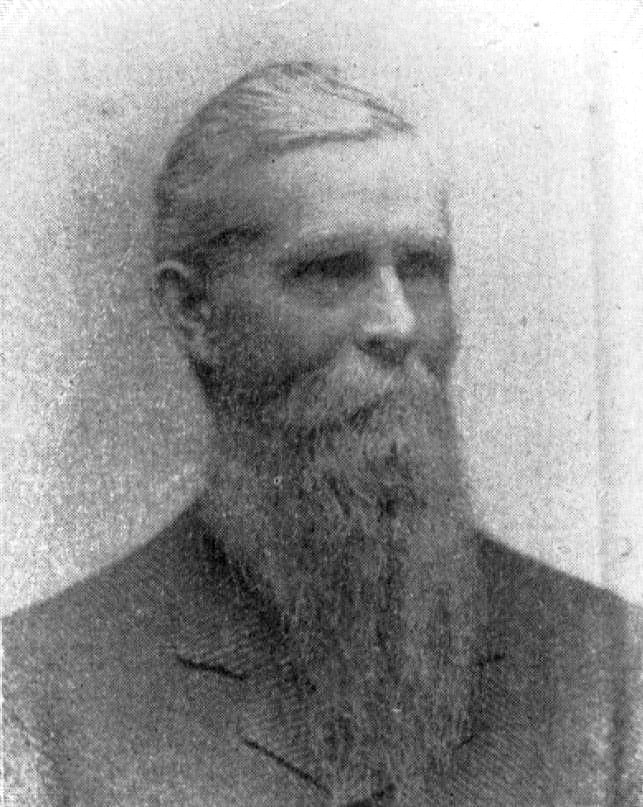
Morrisite War
Joseph Morris claimed to be the Seventh Angel of the Book of Revelation. By the spring of 1862, several hundred believers had gathered at his command to a makeshift stockade on the Weber River, waiting for the Second Coming that he promised was imminent. They trampled their crops into the ground as proof of faith. When territorial militia surrounded them that June, Morris received one final revelation: the soldiers would be destroyed. He was wrong.
The Seventh Angel Rises
In 1857, Joseph Morris, an English convert to the LDS Church in Utah, began receiving what he claimed were divine revelations naming him the Seventh Angel from the Book of Revelation. He wrote to Brigham Young seeking recognition, but found none. By 1860, Morris had gathered his own following, and in February 1861, John Taylor and Wilford Woodruff excommunicated him from the church. Undeterred, Morris organized his own Church of the Firstborn on April 6, 1861, and called his followers to gather at Kington Fort, an abandoned stockade on the Weber River. By fall, several hundred believers had answered his call, living communally and sharing all possessions in a pool.
A Commune Unraveling
Morris told his followers the Second Coming was so close they need not bother planting crops. Some trampled their fields as demonstrations of faith. But each time the prophecy failed to materialize, members began leaving, and the question of property became contentious. Those who stayed believed departing members took better livestock and goods than they had contributed. When three departing members seized a load of wheat being sent for milling, the Morrisites captured them and held them prisoner, awaiting trial by the Lord when he came. The territorial government issued a writ of habeas corpus commanding their release. The Morrisites refused to receive it.
Thirty Minutes to Surrender
After the Morrisites ignored a second writ, Chief Justice Kinney asked the acting governor to activate the territorial militia. Robert T. Burton led a posse to surround Kington Fort, while a militia from Ogden positioned itself to the north. Burton sent a message via a Morrisite herd-boy: surrender within thirty minutes. Morris received the ultimatum, retreated briefly, and returned with a new revelation promising his followers that the posse would be destroyed. He had a bugle sounded to gather the congregation and read this final prophecy aloud. When thirty minutes passed with no surrender, Burton ordered two warning shots fired to speed up the decision.
The End of Prophecy
Heavy rains delayed action on June 14. The next day, Burton rode into the fort with a small contingent. What followed remains unclear to historians, but Morris may have approached Burton in what was perceived as a threatening manner. Burton shot and killed him. Two women died in the resulting chaos, and Morris's counselor John Banks was mortally wounded. Burton took ninety men prisoner and marched them back to Salt Lake City. Seven Morrisites were convicted of second-degree murder in March 1863, and sixty-six others of resistance. Three days later, the new territorial governor Stephen S. Harding pardoned them all.
Scattered to the Wind
The surviving Morrisites dispersed across the American West. Many settled in Deer Lodge County, Montana, where a house of worship they built in the tiny settlement of Racetrack still stands, though deteriorating. Seven years after the siege, Robert T. Burton stood trial for the murder of Isabella Bowman, one of the women killed that day at Kington Fort. He was acquitted. Today, a monument erected by the Daughters of Utah Pioneers and Sons of Utah Pioneers stands in South Weber, marking where a self-proclaimed angel promised divine intervention and found only mortal reckoning.
From the Air
Located at 41.15N, 111.97W near South Weber, Utah. The site sits along the Weber River corridor between Ogden and Salt Lake City. Nearest airports include Ogden-Hinckley (KOGD) approximately 8nm north and Salt Lake City International (KSLC) approximately 25nm southwest. Best viewed from 3,000-4,000 feet AGL. The Weber River and surrounding agricultural land are visible landmarks.