Moscow
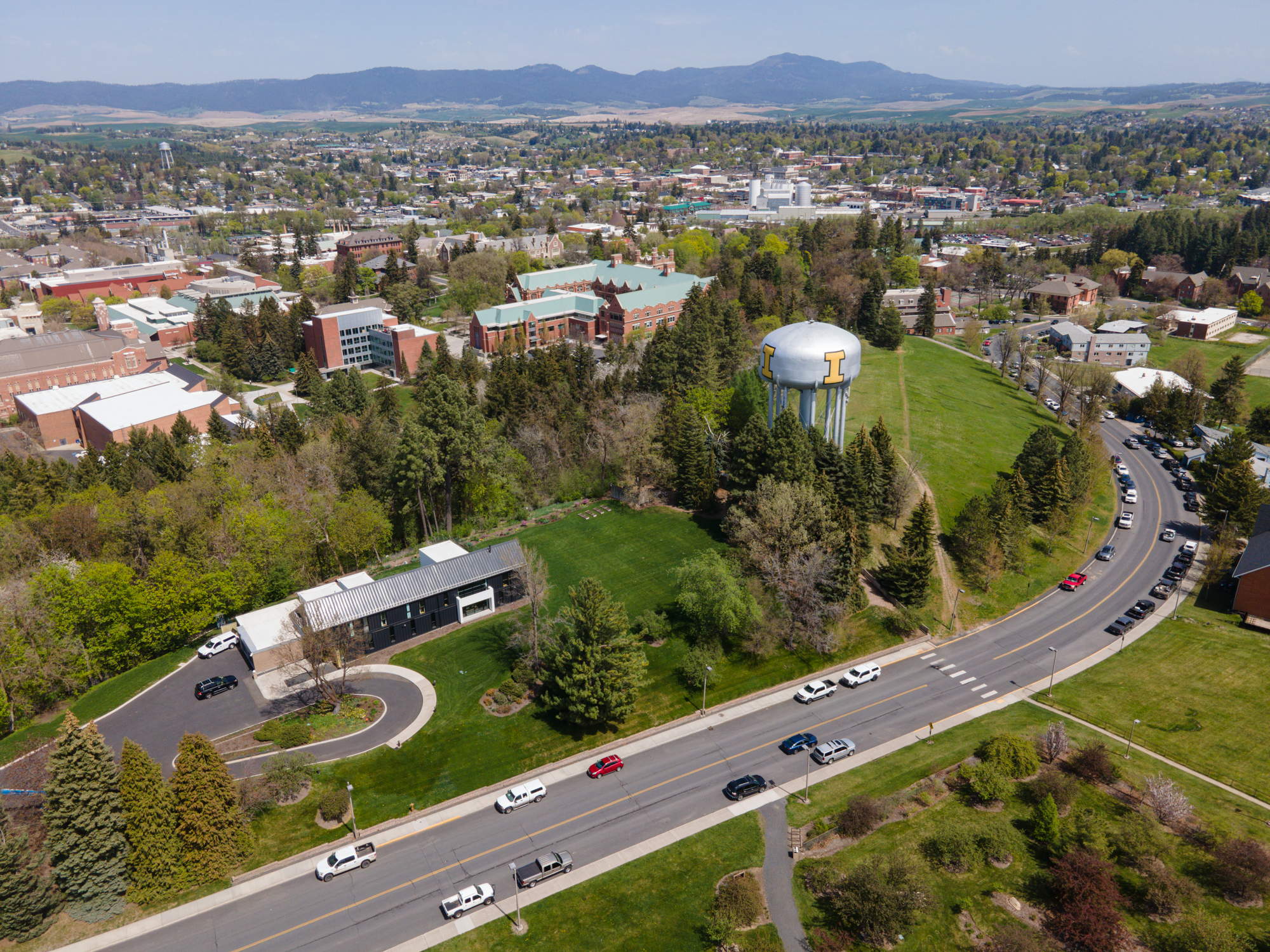
The name has nothing to do with Russia - it likely derives from a Nez Perce word, though the exact origin remains debated. What's certain is that Moscow, Idaho, is one of the purest college towns in America, a city of 26,000 where the University of Idaho defines virtually every aspect of life. Founded in 1889, the university arrived before much else, and the town grew around it rather than the other way around. Less than ten miles away, Washington State University in Pullman creates a twin college culture that intensifies the academic atmosphere. But step outside either campus and the landscape takes over - the rolling Palouse hills, covered in wheat and lentils, creating a pastoral beauty that has drawn photographers and painters for generations.
The Palouse
The hills roll like frozen waves, their curves shaped by wind-blown loess deposited over millennia. In winter they're brown and dormant; in spring the winter wheat greens them; by summer the gold returns, and combines trace contour lines across slopes too steep for any other crop. This is the Palouse, one of the most productive wheat-growing regions in the world and one of the most visually striking agricultural landscapes anywhere.
Moscow sits at the heart of this terrain, the town visible from surrounding hilltops as a cluster of buildings in a sea of fields. The drive in any direction offers the same hypnotic beauty - curves revealing new curves, the geometry shifting with every rise. Photographers prize the Palouse for its abstract compositions, the way light and shadow play across the undulating land. For residents, it's simply the view from home, the backdrop to daily life in a region that produces wheat, lentils, peas, and canola in quantities that feed the world.
Vandal Country
The University of Idaho Vandals compete against the Washington State Cougars in one of college sports' most geographically compact rivalries - the campuses sit eight miles apart across the state line. Game days fill both towns with fans, and the rivalry extends beyond athletics into every aspect of the twin communities' relationship. Students shuttle between campuses for classes and social events; residents hold loyalties to one school or both.
The university shapes Moscow's economy and culture entirely. During the school year, students nearly double the population. Downtown businesses cater to academic schedules; bars fill when classes end; summers bring a quieter rhythm. It's a pattern common to college towns, but Moscow's isolation intensifies it - there's no nearby city to dilute the effect, no other industry to balance the university's dominance. This purity appeals to those who embrace it: academics who want to live their research, students who want the full campus experience, families who value education and community.
Trails and Forests
The bike trail between Moscow and Pullman follows an old railway grade, offering an easy commute for the many residents who work in one town and live in the other. In summer, bicycle commuters stream along the path; cyclists and runners share the route with families out for evening rides. Another trail extends east toward Troy, connecting to the recreational networks that make this region surprisingly accessible without a car.
Beyond the trails, wilderness beckons. Moscow Mountain rises north of town, its slopes laced with mountain biking and hiking trails for every skill level. National forests fill the mountains to the east - the Hoodoos, the Saint Joe, places where trails wind through timber and solitude comes easy. The outdoor culture matches the academic one; faculty and students who choose this remote location often do so for access to wild country as much as for the universities themselves. Skiing is available in winter; hiking and biking dominate the longer seasons.
Small Town Rhythms
Downtown Moscow occupies a few blocks of Main Street, the storefronts housing the mix of businesses any college town requires: bookshops and coffee houses, restaurants and bars, gear shops for the outdoor pursuits that define leisure here. The Farmers Market runs Saturday mornings from spring through fall, local producers selling the vegetables and crafts that supplement the commodity agriculture surrounding town.
The isolation is real - Spokane lies ninety miles north, Boise over three hundred south. The regional airport offers flights to Seattle and beyond, but reaching Moscow requires intention. Those who come tend to stay, building the stable community that distinguishes this from transient college environments. Faculty raise families; graduates return after years away; retirees from distant places choose the Palouse for the same beauty that attracted the universities. It's a self-selecting community, small by choice, academic by nature, surrounded by one of America's most beautiful agricultural landscapes.
From the Air
Located at 46.73N, 117.00W in the Palouse region of northern Idaho, near the Washington border. The rolling Palouse hills are visible in every direction - distinctive undulating terrain covered in wheat and legume crops. Pullman, Washington, and Washington State University are 8 miles west. The University of Idaho campus is visible on the east side of town. US Highway 95 runs north-south through Moscow; Highway 8 connects to Pullman. Moscow-Pullman Regional Airport (KPUW) is east of Pullman. The forested mountains of the Idaho Panhandle rise to the east; Spokane is 85 miles north.