Motorsports Hall of Fame of America
The inaugural class tells you everything. In 1989, the Motorsports Hall of Fame of America inducted its first eight members: Cannon Ball Baker in motorcycles, Jimmy Doolittle in aviation, A.J. Foyt in open wheel, Don Garlits in drag racing, Phil Hill in sports cars, Bill Muncey in powerboats, Barney Oldfield in the historic category, and Richard Petty in stock cars. Eight names spanning eight forms of speed, each one a titan. This is not a hall devoted to a single sport. It is a hall devoted to the fundamental American impulse: build a machine, point it forward, and go faster than anyone else ever has.
Born in Novi, Reborn in Daytona
The Motorsports Hall of Fame of America was incorporated in 1986 as a nonprofit in Novi, Michigan, a town with its own racing pedigree. Novi was the birthplace of the famous Novi Special Indianapolis 500 racecars, engines so distinctive their howl became legendary at the Brickyard. Founding Chairman Larry G. Ciancio and founding President Ron Watson built the institution from civic pride and genuine love of speed. The museum opened inside the Novi Expo Center in 1994, then moved to the Detroit Science Center in 2010. In 2015, it found its permanent home inside the Ticket and Tours Building at Daytona International Speedway, the cathedral of American stock car racing. The relocation placed the Hall of Fame where the engines roar loudest.
Ten Categories of Speed
What sets the MSHFA apart from other motorsports halls is its breadth. Ten categories span the full spectrum of engine-powered competition: Open Wheel, Stock Cars, Powerboats, Drag Racing, Motorcycles, Sports Cars, Aviation, At Large, Off-Road, and Historic. Periodic special categories recognize Speed Records, Business, and Technology. To be eligible, a candidate must have retired from competition for at least three years, or have competed at the highest level for at least twenty. Induction is decided by a vote of 200 racing experts: historians, journalists, category specialists, and existing inductees. The process is overseen by certified accountants. Each inductee receives the Horsepower award, an original bronze statuette sculpted by Ann Arbor artist Michael Curtis.
Black Ties and Horsepower
Every March, the MSHFA's annual Induction Ceremony brings motorsports royalty to Daytona Beach for a black-tie affair. The two-day event begins with the Heroes of Horsepower reception in the museum, where new inductees unveil their permanent Hall of Fame sculptures. The Heritage Luncheon follows, spotlighting the Historic category honorees. The Inductee Breakfast lets the incoming class and returning Hall of Famers trade stories in a lively open session. The main ceremony, attended by legends and industry figures alike, features each new inductee presented by a prominent peer. In 2019, Jimmie Johnson presented Tony Stewart, Scott Dixon presented Dario Franchitti, and Don Prudhomme presented Don Schumacher.
The Museum at the Speedway
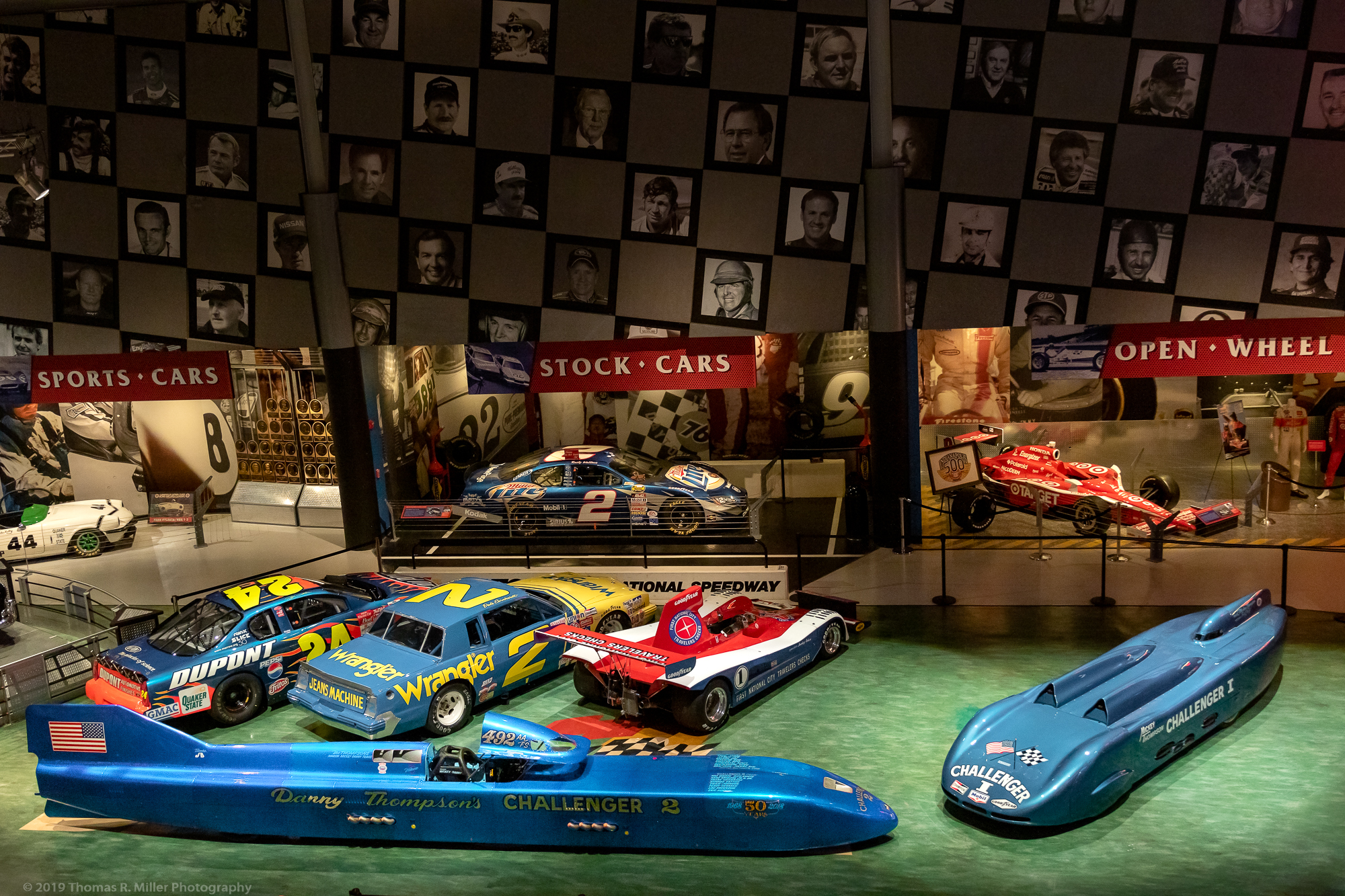
More than 100,000 visitors walk through the museum each year as part of Daytona International Speedway tours. The collection spans the full history of American motorsports: historic racing vehicles, memorabilia, informational displays, and plaques honoring over 260 inductees. Two movie theaters screen motorsports content. The vehicles on display range from early open-wheel racers to modern stock cars, from drag machines to powerboats, each one a piece of engineering ambition frozen in time. The MSHFA also operates as a research organization, fielding questions from journalists, historians, and enthusiasts through its network of expert consultants.
Legends on the Wall
The roster reads like a history of American speed. Mario Andretti, the 1978 Formula 1 World Champion, has served as honorary chairman of the ceremony. Jeff Gordon, Jimmie Johnson, Richard Petty, and Dale Jarrett represent stock car racing's royalty. Jimmy Doolittle, who led the famous 1942 raid on Tokyo, stands in the aviation category. Paul Newman, the actor who became a genuine professional racer, was inducted in the class of 2024. The 2025 class includes Skip Barber, Dale Jarrett, and drag racing legend Tony Schumacher. Each induction class renews the same argument the Hall has made since 1989: speed, in all its forms, is an American art.
From the Air
Located at 29.19N, 81.07W within the Daytona International Speedway complex in Daytona Beach, Florida. The distinctive tri-oval shape of the speedway (2.5-mile track with 31-degree banking) is unmistakable from altitude. The museum is housed in the Ticket and Tours Building on the speedway grounds, on the west side of the facility. Nearest airport: Daytona Beach International (KDAB) approximately 2nm east. Recommended viewing altitude: 2,000-5,000 ft AGL. The speedway's banking and infield lake are clearly visible. Embry-Riddle Aeronautical University campus is visible to the east, adjacent to KDAB.