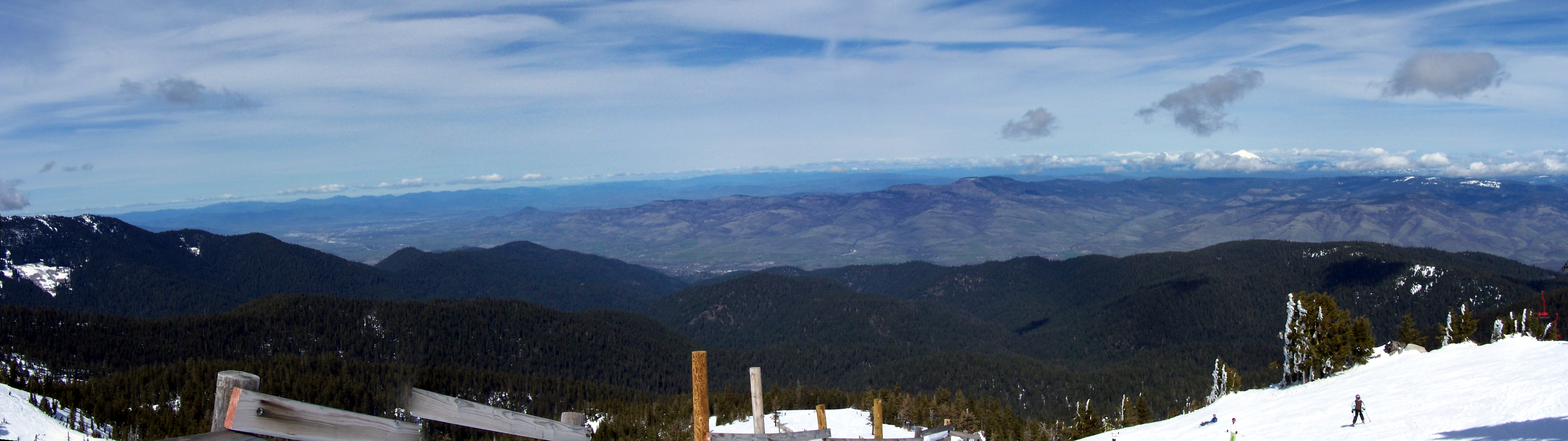
Mount Ashland Ski Area
In 1991, a Seattle real estate company announced it would strip the chairlifts from a small Oregon ski area and haul them north to bolster its flagship resort at Stevens Pass. The community of Ashland had other plans. Within months, a grassroots campaign called "Save Mt. Ashland" had raised enough money to purchase the ski area outright, transforming corporate real estate into a community asset. Three decades later, Mount Ashland remains one of the few nonprofit ski areas in the country, a place where the lifts exist not to maximize shareholder returns but to put local kids on skis.
Born from Backcountry Dreams
Before there were chairlifts, there were rope tows jury-rigged by backcountry enthusiasts who trudged up Mount Ashland's north face in the 1950s. The mountain's appeal was obvious: a glacial cirque called The Bowl that funneled 235 inches of annual snowfall into steep, sustained pitches. By the early 1960s, local businessmen had pooled resources to build something more permanent. Glenn Jackson, a Medford businessman, contributed over half of the $120,000 needed to construct a proper lodge. On January 11, 1964, Mount Ashland opened to the public with one chairlift, a T-bar, and a rope tow. The community had built itself a ski area.
The Nonprofit Experiment
The mountain changed hands repeatedly through the 1970s and 1980s, cycling through private ownership and corporate consolidation. When Harbor Properties of Seattle acquired it in 1983, Mount Ashland became a small holding in a larger portfolio, an afterthought to the company's main investment at Stevens Pass. The 1991 announcement that the chairlifts would be dismantled galvanized Ashland. The city itself stepped in, channeling donations and an Oregon Economic Development Fund grant to purchase the property. A new nonprofit, the Mount Ashland Association, took over operations in 1992. The model has endured: volunteers serve on the board, programs like the After School Youth Program provide low-cost instruction to local kids, and annual events like Ski & Ride for Hunger and Pride Ride reflect the community's values.
Sustainability Pioneer
In 2017, Mount Ashland became the first ski area in the world to earn STOKE certification, a rigorous sustainability standard for tourism operations. The recognition validated decades of environmental stewardship at a mountain that sits entirely within the Rogue-Siskiyou National Forest. The ski area operates under a U.S. Forest Service Special Use Permit, a status formalized in 2012 after years of legal negotiations with the City of Ashland. Recent expansion projects have balanced growth with conservation: snow fencing to reduce wind erosion, trail widening to improve safety, and in 2024, the completion of the Lithia Chairlift, funded by a $2.5 million gift from Sid and Karen DeBoer, the largest single donation in the association's history.
Four Seasons on the Summit
Snow melts from the Bowl by late spring, but the mountain remains active year-round. The Pacific Crest Trail skirts Mount Ashland's south and east flanks, drawing through-hikers on their journey between Mexico and Canada. Runners tackle the Mt. Ashland Hillclimb, a punishing 13-mile course that climbs a vertical mile from Lithia Park in downtown Ashland to the summit. The Siskiyou Out Back ultramarathons launch from the ski area parking lot. Mountain bikers descend fire roads during the Spring Thaw festival. Even in winter's silence, the lodge opens for food and special events, the kind of gathering place that only exists because a community refused to let it disappear.
A Mountain's Climate
Mount Ashland's dry-summer subalpine climate creates a paradox: heavy snowfall despite sitting at the end of the Rogue Valley's rain shadow. The mountain's elevation wrings moisture from Pacific storms that have already dropped much of their payload on the Coast Range. The result is reliable powder through mid-April, conditions that drew backcountry skiers in the 1950s and continue to fill the parking lots today. In 2023, the ski area recorded its highest winter visitation ever: 128,625 visitors carving turns on 44 trails, 52% of them rated advanced or expert, all of them belonging to a community that built a mountain from scratch.
From the Air
Mount Ashland Ski Area sits at 42.083N, -122.717W, elevation approximately 7,500 feet. The ski area occupies the north face of Mount Ashland in the Siskiyou Mountains near the Oregon-California border. From the air, look for the cleared ski runs and The Bowl, a distinctive glacial cirque on the north face. The lodge and parking areas are visible at the base. Nearby airports include Rogue Valley International-Medford (KMFR) approximately 20 miles north, and Ashland Municipal (S03) about 15 miles north. Best viewing altitude is 8,000-10,000 feet AGL. The Pacific Crest Trail corridor is visible along the ridgeline to the south and east.