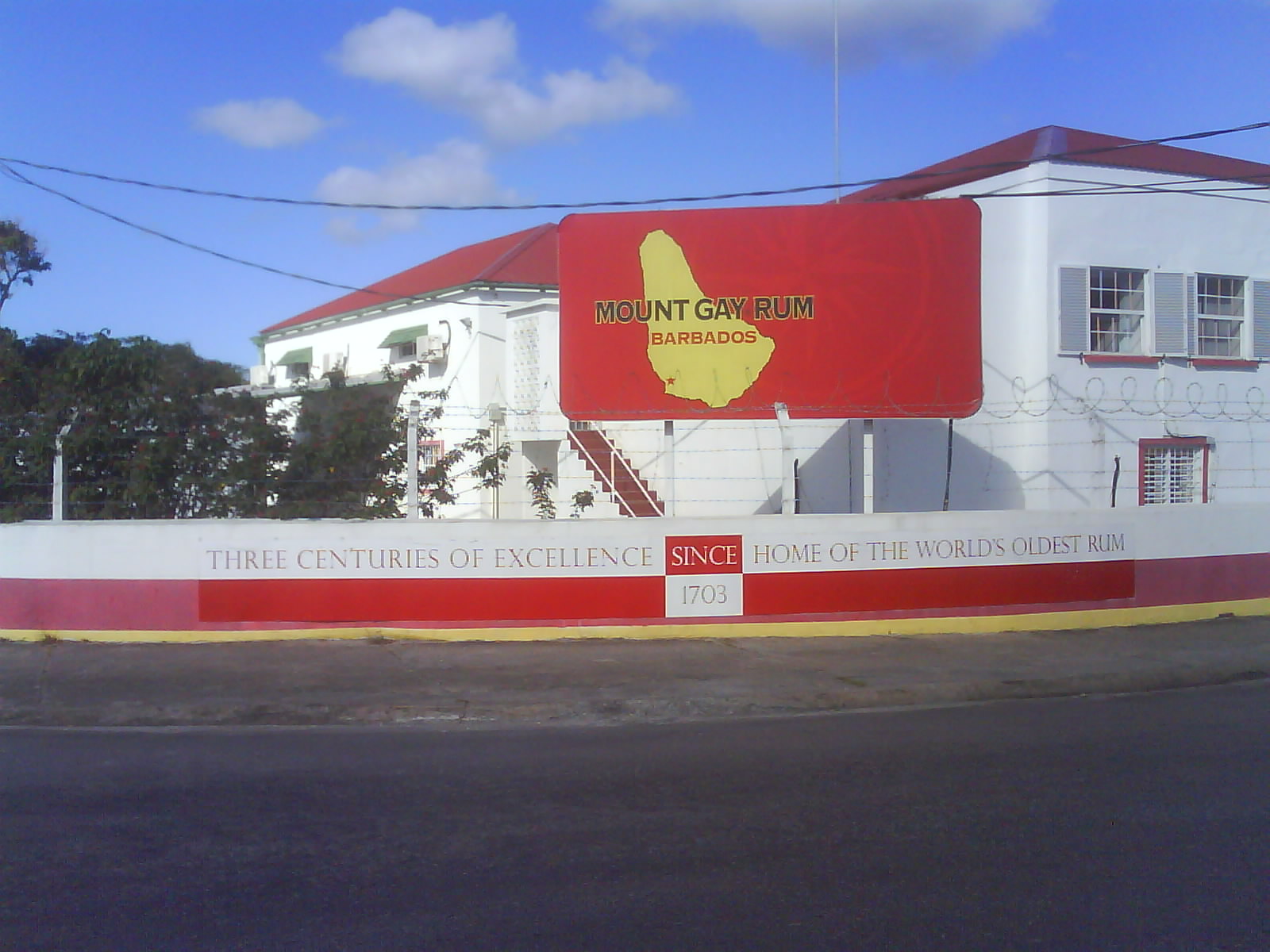
Mount Gay Rum: Three Centuries in a Glass
A deed dated 1703 mentions two pot stills and a boiling house on a Barbadian sugar estate called Mount Gilboa. That scrap of paper, mundane as it sounds, makes Mount Gay the oldest documented commercial rum distillery in the world. More than three centuries later, the distillery still operates in the northern parish of St. Lucy, still filters its water through the island's natural coral aquifer, and still ferments with a proprietary yeast strain that the company guards carefully. Rum has been distilled across the Caribbean for nearly as long as Europeans have grown sugarcane there, but Mount Gay is the one that kept the receipts.
The Gentleman Whose Middle Name Stuck
The distillery owes its name to Sir John Gay Alleyne, 1st Baronet of Four Hills, though he never owned it. In 1747, John Sober purchased the Mount Gilboa plantation from William Sandiford and asked his trusted friend Alleyne to manage the operation. Alleyne proved so effective that when he died in 1801, Sober proposed renaming the company in his honor. Because a Mount Alleyne already existed on the island, they took his middle name instead, and Mount Gay Distilleries was born. Alleyne was no mere businessman. He served in the Parliament of Barbados for forty years beginning in 1757, became Speaker of the House of Assembly, and was named a Baron of Four Hills in 1769. Historian Hilary Beckles has described him as a popular leader among the planter elite and a great philanthropist. He was also, notably, one of the most influential voices of his era to speak out against the institution of slavery -- a remarkable position for a man embedded in the plantation economy.
Coral Water and Copper Stills
The distillery's method has evolved in scale but not in essence. Molasses is mixed with water drawn from wells that filter naturally through the coral limestone that forms Barbados's geological foundation. This filtration gives the water a mineral character distinct from the volcanic islands to the west. The fermented wash is then distilled in both traditional copper pot stills and modern column stills, a dual approach that gives the blenders a wide palette of flavor profiles to work with. A retort system re-infuses aromas from the vapor back into the liquid during distillation, adding complexity before the spirit ever touches oak. Four warehouses hold roughly 4,000 barrels of aging rum. The Eclipse expression, developed in 1911, takes its name from the total solar eclipse that crossed Barbados the previous year and the passage of Halley's Comet. The XO contains casks aged between eight and fifteen years. Even the bottle label tells a story: the small red star on the image of Barbados marks Bridgetown, not the distillery itself, which sits at the island's opposite end.
A Sailor's Rum
Barbados occupies a unique position in Atlantic sailing. It is the easternmost Caribbean island, the first landfall for ships riding the trade winds from Europe. For centuries, Mount Gay has been the rum that greeted sailors after weeks at sea, and the connection has become part of the brand's identity. The company sponsors over 110 regattas worldwide and awards its distinctive red caps to top competitors -- in sailing circles, a Mount Gay cap is a quiet badge of accomplishment. Mount Gay is also a key ingredient in Stirling Punch, named for Harold Stirling Vanderbilt, the America's Cup winner and founder of the Vanderbilt Sailing Club. Paradoxically, Barbados itself is not ideal sailing territory. The island sits exposed to swells from both the northern and equatorial Atlantic and lacks the protected natural harbors found in Antigua or Grenada. The rum, it seems, travels better than the island's waters invite lingering.
From Plantation to Pop Culture
Through the 20th century, the Ward family of St. Peter parish oversaw the distillery, with Frank Ward serving as the last family member to manage operations and as Executive Chairman of the West Indies Rum and Spirits Producers Association. In 1989, Remy Cointreau acquired majority ownership, folding Mount Gay into a French luxury spirits portfolio while keeping production rooted in Barbados. Today the rum is sold in 110 countries, with the United States as its primary export market. The Visitors Centre on Spring Garden Highway in Brandons, St. Michael, draws tourists for tastings and tours. Perhaps the most unexpected testament to its stature came in 2006, when the first drink James Bond orders in Casino Royale -- Daniel Craig's debut in the role -- is not the trademark vodka martini but a Mount Gay with soda. For a rum born from a molasses-scented plantation in the Caribbean's easternmost outpost, it was a fitting moment on the world stage.
From the Air
Located at 13.11°N, 59.63°W in the northern part of Barbados, parish of St. Lucy. The distillery complex is situated inland from the island's rugged northern coast. From altitude, the northern parishes appear greener and more agricultural than the developed south coast. Grantley Adams International Airport (TBPB) is approximately 15 miles to the southeast. The Visitors Centre is separately located on Spring Garden Highway near Bridgetown. Recommended viewing altitude: 3,000-5,000 feet for the surrounding plantation landscape.