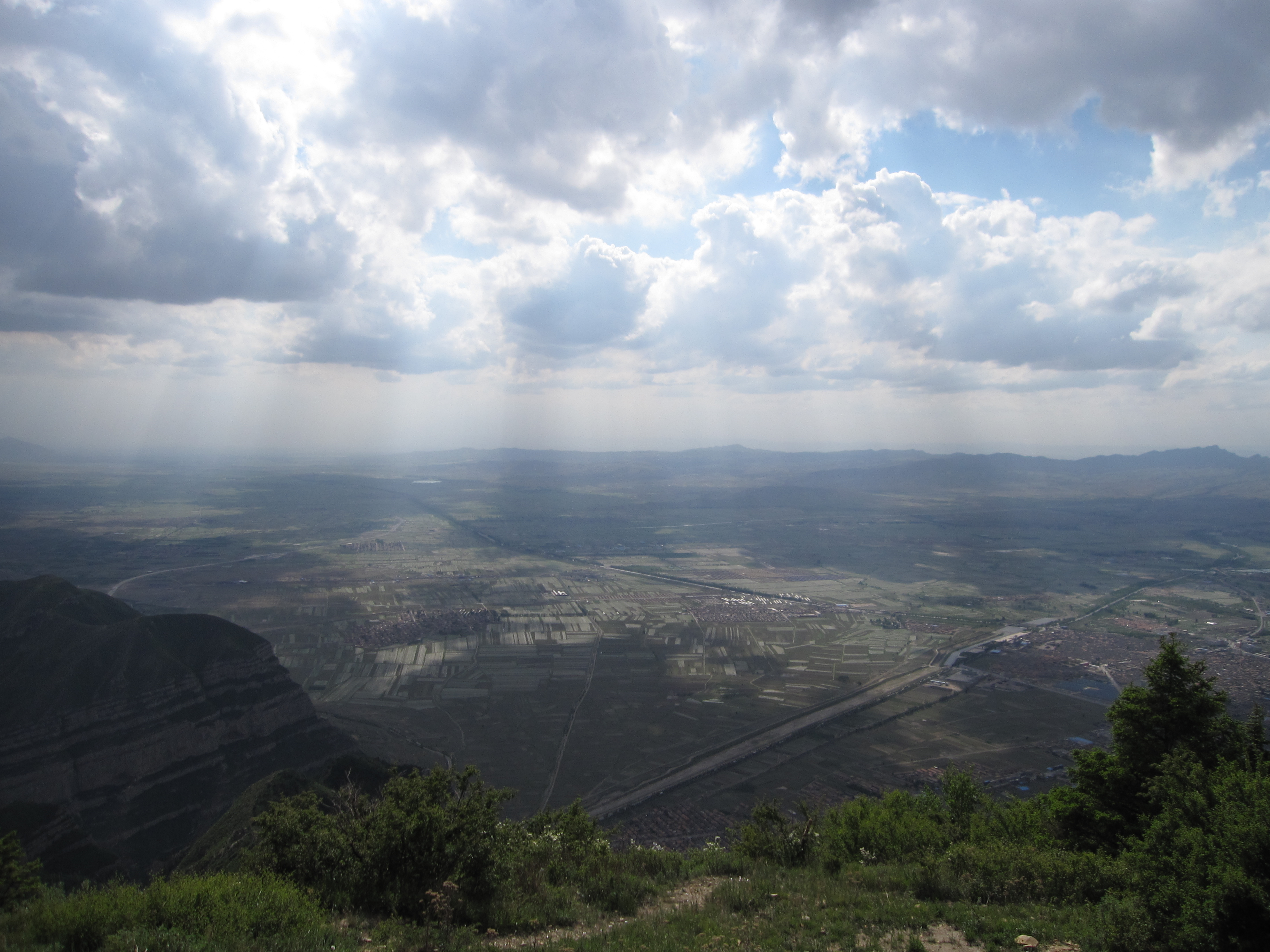
Mount Heng (Shanxi)
There are no hotels on Mount Heng. This is perhaps the most telling fact about the northern peak of China's Five Great Mountains, a summit that has been considered sacred since the Zhou dynasty but remains, to this day, the least visited and least developed of the quintet. Where China's other sacred mountains have been engineered into tourist destinations with cable cars, gift shops, and concrete pathways, Mount Heng in Shanxi Province still requires a three-hour hike round trip from the parking lot. In June, the summit blooms with fragrant lilac, and the only company is the wind through the hemlocks.
Sacred but Peripheral
Mount Heng's relative obscurity has a historical explanation. Its northerly location, deep in Shanxi Province, placed it repeatedly under the control of non-Chinese kingdoms -- the Xiongnu, the Khitan, the Jurchen, the Mongols. While the other four sacred mountains developed long, continuous traditions of pilgrimage and imperial patronage, Heng Shan's history is interrupted by centuries of foreign rule during which Chinese pilgrims could not easily or safely make the journey. This political isolation paradoxically preserved the mountain's character. Without the weight of continuous religious tourism, Heng Shan never developed the infrastructure that now crowds its southern counterpart in Hunan. Both mountains share the same Chinese pronunciation, a source of perennial confusion, but their characters are distinct.
The Temple on the Cliff
Near the base of Mount Heng, a temple clings to a cliff face in apparent defiance of structural engineering. The Hanging Temple -- Xuankong Si -- was built more than 1,500 years ago, its wooden halls and walkways suspended above a gorge on slender wooden pillars and crossbeams driven into holes drilled in the rock. The temple is remarkable not only for its precarious position but for its ecumenical spirit: it houses Buddhist, Taoist, and Confucian shrines under the same improbable roof, a philosophical tolerance expressed in wood and stone. The Hanging Temple draws more visitors than the mountain's summit, a reversal that suits Heng Shan's character. The mountain itself remains the domain of those willing to earn their views on foot.
Gods of the Northern Peak
During the Han dynasty, a temple called the Shrine of the Northern Peak was built on Heng Shan's slopes, dedicated to the mountain god. This temple has an uninterrupted history spanning two millennia, though it has been periodically destroyed and rebuilt. During periods when non-Han peoples controlled the mountain, worship of Heng Shan was redirected to the Beiyue Temple in Quyang, far to the south in Hebei Province -- a religious embassy in exile, maintaining the devotional connection to a mountain that politics had made inaccessible. When Chinese control returned, so did the pilgrims, and the cycle of destruction and rebuilding resumed.
The Mountain Uncrowded
Heng Shan's slopes wear a thick coat of hemlocks, pines, elm, fir, poplar, and hawthorn, thinning toward the summit where bare rock and wildflowers take over. The lack of commercialization means the mountain's ecology remains relatively intact, the forests unbisected by wide paved roads. Temples set into the cliffs appear as you climb, their rooflines emerging from the rock as though the mountain had grown them. For travelers accustomed to China's more famous mountains, where stone staircases can stretch for thousands of steps past hawkers selling water and souvenirs, Heng Shan offers something increasingly rare: the experience of a sacred mountain that still feels sacred, where the silence is unbroken and the summit belongs to whoever is willing to walk.
From the Air
Located at 38.58N, 112.90E in north-central Shanxi Province. The mountain reaches over 2,000 meters at its highest point. Nearest airports are Datong Yungang Airport (ZBDT) to the north and Taiyuan Wusu International (ZBYN) to the south. Approach with caution -- mountainous terrain with potential for turbulence and rapidly changing weather. The Hanging Temple is located in a gorge on the mountain's lower slopes, visible from certain angles at low altitude.