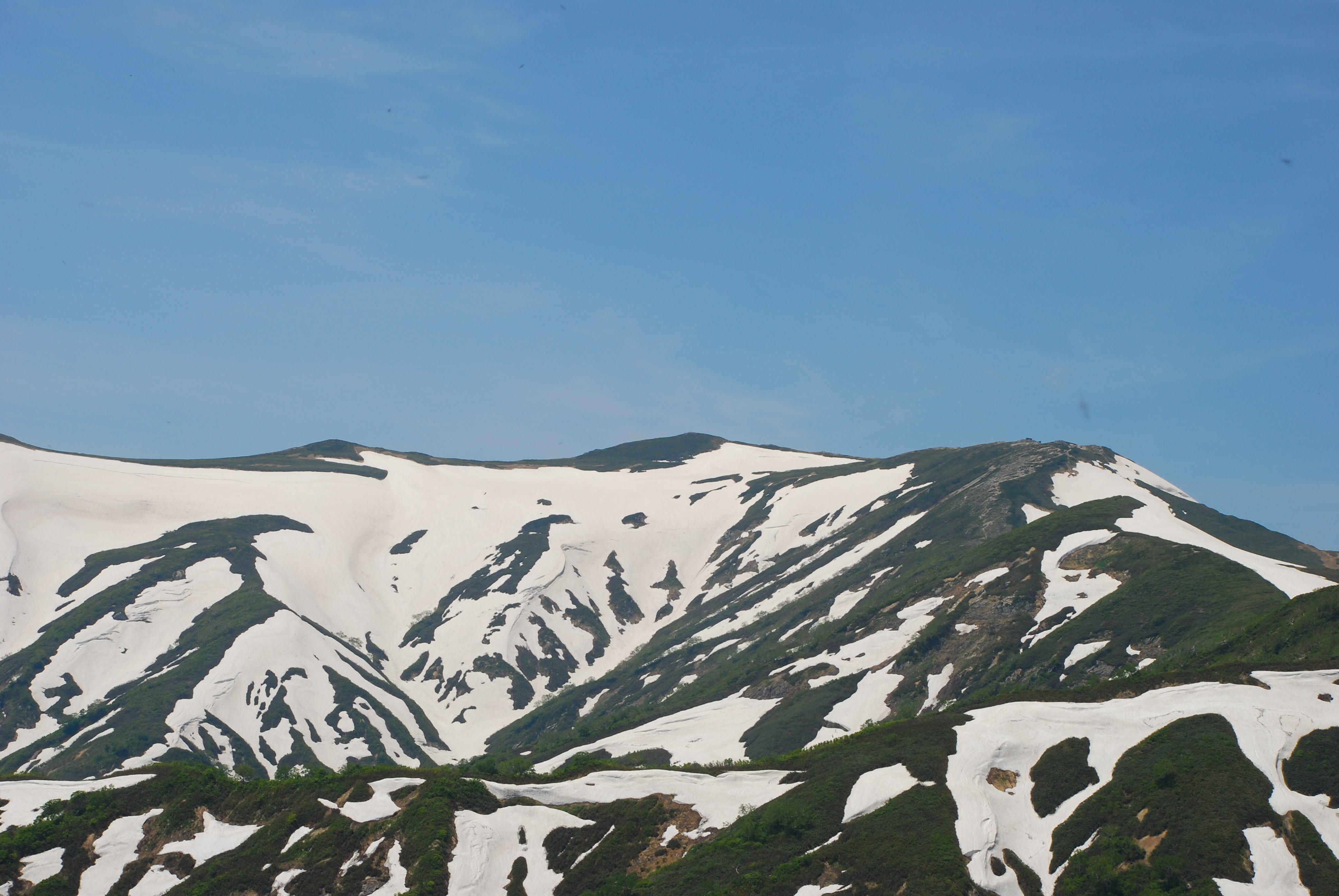
Mount Iide: The Mountain That Made Men
For generations of boys growing up in the villages around the Iide Range, there was one question that mattered before the age of fifteen: have you climbed the mountain? The local custom was unambiguous. A boy who reached the summit of Mount Iide before his fifteenth birthday was considered a man. One who had not was still a child. The tradition endured until the Pacific War, rooted in the same ascetic severity that had drawn Yamabushi mountain priests to this peak since the seventh century. Mount Iide stands at 2,105 meters where Fukushima, Niigata, and Yamagata prefectures converge -- not the tallest summit in its own range, but the one that carries the name, the shrine, and the weight of more than a thousand years of spiritual practice.
Not the Highest, but the One That Counts
Mount Iide is the main peak of the Iide mountain range, the northern portion of the Echigo Range, but it is not the highest. That distinction belongs to Mount Dainichi at 2,128 meters, followed by Mount Kitamata at 2,025 meters, Mount Eboshi at 2,017 meters, and Mount Onishi at 2,013 meters. Five peaks in the range break 2,000 meters, earning the collective name Tohoku Alps. Yet Iide is the summit that gives the range its name, the one that appears in Kyuya Fukada's celebrated book 100 Famous Japanese Mountains, and the one whose trails are worn deepest by centuries of pilgrimage. The range is bounded by the Arakawa River to the north, the Agano River to the south, and the Echigo Plain to the west. On clear days, the view from the ridge encompasses the Asahi Range, Mount Azuma, the Aizu Basin, Mount Nasu, and the Sea of Japan.
The Ascetic's Mountain
In 652, the legendary figure En no Ozunu is said to have established the practice of Shugendo on Mount Iide, making it one of the earliest seats of this syncretic mountain religion that blends Tantric Buddhism, Shinto, and animistic mountain worship. Yamabushi -- mountain priests whose name means "one who prostrates oneself on the mountain" -- have followed his path here for nearly fourteen centuries. The discipline is physical and uncompromising: fasting, meditation, sitting beneath waterfalls, traversing snow-covered ridges, and performing fire ceremonies in the thin air above treeline. The Iide Shrine stands at the summit, a spiritual landmark that anchored the faith of local communities during the Meiji period and beyond. Along with the Three Mountains of Dewa -- Gassan, Haguro, and Yudono -- Mount Iide forms part of the great Shugendo geography of the Tohoku region.
Snow, Flowers, and the Short Season
The Iide Range receives some of the heaviest snowfall in Japan. Snowpacks persist on many peaks year-round, compressing the hiking season into a few summer months when the high ridges transform from white to vivid green and wildflower color. Alpine flowers are one of the range's defining attractions -- the bloom draws hikers from across Japan who time their ascent to catch the brief explosion of color above treeline. Below the flowers, dense Japanese beech forest blankets the slopes to around 1,200 meters, giving way to shrubland and then to the exposed alpine zone. Trails approach from all four sides of the range, but the terrain is demanding and the weather volatile. The same snow that creates the flower meadows also makes the mountains dangerous -- conditions can shift from clear skies to whiteout in minutes, and the exposed ridgelines offer little shelter.
A Threshold Still Standing
The prohibition on women climbing Mount Iide lasted until the end of the Pacific War, a restriction common to many sacred mountains in Japan but one that underscored the mountain's particular role as a proving ground for young men. The coming-of-age custom -- summit before fifteen or remain a boy -- was not metaphorical. It was a community standard with social consequences, binding the identity of men in the surrounding villages to the physical fact of the mountain above them. Today both traditions have ended, and the trails are open to everyone. But the Iide Shrine still stands at the summit, the Yamabushi still train on the slopes, and the mountain still demands the same effort it always has. The snow does not care about custom. The ridge does not care about age. Iide remains what it has been since En no Ozunu first climbed it: a mountain that asks something of the people who try to reach its peak.
From the Air
Located at 37.85°N, 139.71°E at the convergence of Fukushima, Niigata, and Yamagata prefectures. Mount Iide (2,105 m / 6,906 ft) is visible as a prominent peak in the Iide Range, with year-round snow on higher elevations. The range stretches roughly north-south as part of the Echigo Range. Best viewed at 8,000-10,000 feet AGL; maintain safe terrain clearance. Niigata Airport (RJSN) lies approximately 40 nautical miles to the west. Yamagata Airport (RJSC) is roughly 50 nm to the northeast, and Fukushima Airport (RJSF) approximately 60 nm to the southeast. Expect mountain turbulence and rapidly changing weather conditions. Snow cover visible most of the year on upper ridges.