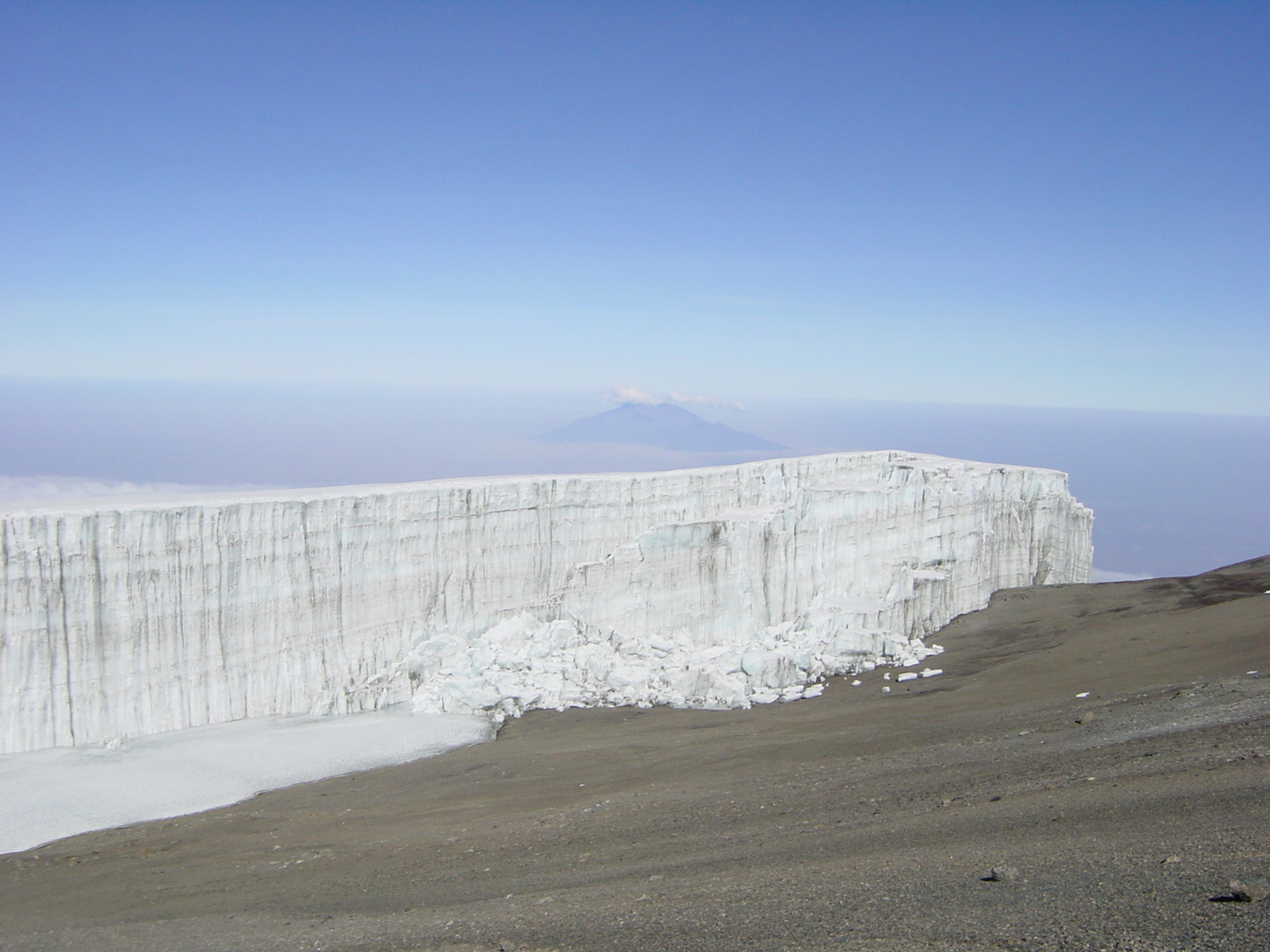
Mount Kilimanjaro
Positioned just 330 kilometers south of the equator, Mount Kilimanjaro defies expectation. Africa's tallest mountain is not a jagged alpine peak but a massive dormant volcano rising in isolation from the savannah, its glaciated summit floating above the clouds like an apparition. At 5,895 meters, Uhuru Peak - 'Freedom' in Swahili - is the highest point on the continent, yet it requires no technical climbing to reach. This accessibility has made Kilimanjaro the most climbed major peak on Earth, drawing over 35,000 trekkers annually to attempt what amounts to a walk from tropical Africa to Antarctica in less than a week. But make no mistake: altitude kills on this mountain, and success depends on respecting the thin air above.
Five Worlds in Five Days
Climbing Kilimanjaro means traversing five distinct ecological zones, each separated by roughly 1,000 meters of elevation. The journey begins in cultivated farmland where Chagga villagers grow coffee and bananas in the volcano's fertile soil. Dense montane forest follows, home to colobus monkeys and over 140 bird species. The forest thins into heath and moorland, where giant lobelias and bizarre groundsels grow to tree-size in adaptation to the intense equatorial sun and freezing nights. Above 4,000 meters, the alpine desert offers little but rock and hardy lichens. Finally, the arctic zone: glaciers and permanent snow fields that, despite their equatorial latitude, have existed for at least 11,000 years. Each day of climbing feels like crossing continents.
Routes to the Roof of Africa
Six main routes ascend Kilimanjaro, each offering different characteristics. The Marangu Route - nicknamed the 'Coca-Cola Route' for its relative ease and hut accommodations - is the oldest and most popular, ascending the southeastern slope over five or six days. The Machame Route ('Whiskey Route') is considered more scenic but more demanding, with tent camping throughout. The Lemosho Route approaches from the west through pristine wilderness where buffalo and elephant roam; armed rangers sometimes accompany groups through the forest. The Rongai Route, ascending from the north near the Kenyan border, sees the fewest climbers and offers a sense of solitude. All routes converge for the final summit push, typically beginning around midnight to reach Uhuru Peak at dawn.
The Altitude Challenge
Kilimanjaro's accessibility is deceptive. The mountain claims lives every year, primarily from altitude-related illness. At nearly 6,000 meters, atmospheric pressure is roughly half that at sea level, and the oxygen content of each breath drops accordingly. Standard schedules of five to six days - common in budget itineraries - produce altitude sickness in up to 75 percent of climbers, and a significant percentage fail to summit. Success rates climb dramatically with additional acclimatization days, particularly around the 4,000-meter level. The golden rule is 'climb high, sleep low' - ascending to a higher elevation during the day but descending to sleep. Signs of trouble include headache, nausea, and confusion; descent is the only reliable cure when symptoms progress.
Glaciers in Retreat
Kilimanjaro's iconic snows are disappearing. The ice fields that greeted Ernest Hemingway's generation have shrunk by over 80 percent since the early twentieth century, and some scientists predict they could vanish entirely within decades. The causes remain debated - reduced snowfall, changing cloud patterns, and global warming all play roles - but the visual evidence is stark. Photographs from the 1990s show glacier faces dozens of meters high; today those same faces have receded or vanished entirely. For climbers, this retreat means navigating an increasingly rocky summit zone where ice once dominated. For the mountain's place in human imagination, it raises questions about what Kilimanjaro will mean when 'the snows of Kilimanjaro' exist only in literature.
Practical Realities
Climbing Kilimanjaro requires mandatory guides and park fees that make it one of Africa's more expensive adventures. All-inclusive trips range from roughly $2,000 to $5,500, depending on route, duration, and comfort level, plus tips for the guides, cooks, and porters who make the climb possible. The mountain is open year-round, but January through March and June through October offer the most favorable weather. Regardless of season, climbers must prepare for temperatures ranging from 30°C at the gate to -25°C at the summit. The gear list includes serious cold-weather equipment: expedition-weight sleeping bags, insulated jackets, and layers capable of handling everything from tropical rain to alpine wind chill. Those who reach the summit earn not just a view but a transformation - a week spent walking through climate zones most people experience only across years of travel.
From the Air
Located at 3.08°S, 37.35°E in northeastern Tanzania near the Kenyan border. Kilimanjaro is unmistakable from cruising altitude - a massive volcanic cone rising in isolation from the surrounding plains, typically with snow visible on the summit even in the equatorial location. The three volcanic cones are visible: Kibo (highest, with glaciers), Mawenzi (jagged eastern peak), and Shira (western plateau). Kilimanjaro International Airport (JRO) lies 30km to the southwest. The mountain dominates the landscape for hundreds of kilometers in all directions.