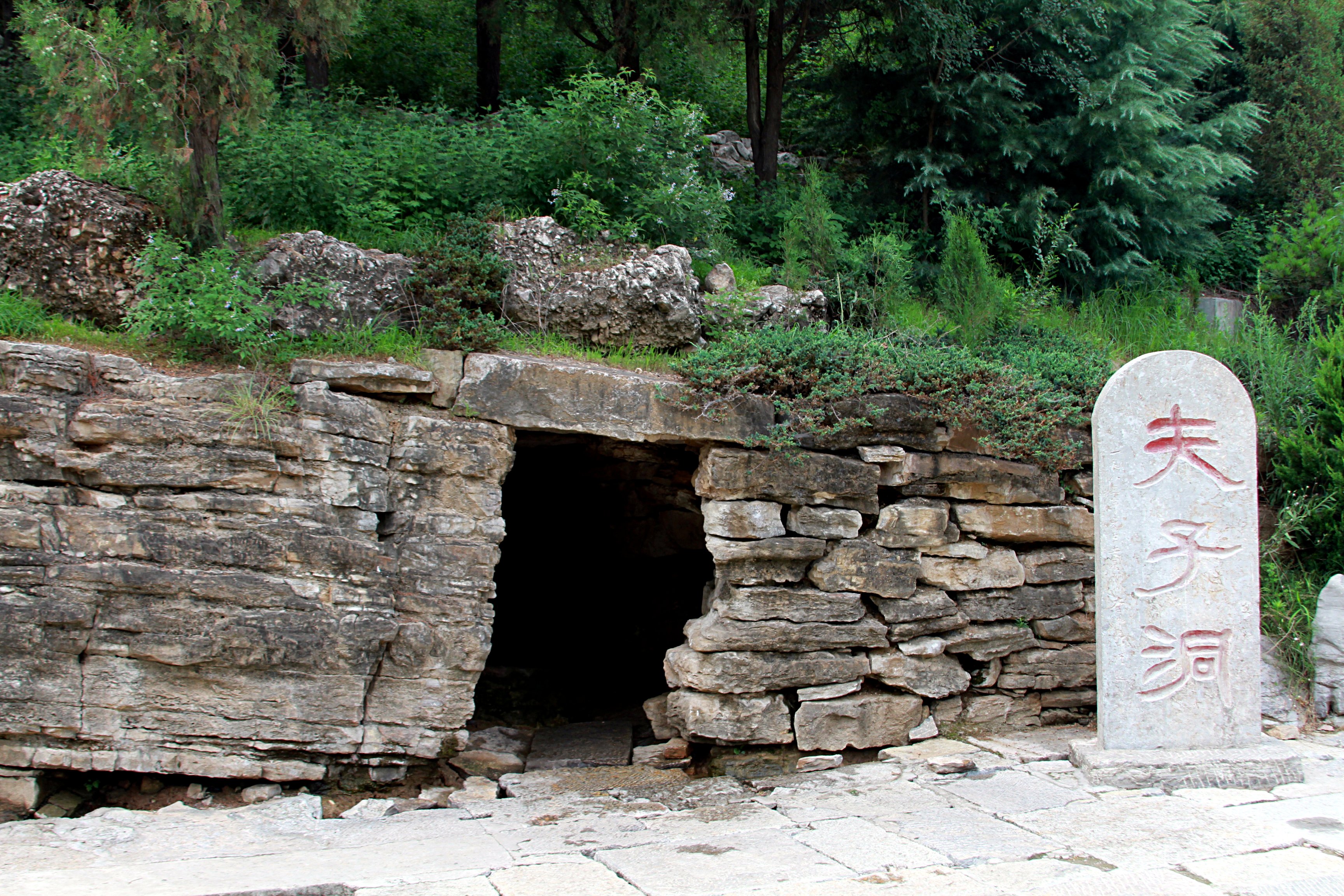
Mount Ni
The hill is not much to look at. Mount Ni rises gently from the Shandong countryside about 30 kilometers southeast of Qufu, the kind of unremarkable elevation that a pilot might glance at and forget. But according to the Han dynasty historian Sima Qian -- China's greatest ancient chronicler -- this is where the story of Confucius begins. His parents, Shuliang He and Yan Zhengzai, climbed this hill to pray for a child. What followed changed the course of human thought.
A Prayer Answered
Sima Qian's Records of the Grand Historian, written in the first century BC, tells the story simply. Shuliang He was an aging warrior and minor nobleman in the state of Lu. His first wife had given him nine daughters but no son; a concubine bore one son who was crippled. Desperate for an heir, Shuliang He married the much younger Yan Zhengzai. The couple went to pray at Mount Ni, and their son was born around 551 BC. They named him Kong Qiu -- Qiu meaning "hill" -- after the place where their prayers were answered. This child would become known to the West as Confucius, and his teachings on ethics, governance, and social harmony would shape Chinese civilization for the next 2,500 years and counting.
Temples on the Hillside
The sacred association with Confucius made Mount Ni a site of veneration across dynasties. A temple dedicated to Shuliang He, Confucius's father, has existed on the mountain since at least the Northern Wei dynasty (386-535 CE), though its history has been turbulent. The temple was abandoned and rebuilt repeatedly through the Later Tang, Later Zhou, Song, Jin, and Yuan dynasties -- a cycle of neglect and restoration that mirrors the shifting fortunes of Confucianism itself across Chinese political history. A Confucian academy was also established on the mountain, along with the Yusheng Memorial Temple, creating a small complex of buildings devoted to learning and remembrance on the very slopes where tradition says the sage's life began.
Between Myth and Memory
Mount Ni sits on UNESCO's tentative list as a proposed extension of the World Heritage Site that already encompasses the Temple and Cemetery of Confucius and the Kong Family Mansion in nearby Qufu. Whether the birth story is literally true matters less than what it reveals about how Chinese culture remembers its foundational thinker. Confucius did not claim divine birth or supernatural powers. His parents prayed on a hill -- a humble, human act -- and had a son who taught that virtue could be cultivated through study and self-discipline. The modesty of the origin story matches the philosophy. Mount Ni endures as a place where landscape and legacy merge, where a quiet hill in Shandong Province carries the weight of being the starting point for one of humanity's most influential intellectual traditions.
From the Air
Located at 35.50N, 117.22E, approximately 30 km southeast of Qufu in Shandong Province. Mount Ni is a low hill visible in clear weather from altitudes above 3,000 feet. Nearest airports include Jining Qufu Airport (ZLJN) and Jinan Yaoqiang International (ZSJN). The Nishan Reservoir (Confucius Lake) is a nearby water feature that aids visual navigation.