Mount Royal Cemetery
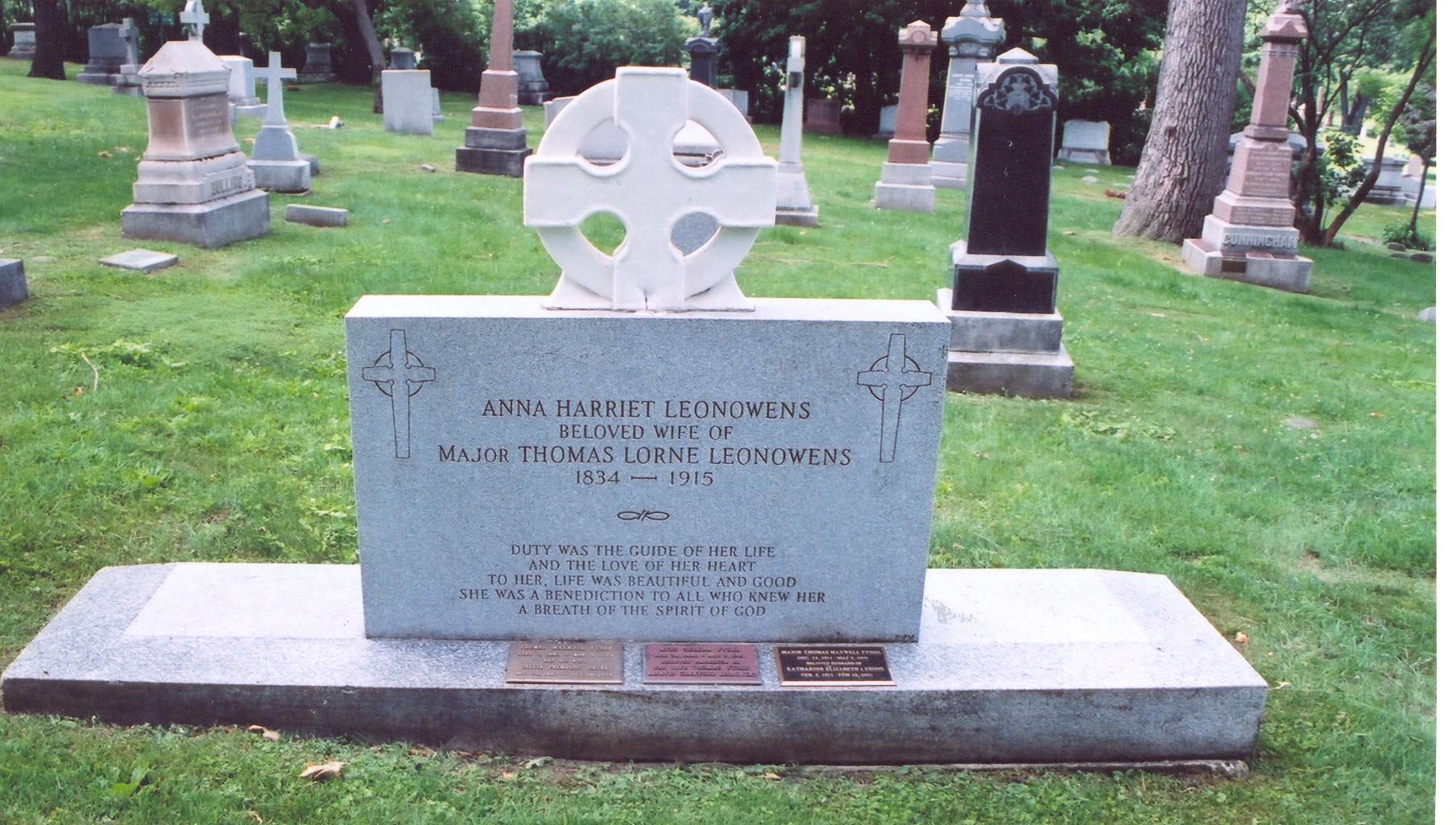
Jocelyn Gordon Whitehead lies somewhere in Mount Royal Cemetery. His claim to fame is singular and grim: in 1926, he delivered an unexpected punch to the abdomen of Harry Houdini, triggering the peritonitis that killed the world's most famous magician days later. Whitehead is buried not far from Anna Leonowens, the governess whose years at the Siamese court inspired The King and I. A few terraces away rests Shadrach Minkins, a fugitive slave rescued from federal custody in Boston in 1851, who crossed the border and built a quiet life in Montreal. The cemetery has been collecting stories like these since it opened in 1852, terracing them into the north slope of Mount Royal with the same democratic permanence its founders promised -- burial in perpetuity, with no grave ever reused or abandoned.
A Mountain Divided by Faith
Mount Royal Cemetery shares its mountain with two other burial grounds: the much larger Roman Catholic Notre Dame des Neiges Cemetery to the west, and the Ashkenazi Jewish Shaar Hashomayim Cemetery to the north. Mount Royal Park borders it to the southeast. Three faiths, three cemeteries, one volcanic hill -- a geographic arrangement that maps Montreal's religious and cultural fault lines directly onto the landscape. The cemetery was originally founded by Protestant denominations and continues to be governed by a board of trustees representing those founding churches, though it is non-denominational today. Temple Emanu-El Cemetery, a Reform Judaism burial ground, sits within the Mount Royal grounds. The founding charter stipulated that all profits be devoted entirely to the embellishment and improvement of the property, a mandate the cemetery has honored for over 170 years.
Canada's First Crematory
In 1901, architect Sir Andrew Taylor built the first crematory in Canada on the cemetery's eastern side, funded by Sir William Christopher Macdonald, Montreal's tobacco tycoon and philanthropist. Built from Montreal limestone, the original structure contained a chapel, cremation chambers, a winter storage vault, and a conservatory filled with exotic plants. The first cremation took place on April 18, 1902. The conservatory was demolished in the 1950s for maintenance reasons, but the original chapel remains intact, its handmade mosaic floor and casket-door -- which lowers to the crematorium and preparation rooms beneath -- preserved exactly as Taylor designed them. The crematory remained the only one in Quebec until 1975. The gatehouse near the Chemin de la Foret entrance is another original structure; carriage attendants once waited inside during Montreal's brutal winters while funerals proceeded on the frozen hillside above.
The Illustrious Dead
The roster of notable burials reads like a compressed history of Canada itself. Sir John Abbott, the country's third prime minister, rests here. So does Sir Arthur Currie, the military commander who led the Canadian Corps through the defining battles of the First World War. Charles Melville Hays, the Grand Trunk Railway executive who went down with the Titanic in 1912, was brought here for burial. John Molson, the brewing tycoon who founded his dynasty in 1786, shares the hillside with Howie Morenz, the Hall of Fame hockey player whose death in 1937 prompted one of the largest public funerals Montreal had ever seen. David Thompson, the mapmaker and explorer who charted more of North America than any single person in history, lies in a modest grave that went unmarked for decades.
Outsiders Who Found Refuge
Some of the cemetery's most compelling residents are people who arrived in Montreal as outsiders. Shadrach Minkins, born into slavery around 1815, was arrested under the Fugitive Slave Act in Boston in 1851. A group of abolitionists stormed the courthouse and freed him, and Minkins fled north across the border. He settled in Montreal, opened a barbershop, and lived quietly until his death in 1875. Edith Maude Eaton, buried under her pen name Sui Sin Far, was the first person of Chinese descent to publish fiction in North America, writing stories that challenged the racist caricatures of her era. Margaret Kempe Howell, the mother of Varina Davis and mother-in-law of Jefferson Davis, president of the Confederacy, also found her final resting place on this mountain -- a Southern matriarch buried in the soil of a country that had sheltered the enslaved people her family once held in bondage.
Lilacs, Leaves, and Perpetuity
Mount Royal Cemetery was designed as a landscape for the living as much as a resting place for the dead. In spring, the Lilac Knoll section flushes with hydrangeas. In autumn, walking tours guide visitors through canopies of red and gold maple. The military section, given prominence after the First World War claimed over 60,000 Canadian soldiers, stands in quiet rows that echo the Commonwealth War Graves pattern found across northern France. The cemetery remains an active burial ground, though casket-sized plots are increasingly scarce. That scarcity only reinforces the original promise: every grave is permanent, every plot held in perpetuity. In a city that has reinvented itself repeatedly -- from fur-trade outpost to industrial powerhouse to cosmopolitan metropolis -- Mount Royal Cemetery preserves the one thing Montreal's relentless energy cannot touch: the stillness of its dead, terraced into the mountain, looking north.
From the Air
Mount Royal Cemetery sits at 45.51N, 73.60W on the north slope of Mount Royal, clearly visible from the air as a large green space distinct from the adjacent Notre Dame des Neiges Cemetery and Mount Royal Park. The terraced layout and winding paths are discernible from 2,000-3,000 feet AGL. The cemetery occupies a wedge-shaped area between the park and the Catholic cemetery. Montreal/Pierre Elliott Trudeau International Airport (CYUL) lies 10 nm to the west. Montreal/Saint-Hubert Airport (CYHU) is 10 nm to the southeast. The cross atop Mount Royal and the Universite de Montreal tower serve as primary visual references.