Mount Rushmore: The Mountain They Carved Into Presidents
The faces are bigger than expected. Washington's eyes are 11 feet across; Lincoln's nose is 20 feet long. From viewing terrace to granite chin is 500 feet of engineered spectacle, four presidents carved from a mountain in the Black Hills of South Dakota between 1927 and 1941. The memorial is simultaneously an engineering marvel and an act of territorial assertion - carved into land the United States took from the Sioux after gold was discovered. Sculptor Gutzon Borglum chose the site for its visibility and its granite; the choice placed a monument to American democracy on stolen sacred ground. Mount Rushmore embodies American ambition: the audacity to reshape mountains into monuments, the contradiction of liberty celebrated on conquered land.
The Vision
South Dakota historian Doane Robinson conceived the memorial in 1923, hoping to attract tourists. He initially proposed carving Western figures - Lewis and Clark, Buffalo Bill, Sitting Bull - into rock formations called the Needles. Gutzon Borglum, already known for Stone Mountain's Confederate memorial in Georgia, rejected both the Needles (too fragile) and the Western theme. He proposed a national memorial to presidents, carved into Mount Rushmore's southeast-facing granite. The project grew in ambition: originally full figures were planned, then torso-length portraits, finally just the 60-foot heads visible today. The scope contracted with the budget.
The Carving
Workers began blasting in 1927 and didn't finish until 1941. Most of the carving was done by dynamite - 90% of the rock was removed by explosives, with workers dangling in harnesses drilling and blasting inches at a time. Over 400 workers participated; remarkably, none died on the project. Workers refined the surfaces with pneumatic tools, achieving a smoothness that seems impossible at the scale. The heads took shape over fourteen years, through Depression-era funding struggles and Borglum's difficult personality. He died in March 1941; his son Lincoln (named for the president) supervised the final details. The project was declared complete in October 1941, just before Pearl Harbor.
The Choices
Why these four presidents? Washington was obvious - the founder, the first. Jefferson wrote the Declaration of Independence and doubled the nation's size. Lincoln preserved the Union and ended slavery. Theodore Roosevelt was more controversial - recent, Republican, Borglum's friend. Borglum chose Roosevelt for his progressive reforms, trust-busting, and canal-building - achievements now less celebrated than his conservation legacy. The selection reflected early 20th-century priorities: expansion, industrialization, national unity. Other presidents might have been chosen with different values; these four represented what Americans in the 1920s wanted to celebrate.
The Contradiction
Mount Rushmore occupies the Black Hills, granted to the Sioux 'in perpetuity' by the 1868 Fort Laramie Treaty. When gold was discovered, the government took the land back; the Sioux have never accepted the seizure, refusing a Supreme Court-ordered settlement that would now exceed a billion dollars. For the Lakota, Rushmore is desecration twice - stolen land defaced with alien faces. The ongoing Crazy Horse Memorial, 17 miles away, responds with a far larger carving of the Lakota leader - itself controversial among those who believe the Black Hills shouldn't be carved at all. Rushmore's meaning depends on whose history you're telling.
Visiting Mount Rushmore
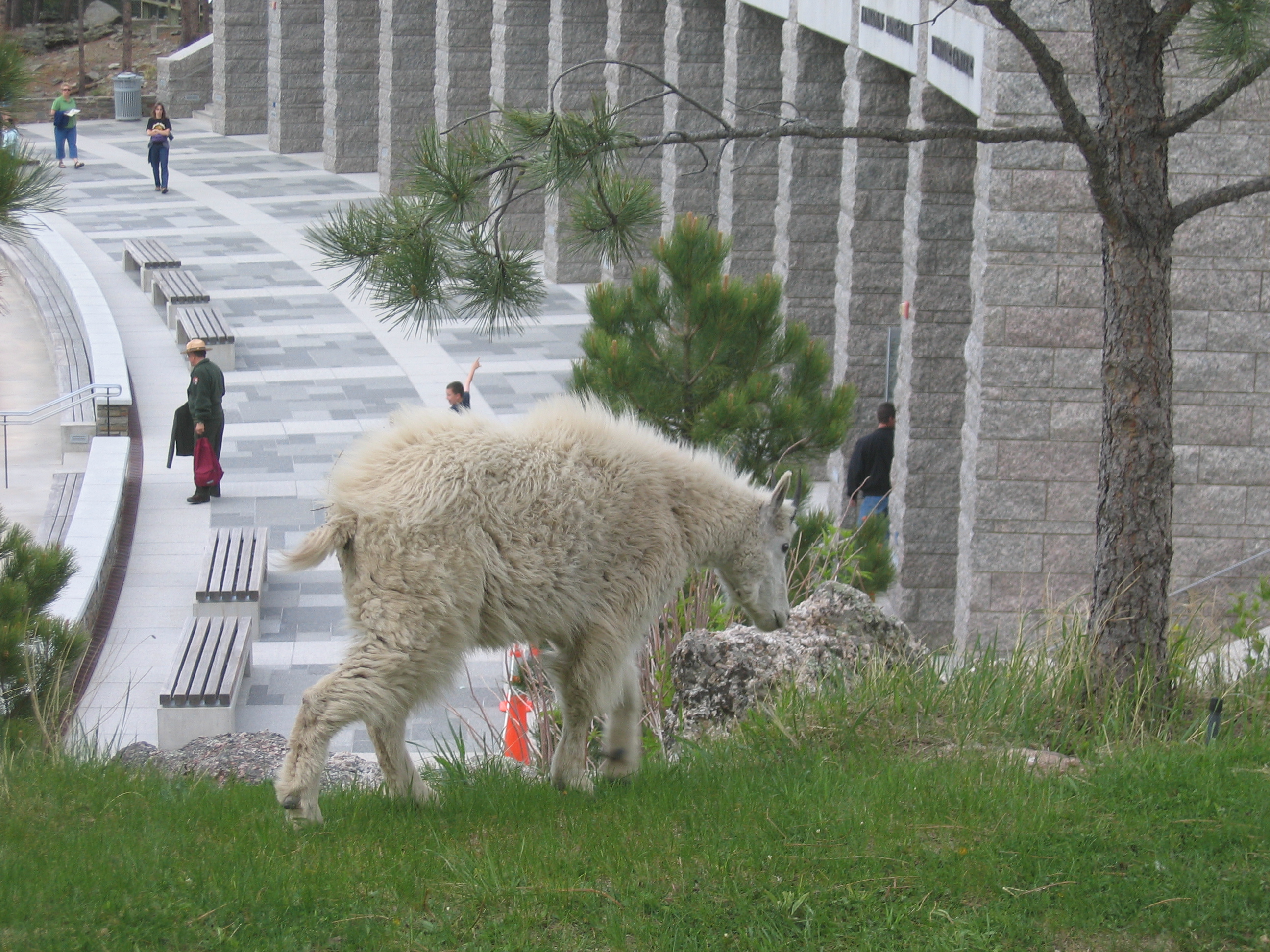
Mount Rushmore National Memorial is located in the Black Hills of South Dakota, approximately 25 miles southwest of Rapid City via Highway 16. Admission is free; parking charges apply. The visitor center offers exhibits on the carving process. The Presidential Trail provides closer views and sculptor's studio access. The avenue of flags representing all states adds visual drama. Evening lighting ceremony occurs nightly in summer. The Crazy Horse Memorial is a worthwhile comparison visit 17 miles south. The Black Hills offer additional attractions including Custer State Park, Wind Cave, and Deadwood. Allow 2-3 hours for the memorial; combine with other Black Hills sites for a full day.
From the Air
Located at 43.88°N, 103.46°W in the Black Hills of southwestern South Dakota. From altitude, Mount Rushmore is surprisingly difficult to spot - the faces point southeast, and the mountain is surrounded by similar granite peaks. The memorial becomes visible when approaching from the southeast, the white granite of the carved faces contrasting with surrounding dark forest. The parking structure and approach road are visible. The Crazy Horse Memorial, far larger but less complete, is visible 17 miles to the southwest. The Black Hills appear as a forested dome rising from surrounding plains. Rapid City is visible to the northeast. What seemed audacious from the ground - carving a mountain into faces - appears modest from altitude, a small intervention in a vast landscape that Indigenous peoples still consider sacred.