The Cross on the Hill
A 29-foot concrete cross has stood at the summit of Mount Soledad in La Jolla since 1954. The view from that summit — across the Pacific, down the coast toward San Diego Bay, over the residential neighborhoods spreading inland — is among the most comprehensive in the city. And for more than two decades, the cross at the center of that view was the subject of continuous legal dispute over one of the oldest questions in American constitutional law: what happens when the government displays a religious symbol on public land?
Three Crosses on the Same Hill
The current cross is not the first on Mount Soledad. Private citizens erected a wooden cross there in 1913; it was stolen in 1923 and later burned. A second cross, built in 1934 by a private Protestant group, was blown down by wind in 1952. The present structure, designed by architect Donald Campbell in prestressed concrete, was dedicated on Easter Sunday in 1954 — an occasion whose explicitly religious character would become significant in the legal proceedings that followed decades later.
The cross stands 29 feet tall on a base that brings the total height to 43 feet, with a 12-foot arm spread. It is visible from considerable distances, particularly from the water and from aircraft approaching San Diego. Its physical prominence made it a landmark; its religious symbolism made it a legal controversy.
Twenty-Six Years of Litigation
In 1989, Philip K. Paulson — a San Diego resident and Vietnam War veteran — filed a lawsuit challenging the cross's presence on public land. His argument was straightforward: the California Constitution's 'No Preference Clause' and the First Amendment's Establishment Clause prohibited government from displaying religious symbols on public property without also displaying symbols of other faiths.
The courts agreed, repeatedly. Federal and state judges ruled multiple times that the cross violated constitutional principles. The City of San Diego attempted various remedies — selling the land under the cross to a nonprofit, proposing transfers to various private entities, seeking voter approval for different arrangements. Each solution generated new legal challenges. The litigation ran continuously from 1989 until 2015, longer than some careers in public service.
Veterans, Congress, and Federal Land
The resolution that eventually quieted the dispute came through Congress. In 2006, President George W. Bush signed legislation authorizing the federal government to acquire the Mount Soledad property through eminent domain, transferring it from the City of San Diego to federal ownership and designating the site as the Mt. Soledad National Veterans Memorial.
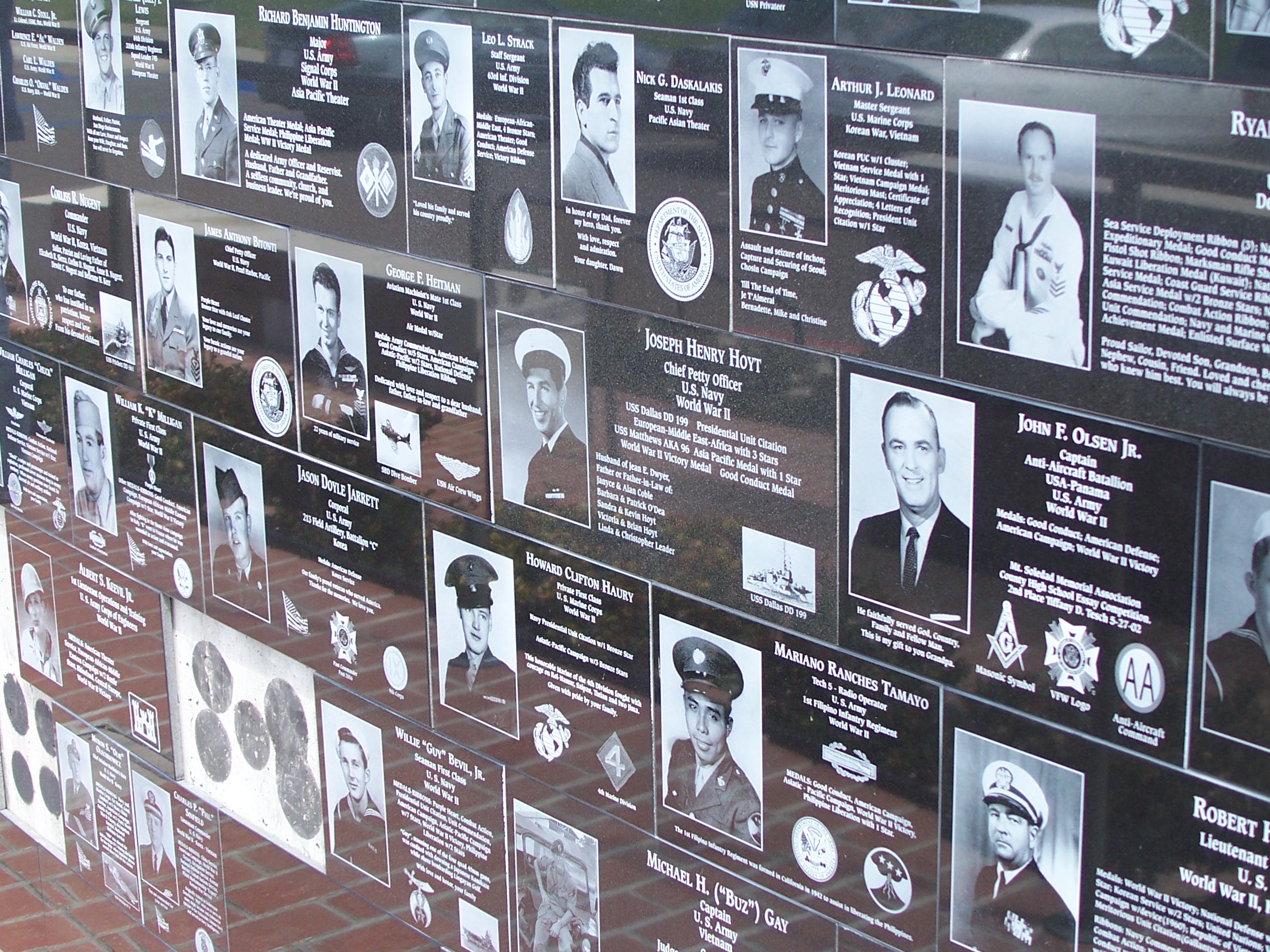
The memorial designation was the key argument: the cross, supporters maintained, was not primarily a religious symbol but a veterans memorial — the centerpiece of a site that also included six concentric walls with more than 3,000 granite plaques honoring individual veterans. Courts continued to evaluate the constitutional questions under federal law, and additional litigation followed the federal transfer. By 2015, the major litigation had concluded without requiring the cross's removal, though the legal questions it raised about the relationship between religious symbols and veterans memorials were not fully resolved by the outcome.
What the View Holds
The dispute over the Mount Soledad Cross was fundamentally a dispute about what it means for government to display a symbol — what message is sent, to whom, and whether that message is compatible with a constitutional order that is supposed to treat citizens of all faiths equally.
Those who wanted the cross removed were not anti-military. Paulson himself was a veteran. Their objection was to the exclusivity of the symbol — the way a Latin cross, placed on public land without accompanying symbols of other traditions, communicated that the government identified with one religious tradition rather than with the diversity of the people it governed. Those who wanted it kept argued that the memorial context transformed the cross into something universal — a monument to sacrifice rather than a profession of faith.
The cross remains on the summit of Mount Soledad. The view from it is unchanged: the Pacific stretching west, the city spreading east, the bay gleaming in the distance. The argument about what the cross means is part of the view now too.
From the Air
Mount Soledad is the highest point in the La Jolla area of San Diego, its cross visible from approaching aircraft and from the bay, rising above the surrounding residential neighborhoods.