Mount Takao: Where 2.5 Million Hikers Go to Find Tengu
There is a 500-year-old cedar on the slope of Mount Takao whose roots twist outward from the trunk like the legs of an octopus. The locals call it Takosugi -- the Octopus Cedar -- and hikers on Trail 1 pause beside it the way pilgrims pause at a roadside shrine. Mount Takao is full of moments like this, small revelations that seem improbable less than an hour from the center of Tokyo. The mountain stands only 599 meters tall, barely a foothill by alpine standards, yet it draws more than 2.5 million visitors a year. They come for the trails, the temple, the views of Mount Fuji, and the tengu -- the long-nosed supernatural guardians of Japanese folklore who are said to inhabit the forested slopes. Eight hiking trails fan out across the mountain, a funicular and a ropeway carry visitors partway up, and at the summit, on clear days, the white cone of Fuji appears to float above the western horizon.
Guardians with Long Noses
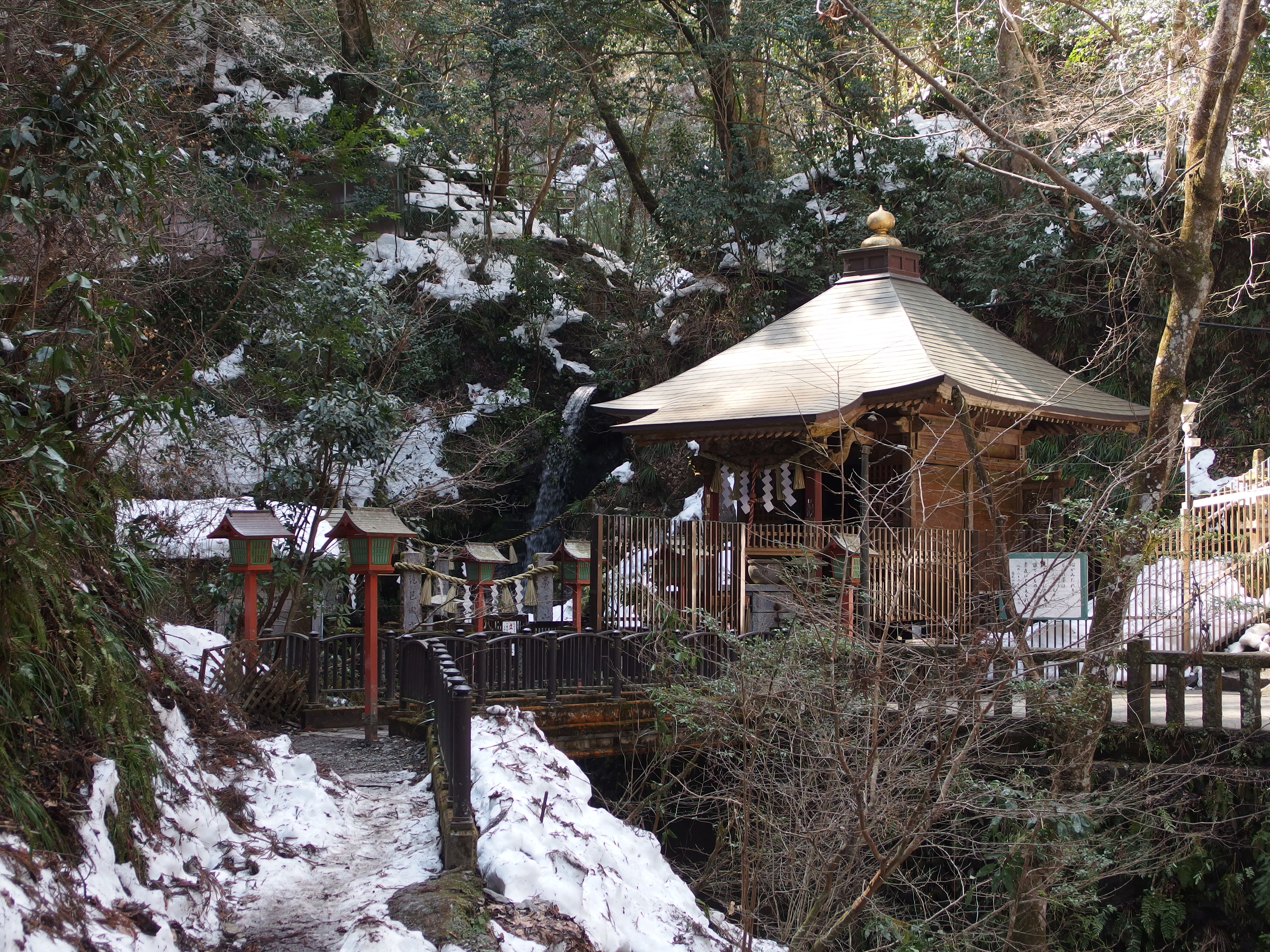
Mount Takao is tengu country. These supernatural creatures from Japanese folklore -- typically depicted with red faces and impossibly long noses -- are considered the mountain's protectors, and their images appear everywhere: carved into temple pillars, painted on ema prayer boards, cast in stone along the trails. The association runs deep. The mountain has been a center of Shugendo, the ancient practice of mountain asceticism, for centuries. Practitioners of Shugendo sought spiritual power through rigorous discipline in wild mountain settings, and Takao's forested slopes provided the perfect stage. The Shingon Buddhist temple Takaosan Yakuoin Yukiji sits partway up the mountain, drawing visitors who pray to the tengu for good fortune. Throughout the mountain, smaller shrines and statues appear among the trees -- some dedicated to Buddhist figures, but many honoring the tengu who, according to tradition, still watch over every trail.
Eight Trails Through Two Climate Zones
Mount Takao sits on the boundary between the warm-temperature and cool-temperature climate zones, a geographic accident that makes it extraordinarily biodiverse for a mountain barely taller than Tokyo Tower. More than 1,200 species of plants blanket its slopes, and wild boars and monkeys roam the forests. Trail 1 is paved and passes hundred-year-old cedars, three observation decks, a monkey park, and the Takosugi octopus cedar -- 37 meters tall with a circumference of about 19 feet, an estimated five centuries old. Trail 4 crosses a suspension bridge. Trail 6 follows a stream past the Biwa Falls. The Inariyama Trail takes an unpaved route all the way from base to summit. Past the peak, the network connects to the wider Chichibu Tama Kai National Park. For those who prefer to save their energy, the Takaotozan Railway runs a funicular and a ropeway to a midpoint station, leaving about a 30-minute walk to the summit.
A Mountain Between Seasons
The cherry blossoms arrive on Takao's slopes each spring, making it a popular hanami destination, though climate change has been nudging the bloom earlier -- by an average of 5.5 days over a 25-year study period, driven by warmer temperatures in February and March. Autumn brings the mountain's most dramatic transformation. Because of its position at the climate zone boundary, Mount Takao produces brilliant koyo autumn foliage, and the trails fill with leaf-watchers from across the Kanto region. Even at night the mountain has its audience: Trail 1 is lined with lanterns, and after-dark hikers make their way up to watch the city lights of Tokyo spread to the eastern horizon. At the base of the mountain, the Keio Takaosan Onsen Gokurakuyu offers hot-spring baths for hikers coming off the trail, and the 599 Museum focuses on the ecology of Takao's slopes.
The Long Trail and the Expressway
Mount Takao is the eastern starting point of the Tokai Nature Trail, a long-distance footpath that stretches all the way to Minoh, near Osaka. That a national trail begins at a Tokyo commuter station -- Takaosan-guchi on the Keio Takao Line, or Takao Station on the JR Chuo Line -- speaks to the mountain's unusual position as wilderness within a metropolis. That position was tested in 2012 when the Ken-O Expressway opened, its route requiring two tunnels drilled through the heart of the mountain. Conservationists had fought the project, worried about the impact on Takao's biodiversity. The expressway opened to traffic on March 28, 2012, and the long-term effects on the mountain's ecosystem remain a subject of ongoing study. For now, the tengu still guard their slopes, and the 2.5 million annual visitors keep coming.
From the Air
Located at 35.625°N, 139.244°E in western Tokyo (Hachioji). At 599 meters (1,965 feet), Mount Takao is a prominent terrain feature west of the Tokyo urban core. The forested summit contrasts sharply with the suburban development at its base. Yokota Air Base (RJTY) lies approximately 7 nautical miles to the north-northeast. Tokyo Narita (RJAA) is far to the east, while Tokyo Haneda (RJTT) is approximately 25 nautical miles to the east-southeast. On clear days, Mount Fuji is visible to the west from above Takao. Best viewed at 3,000-5,000 feet AGL to appreciate the mountain's position as the last green ridge before the Tokyo sprawl begins.