Mount Vernon Arsenal
Geronimo spent seven years here. Not in the arid canyons of the Southwest, but in the humid lowlands of southern Alabama, thirty miles inland from the Gulf of Mexico. The Mount Vernon Arsenal, established in 1828 as an ordnance manufacturing base near the Mobile River, has worn more identities than almost any military site in America. Ammunition plant, Confederate prize, federal barracks, Apache prison camp, and psychiatric hospital -- each chapter layered atop the last like sediment in the river bluffs nearby. Today the compound stands as one of the most complete antebellum arsenals surviving anywhere in the United States, its Greek Revival buildings holding stories that span the full arc of American conflict and consequence.
Powder and Shot on the Mobile
The arsenal took shape three miles west of old Fort Stoddert, perched on ground high enough to keep its powder dry but close enough to the Mobile River for supply boats to reach it. Congress authorized the facility under the Defense Infrastructure Act of 1828, and workers soon raised ordnance workshops and magazines in the restrained Greek Revival style common to military architecture of the period. For more than three decades, Mount Vernon operated as one of the U.S. Army's principal ammunition plants, its forges and assembly buildings turning out cartridges and shells that supplied garrisons across the Deep South. Along with the Kennebec Arsenal in Augusta, Maine, it ranks among the best-preserved examples of pre-Civil War military manufacturing in the country. The buildings themselves tell a story of careful federal investment in a region still being drawn into the national economy.
A Bloodless Seizure
On January 4, 1861, weeks before Alabama formally seceded, state militia troops arrived at the arsenal gates under orders from Governor Andrew B. Moore. The small U.S. Army garrison, commanded by Captain Jesse L. Reno, surrendered without a fight. The takeover was bloodless -- a tense handshake rather than a battle. Alabama soon turned the arsenal over to the Confederate Army, which used it as an ammunition production center until the strategic picture shifted. After the Battle of New Orleans in 1862, Confederate leaders recognized that a facility just thirty miles from the Gulf was dangerously exposed. They relocated munitions manufacturing upriver to Selma, a city shielded by distance from Union naval power. The arsenal sat quieter after that, its role diminished but its walls still flying the Confederate flag almost until the war's end.
Geronimo's Alabama Exile
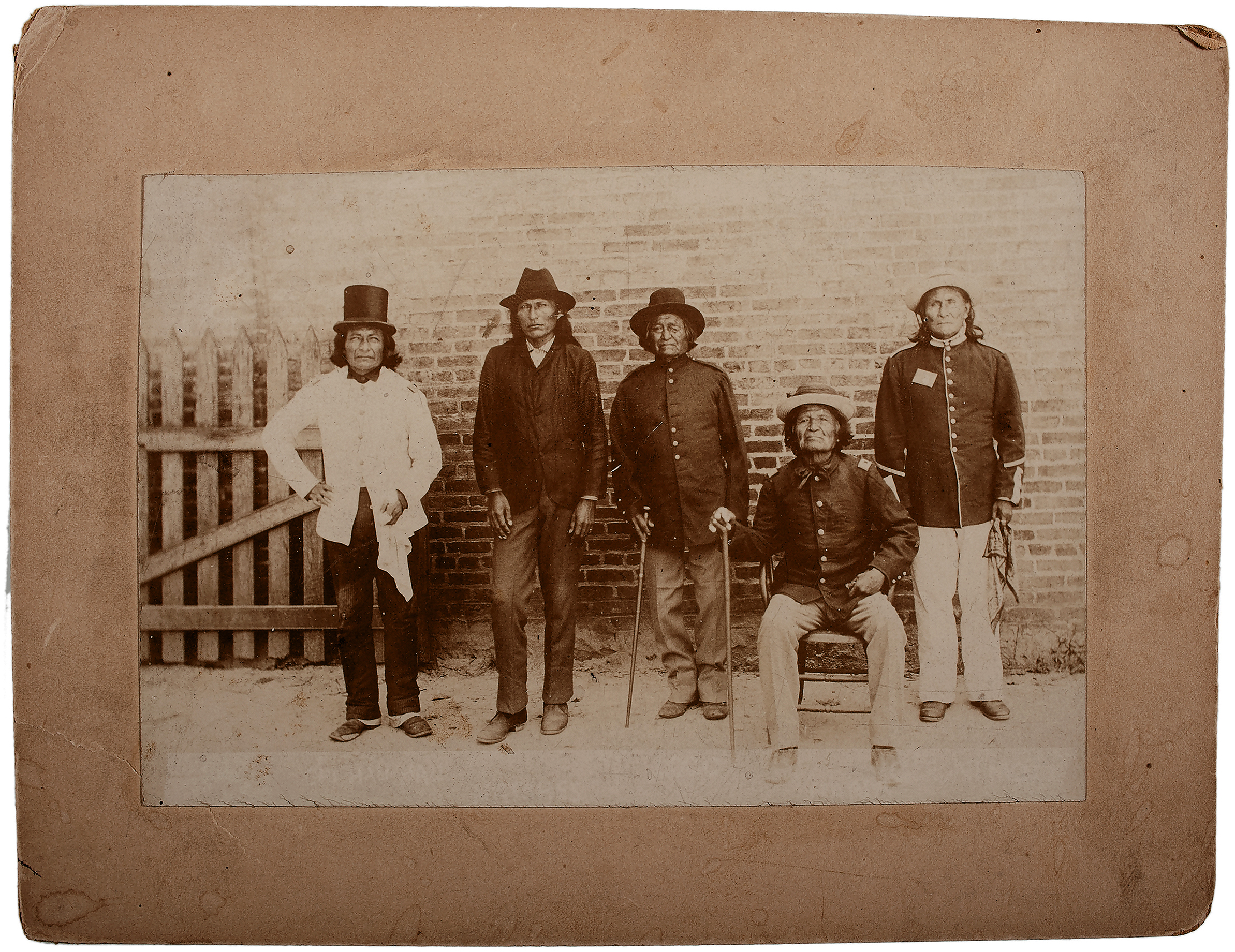
The strangest chapter began in 1887. After the federal government reclaimed the site and renamed it Mount Vernon Barracks, the compound became a prison for captured Apache people -- including the legendary war leader Geronimo and roughly 350 of his followers. Removed thousands of miles from their homeland in the arid Southwest, the Apache found themselves in Alabama's subtropical humidity, surrounded by dense pine forests and river bottoms that bore no resemblance to the landscapes they knew. Disease spread through the camp. The climate was punishing. The confinement lasted until 1894, when the prisoners were relocated to Fort Sill in Oklahoma. During this same period, a young Army physician named Walter Reed served as the post surgeon. Reed would later gain fame for confirming that yellow fever is transmitted by mosquitoes -- research that transformed tropical medicine. His time at Mount Vernon Barracks placed him at the intersection of military duty and scientific inquiry.
From Barracks to Asylum
In 1895, the federal government deeded the property to the state of Alabama, and the arsenal's final transformation began. The old military buildings were repurposed as Searcy Hospital, a state psychiatric facility that would operate on the grounds for over a century. The thick-walled magazines and officers' quarters, built to store gunpowder and house soldiers, took on an entirely different kind of confinement. Searcy Hospital eventually closed, but the physical fabric of the arsenal endured. The complex was listed on the National Register of Historic Places on May 26, 1988, as the Mount Vernon Arsenal-Searcy Hospital Complex -- a name that captures the site's layered identity. Walking the grounds today, the Greek Revival symmetry of the original buildings still reads as purposeful federal architecture, even as the surrounding landscape has softened into quiet Alabama countryside.
Layers That Refuse to Flatten
What makes Mount Vernon Arsenal remarkable is not any single event but the accumulation. A munitions factory becomes a Confederate trophy, then a federal prison camp, then a hospital for the mentally ill. Geronimo and Walter Reed walked the same paths. Confederate militiamen and Union officers stood in the same rooms a few years apart. Each era left its mark without erasing the one before. The site sits in the small town of Mount Vernon, Alabama, surrounded by the river-bottom forests and gentle terrain of Mobile County. From the air, it reads as a cluster of old buildings in a green clearing -- unremarkable until you know what happened there. And that is perhaps the most American thing about it: a place where history piled up quietly, far from the spotlight, each layer as consequential as the last.
From the Air
Located at 31.09N, 88.03W in Mount Vernon, Alabama, approximately 30 miles north of Mobile. The site sits near the Mobile River, three miles west of the former Fort Stoddert location. Nearest significant airport is Mobile Regional Airport (KMOB) roughly 25 nm to the south. From cruising altitude, look for the cluster of historic buildings along the river bluffs in the forested lowlands west of the Mobile River. The Mobile-Tensaw River Delta is visible to the east, and the Gulf of Mexico coastline lies to the south.