Mozu Tombs
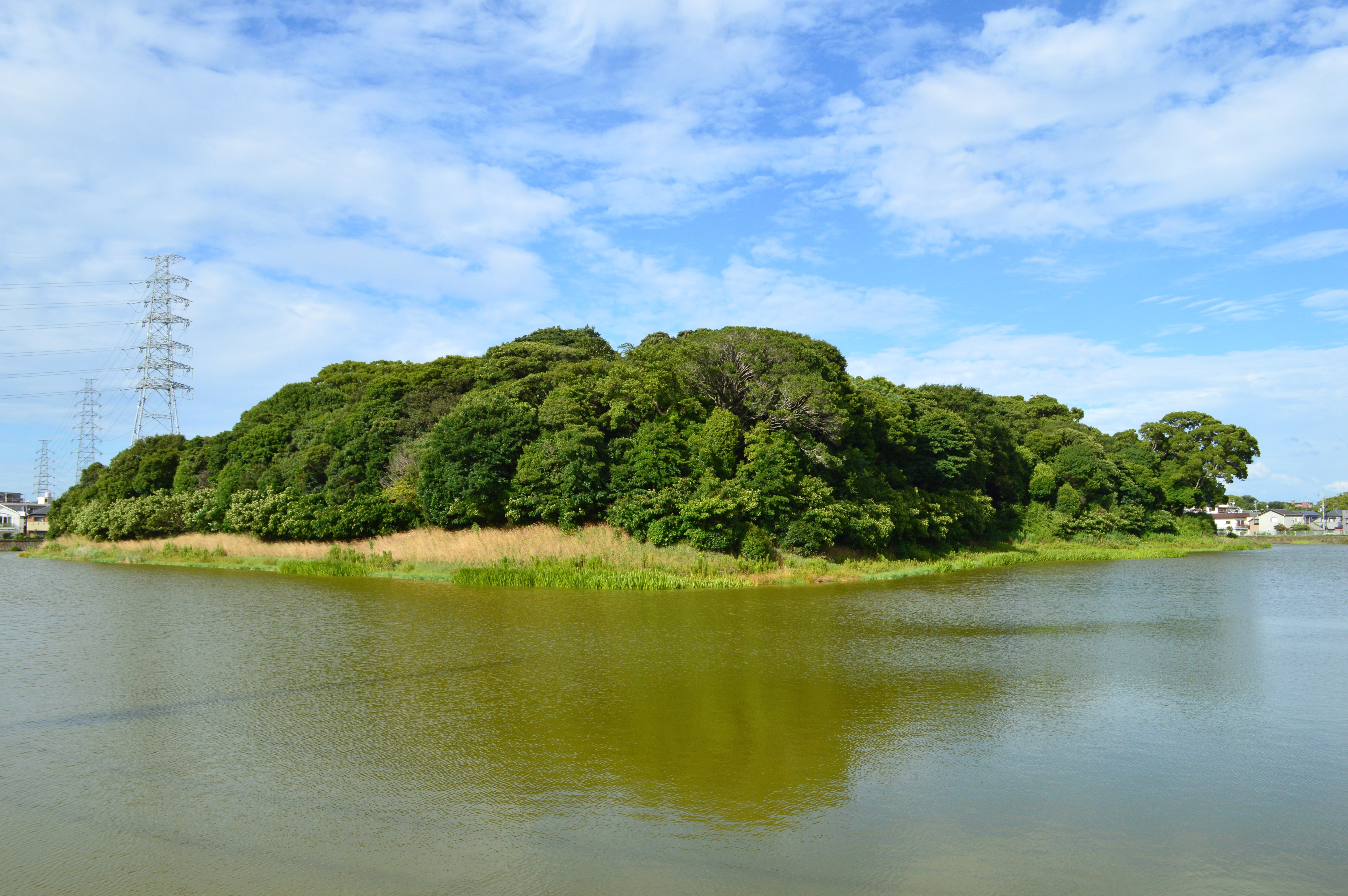
From the ground, it looks like a forested hill surrounded by calm moats in the middle of a busy Japanese city. From the air, the shape is unmistakable: a massive keyhole, 486 meters long, cut into the suburban fabric of Sakai like a lock waiting for a key that was buried in the fifth century. The Daisen Kofun is the largest tomb in Japan and one of the largest in the world, rivaling the Great Pyramid of Giza in footprint. It anchors the Mozu Kofun Cluster, a group of megalithic burial mounds that once numbered over a hundred and now stands as a UNESCO World Heritage Site -- a reminder that long before Osaka became a neon-lit commercial hub, this stretch of coastline belonged to emperors whose power was measured in earth moved and moats dug.
Tombs Shaped Like Keys to the Afterlife
The kofun -- literally 'old mounds' -- come in three shapes: round, square, and the distinctively Japanese keyhole form called zempo koenfun. The keyhole tombs represent the highest class, reserved for rulers whose status demanded not just a grave but a monument visible from the sea. The Daisen Kofun is enclosed by three concentric moats, its mound rising roughly 35 meters above the surrounding terrain. The inner moat alone stretches wide enough to have served as a defensive barrier. Smaller circular and square kofun cluster around it like courtiers attending a sovereign in death as they did in life. These range from modest mounds a few meters across to substantial tumuli with their own moats and burial goods. The variety of shapes and sizes reflects a rigid social hierarchy that governed death as strictly as it governed the living.
Twenty Years of Earth and Stone
Construction of the Daisen Kofun is believed to have taken approximately twenty years during the mid-fifth century, at the peak of the Kofun Period. More than 20,000 such tumuli were built across the Japanese archipelago between the late third and sixth centuries, but Sakai's cluster represented an extraordinary concentration of power and resources. The mounds were raised on a plateau overlooking Osaka Bay near the ancient coastline, distributed across roughly four kilometers in each direction. The plateau offered both visibility -- these tombs were meant to be seen by arriving seafarers -- and access to the materials needed for construction. The Imperial Household Agency attributes the Daisen Kofun to Emperor Nintoku, though archaeological confirmation remains elusive since the agency prohibits excavation of imperial tombs. This restriction means the largest tomb in Japan has never been properly studied from the inside.
Suburban Erosion
What postwar Japan's rapid development did to the Mozu Tombs amounts to archaeological tragedy. Of the original hundred-plus burial mounds, more than half were destroyed as residential neighborhoods expanded across the Sakai plateau after World War II. Houses and roads now sit where ancient graves once marked the landscape. The surviving kofun owe their existence partly to their sheer size -- it is harder to bulldoze a mound surrounded by three moats -- and partly to the Imperial Household Agency, which designated three as imperial mausoleums, two as tomb reference sites, and eighteen as ancillary mausoleums connected to the imperial tombs. These designations made them legally untouchable. The kofun that lacked such protection simply vanished under concrete and asphalt, a reminder that cultural heritage and real estate pressure are rarely comfortable neighbors.
World Heritage at Last
In 2010, Japan proposed the Mozu and neighboring Furuichi Kofun clusters for UNESCO World Heritage status. The nomination grouped both clusters together as the Mozu-Furuichi Kofun Group: Mounded Tombs of Ancient Japan. Nine years of review followed before the site was inscribed on July 6, 2019, under criteria recognizing the tombs as exceptional testimony to a cultural tradition and as outstanding examples of a type of construction that illustrates a significant period in human history. Today, the Daisen Kofun remains off-limits, its mound completely overgrown with vegetation, its moats home to fish and waterbirds. Visitors approach via a viewing platform on the south side, accessible from Mozu Station on the Hanwa Line, directly across from the Sakai City Museum. The museum offers models, aerial photographs, and context that the ground-level view cannot provide -- because these tombs were built for an audience that, fifteen hundred years ago, arrived by sea, and today arrives by air.
From the Air
Located at 34.564N, 135.487E in southern Osaka Prefecture, within the city of Sakai. The keyhole shape of the Daisen Kofun is strikingly visible from altitude -- look for the distinctive outline surrounded by three moats amid dense suburban development. The Furuichi Kofun Cluster lies approximately 10km to the east in Habikino and Fujiidera. Nearest major airport: Kansai International Airport (RJBB) approximately 20nm south across Osaka Bay. Osaka Itami (RJOO) lies approximately 15nm north. The area sits on low terrain overlooking Osaka Bay with generally good visibility except during summer haze and typhoon season.