Mpala
Father Isaac Moinet had a sense of humour about his new title. Writing to the departing Captain Emile Storms, the man who had ruled this stretch of Lake Tanganyika's western shore for two and a half years, Moinet signed himself "I, Moinet, Acting King of Mpala." The joke concealed a serious ambition. Cardinal Charles Lavigerie, founder of the White Fathers missionary society, dreamed of establishing a Christian kingdom in equatorial Africa -- a theocratic state that would halt the slave trade and anchor the Catholic faith in the continent's heart. Mpala, a small station at the mouth of the Lufuku River, was to be its capital. The kingdom lasted barely a decade before being absorbed into Leopold's Congo Free State. But what happened at Mpala between 1883 and 1893 -- the violence, the idealism, the betrayals, and the unlikely survival -- left marks that are still visible in the old fortified buildings standing on the lakeshore.
A Fort Built of Five Thousand Trees
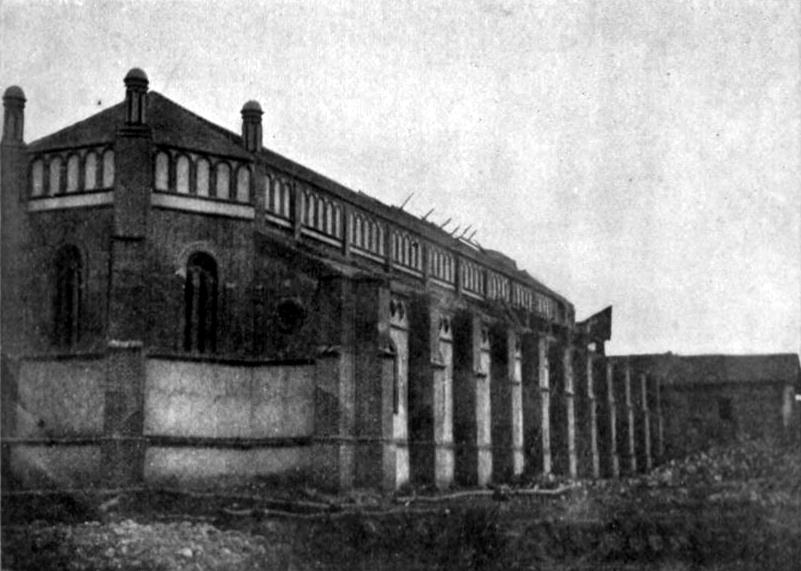
Captain Emile Storms of the International African Association laid the foundations of Mpala on 4 May 1883, on the western shore of Lake Tanganyika opposite the existing post at Karema. He named the station after the local chief who, on his deathbed, had told his people to obey the Europeans. Storms built a great square stockade thirty metres on each side, using five thousand trees. The walls were mudbrick, sixty centimetres thick, enclosing seventeen rooms around a covered courtyard. It burned to the ground on 19 May 1885 when dried thatch caught fire. Little was saved apart from the gunpowder. Before the fire, Storms had already fought and killed the powerful slaver Lusinga Iwa Ng'ombe -- a man the explorer Joseph Thomson called a "sanguinary potentate" -- and defeated the rival leader Kansawara. When the Berlin Conference assigned the eastern shore to Germany, King Leopold II turned to Lavigerie and the White Fathers to take over the western stations, and Storms, furious at being recalled, handed over his fort, his arms, his sailboat, and a garrison of askaris paid up for six months.
The Soldier Who Married into Mpala
The priests inherited territory extending a hundred kilometres along the lakeshore and twenty kilometres inland, along with the responsibility for defending it. They were not suited to the task. After leading a military expedition in which villages were burned and enslaved people captured, the missionaries recognized they needed a soldier. Captain Leopold Louis Joubert, a French volunteer, arrived in March 1887 with full civil and military authority. He was thrown immediately into combat with slave traders, fighting skirmishes that spring and again in August, November, and into the following year. His force of thirty men armed with rifles was barely adequate. In February 1888, Joubert married Agnes Atakaye, daughter of Kalembe from Mpala. They would have ten children, two of whom became priests. The marriage anchored Joubert to this place in a way that military orders never could. He lived on at nearby St Louis de Murumbi until 1910, and died at Moba in 1927 -- forty years after he first stepped ashore.
Besieged by Slavers, Abandoned by Allies
By 1889, the mission was cut off from the outside world. The Abushiri Revolt against the Germans in Bagamoyo and Dar es Salaam severed communications, and the slavers Rajabu and Rumaliza controlled nearly the entire western shore of the lake. Only Mpala and the Mrumbi plain held out. In 1890, Rumaliza launched a major assault from the lake itself, but was beaten back. A relief expedition under Captain Alphonse Jacques reached Mpala in October 1891 and fought pitched battles against the slavers, founding the fortress of Albertville in the process. The European press called these actions the "military adventures of Cardinal Lavigerie," and the volunteer Alexis Vrithoff died in combat in April 1892. The slave trade's grip on the region was not broken until Baron Francis Dhanis's expedition in 1893, after which the dream of a Christian kingdom dissolved into the reality of Leopold's Congo Free State.
Latin Grammar and Catfish
What endured at Mpala was not the kingdom but the school. Father Auguste Huys arrived in 1897 and founded the first junior seminary in the Congo, officially inaugurated on 3 January 1899 with six candidates. Father Joseph Weghsteen created a Latin-Swahili grammar and printed it on the mission press. The missionaries also controlled something the local people valued more than Latin: access to the ndjagali catfish that spawned in the Lufufo River each autumn. The fish were a delicacy and a staple, once caught communally and traded for salt and iron. The people believed the spirit Kaomba caused them to multiply. The missionaries recognized these beliefs, identified the river's sacred stretches, and then controlled access to them -- using the fish as food for themselves or rewards for the loyal. It was a pattern that repeated across colonial Africa: understanding local knowledge well enough to turn it into leverage.
What the Buildings Remember
Sleeping sickness struck Mpala in 1904. Seven of twenty-one missionaries died. The seminary was evacuated to a mission sixty kilometres inland. The missionaries built lazarets where the White Sisters tended the sick, and a sanctuary to the Blessed Virgin on a hill overlooking the plain, hoping for divine protection against an epidemic that faith alone could not stop. The disease reshaped the mission's geography, scattering its institutions across the interior. But Mpala persisted. In 1920, Father Tielemans launched the Catholic Scouting movement in the Congo with a group of Sea Scouts on the lake. The mission taught carpentry, masonry, and boat-making -- skills that gave graduates well-paid work in commercial enterprises. The old fortified buildings were still standing in 2005, and the architecture of the region today blends traditional materials with the rectangular Western forms the missionaries introduced. Composer and politician Joseph Kiwele was born here in 1912, carrying Mpala's improbable story into the country's cultural life.
From the Air
Located at 6.75S, 29.53E on the western shore of Lake Tanganyika in Tanganyika Province, Democratic Republic of the Congo. From altitude, the lake dominates the view -- roughly 650 km long and 72 km wide, the world's longest freshwater lake. Mpala sits at the mouth of the Lufuku River between Moba to the south and Kalemie to the north. The lakeshore settlement is visible against the green hills rising from the water's edge. Nearest significant airports are Kalemie Airport (FZRF) to the north and Moba Airport to the south. The eastern shore of the lake is Tanzanian territory.