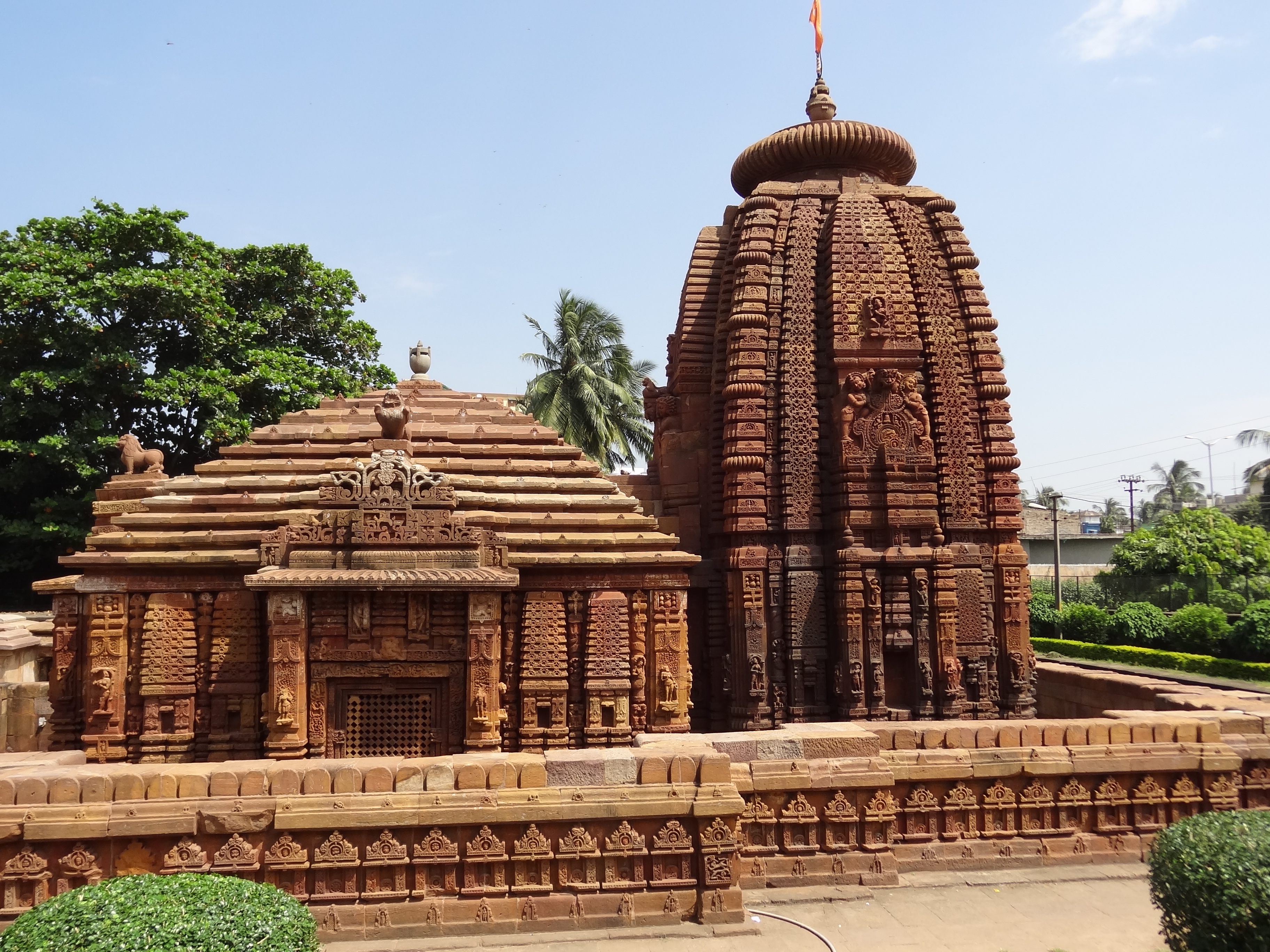
Mukteshvara Temple, Bhubaneswar
Every other temple in Bhubaneswar begins at a doorway. The Mukteshvara Temple begins at an arch. Sometime around 950 CE, the builders of this small Shiva temple did something no other temple architect in the region had done: they erected a torana, a freestanding arched gateway, as the entrance to the octagonal compound. The arch rises on thick pillars carved with strings of beads and smiling women in languorous repose, its curve decorated with scrollwork so fine it looks like it was drawn rather than chiseled. The torana shows the unmistakable influence of Buddhist architecture -- a surprising element in a Hindu temple, and one that makes the Mukteshvara unique among hundreds of shrines in a city that was once called the Temple City of India.
The Gem That Started a Century of Experiment
Scholars call the Mukteshvara the culmination and the beginning. It gathered everything the Kalingan temple builders had learned over the preceding centuries -- from the Parashurameshvara Temple's innovations in the 7th century through the evolving forms of the Somavamshi period -- and distilled it into a building so refined that it earned the title "Gem of Odisha Architecture." But the Mukteshvara was not an endpoint. Percy Brown dated its construction to approximately 950 CE, making it the earliest known work from the Somavamshi dynasty's architectural patronage. The experiments it introduced -- the pyramidal roof over the jagamohana, the octagonal enclosure wall, the pithadeula building type -- launched a century of innovation that would culminate in far larger temples like the Rajarani and the Lingaraja, both still standing in Bhubaneswar.
Red Sandstone, Fine Lines
The temple is small compared to the grand shrines that would follow it, but its surface density of carving is extraordinary. Red sandstone covers every face, and on that sandstone the sculptors carved lean sadhus in meditation alongside voluptuous women heavy with jewelry. The vimana -- the sanctum tower -- is square in plan, its shikara modest in height, with four Natarajas and four kirtimukhas (faces of glory) adorning its four sides. The images of the river goddesses Ganga and Yamuna flank the entrance, carved beside the fierce guardian figures Chanda and Prachanda. Miniature figures of Lakulisha appear throughout the structure in Chaitya arches, depicted in various mudras -- yoga, Bhumispara, vyakhyana -- with yogapattas tied to their knees and disciples gathered at their feet. The figure of Gajalakshmi and the planetary deities Rahu and Ketu also appear in the sculptural program.
Where Dancers Still Perform
Every year, the Odisha state government organizes the Mukteswar Dance Festival in the temple's courtyard, a three-day celebration of Odissi, the classical dance form native to the region. The choice of venue is not accidental. The temple's own walls are covered with images of dancers and musicians -- the sculptors who carved the Mukteshvara a thousand years ago were clearly fascinated by the performing arts, and the festival returns living dance to a space that has always depicted it in stone. Odissi musicians accompany the performances on the mardala, a barrel-shaped drum central to the tradition. The performances take place against the backdrop of the torana arch, the same carved gateway that has framed the temple's entrance for more than ten centuries. What was built as sacred architecture now functions as both shrine and stage.
A Bridge Between Traditions
The Mukteshvara sits at a crossing point in more ways than one. Its Buddhist-influenced torana within a Hindu temple compound reflects a period when religious boundaries in Odisha were more permeable than later centuries would allow. The temple also bridges the early Kalingan style -- compact sanctums with simple curvilinear towers -- and the more ambitious forms that would develop over the following century. Stand inside the octagonal compound and the intimate scale is striking; the entire enclosure feels like a courtyard rather than a temple precinct. The compound wall itself carries elaborate carvings, its octagonal shape unusual among temples that typically follow rectangular or square plans. The Mukteshvara was built on a raised platform in a lower basement amid a cluster of other temples, a modest footprint in a dense sacred landscape. Its influence, though, extended far beyond its walls -- the patterns first tested here would be replicated across Bhubaneswar for the next hundred years.
From the Air
Located at 20.242N, 85.852E in the Old Town area of Bhubaneswar, surrounded by a dense cluster of other historic temples. The nearest airport is Biju Patnaik Airport (VEBS), approximately 4 km to the northwest. From the air, the Old Town temple district appears as a concentration of stone structures amid urban development. The Mukteshvara itself is too small to identify individually from altitude, but the temple cluster is recognizable. The Bindusagar tank, a large rectangular water body nearby, serves as a useful visual reference point.