Munch Museum
On a Sunday morning in August 2004, two armed men walked into a museum in Oslo, ordered the guards to the floor, and snapped the security cables holding two paintings to the wall. Within minutes they were gone, carrying Edvard Munch's The Scream and Madonna into a waiting car. It took two years for police to recover the paintings, and the brazen daylight theft crystallized a problem that Oslo had been debating for decades: the city owned the largest collection of Munch's work on Earth, and it did not have a building worthy of protecting it.
A Gift from Beyond the Grave
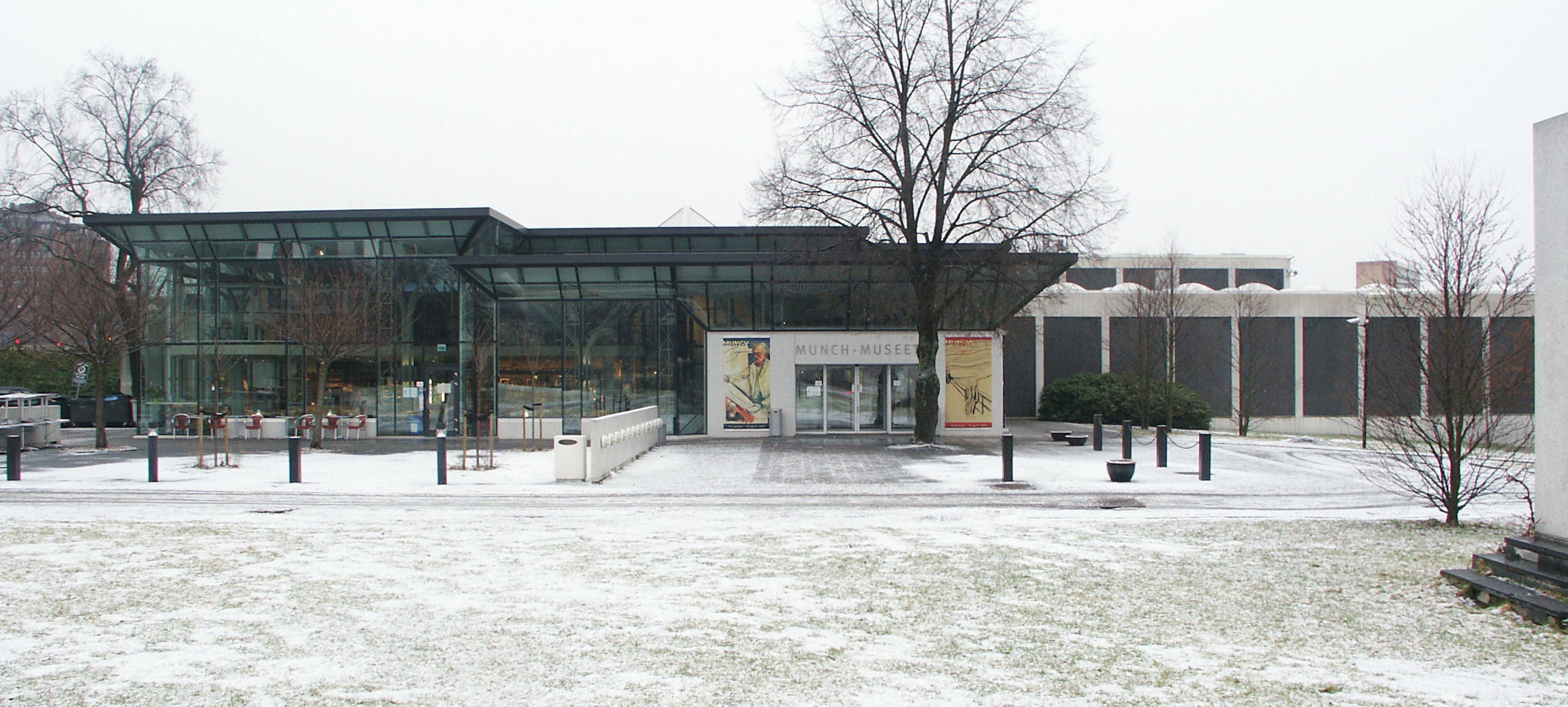
Edvard Munch died in 1944, leaving his entire artistic estate to the city of Oslo. The bequest was staggering: over 1,200 paintings, 18,000 prints, six sculptures, 500 printing plates, 2,240 books, and countless other items. It represented well over half of the artist's total lifetime output, including at least one copy of every print he ever made. The city financed a purpose-built museum from the profits of its municipal cinemas, and in 1963 -- what would have been Munch's 100th birthday -- the Munch Museum opened its doors in the working-class neighborhood of Toyen. The building, designed by architects Einar Myklebust and Gunnar Fougner, was functional but modest, a low-slung structure that gave little outward indication of the explosive art it contained.
The Heist That Changed Everything
The 2004 robbery was not the first time The Scream had been stolen. In 1994, a different version of the painting was taken from the National Gallery during the Winter Olympics in Lillehammer, and recovered three months later. But the Munch Museum theft was more violent and more public -- carried out at gunpoint, in broad daylight, in front of visitors. When The Scream and Madonna were recovered in August 2006, both had sustained damage. The incident sharpened the already contentious debate about whether Munch's collection deserved a new, purpose-built home. Critics pointed out that the Toyen building lacked adequate security, climate control, and exhibition space for a collection of this significance.
A Controversial New Home
In 2008, Oslo launched an international architecture competition for a new Munch Museum in Bjørvika, the rapidly developing waterfront district where the Oslo Opera House had recently opened. Spanish architect Juan Herreros won the competition in 2009. Then the project stalled. Before the 2011 local elections, the Oslo Progress Party withdrew its support on economic grounds, and the city council voted to kill the project entirely, proposing instead to improve the existing museum or fold the collection into the National Gallery. It took until May 2013 for the council to revive the plan, and construction did not begin until September 2015. The new building that eventually rose beside the Opera House sparked its own controversy -- critics derided its exterior as resembling a prison, and one widely quoted assessment branded it the world's largest collection of guard rails.
Thirteen Stories of Anguish and Color
Whatever visitors think of the architecture, the collection inside is beyond dispute. In the summer of 2021, 28,000 pieces of art were transported from Toyen to Bjørvika. King Harald V opened the new museum on October 22, 2021. Now marketed simply as MUNCH, the building rises thirteen stories above the waterfront, its upper floors leaning out over the harbor at a pronounced angle. Inside, the galleries move through the full sweep of Munch's career: from his early naturalism through the psychological intensity of works like The Scream, Anxiety, and Madonna, to the brighter, more experimental canvases of his later decades. The museum holds not just paintings but an extraordinary archive of Munch's working process -- the plates from which his prints were pulled, the books he read, the photographs he took. It is less a gallery than a complete record of one artist's inner life, made visible.
The Scream at Home
Munch created four versions of The Scream between 1893 and 1910 -- two paintings and two pastels. The museum holds the 1910 tempera-on-board painting, the version that was stolen in 2004 and later recovered. The other painted version, from 1893, resides at the National Museum across town. Together, Oslo possesses two of the most recognized images in Western art, both within a few kilometers of each other. For a city of fewer than 700,000 people, it is a remarkable concentration of cultural weight. Munch once wrote that he wanted his art to be a mirror in which viewers saw themselves. In its towering waterfront home, with the Oslofjord visible through the windows, that mirror now has a permanent frame.
From the Air
Located at 59.906N, 10.755E on the Bjørvika waterfront in central Oslo. The museum's distinctive leaning tower is easily visible from the air, rising thirteen stories beside the angular white roof of the Oslo Opera House. Both buildings sit on reclaimed waterfront land at the head of the Oslofjord. Nearest airport is Oslo Gardermoen (ENGM), approximately 48 km northeast. Approach from the south over the fjord for the most dramatic view of the waterfront cultural district. Recommended viewing altitude: 2,000-3,000 feet AGL.