Mundigak
Somewhere in the Afghan desert, a nine-meter mound of earth conceals a city older than the pyramids. When French archaeologist Jean Marie Casal began digging at Mundigak in 1951, he expected to find a village. What he uncovered instead was a sophisticated urban center with a columned palace, a monumental temple, and painted pottery that linked this remote corner of Kandahar Province to civilizations stretching from Turkmenistan to the Indus Valley. Mundigak had been a crossroads of the ancient world -- and then, around 2500 BCE, it simply vanished.
Five Thousand Years Beneath the Dust
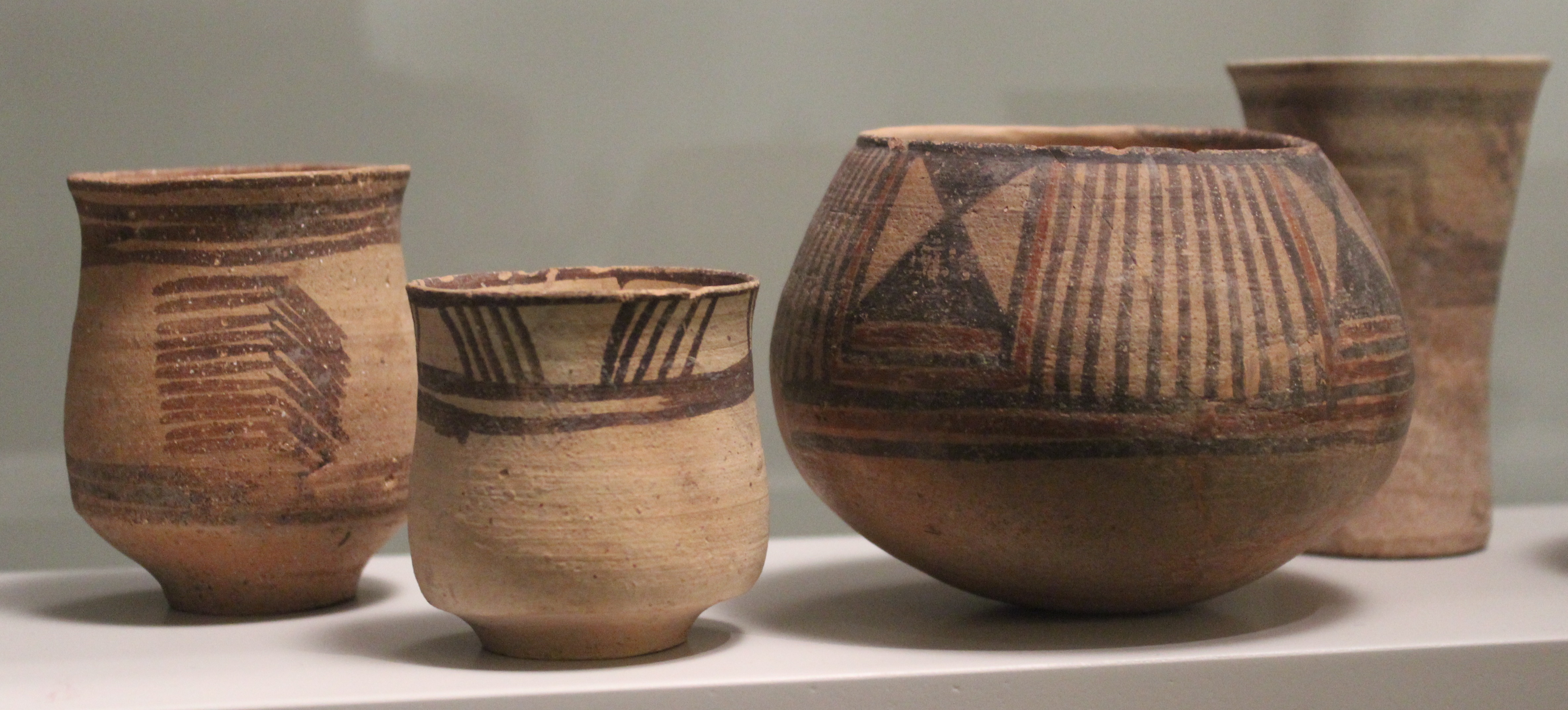
The story of Mundigak stretches across three millennia, from roughly the fifth millennium BCE to the first. The earliest inhabitants left behind simple rectangular adobe houses of one to three rooms, along with hand-painted pottery decorated with geometric patterns. These were not nomads but settled people, farming the upper drainage of the Kushk-i Nakhud River northwest of Kandahar. By the third millennium BCE, the settlement had grown into the second-largest center of the Helmand culture, covering 21 hectares. Only Shahr-i-Sokhta in eastern Iran, at 60 hectares, was larger. The pottery from this period tells a story of long-distance exchange -- styles matching those found in Turkmenistan, Baluchistan, and the early Harappan settlements of the Indus region, all appearing in the same archaeological layers. Mundigak was not isolated. It was a node in a network of Bronze Age trade that spanned half a continent.
A Palace on the Hill
The most dramatic finds came from Period IV, roughly the mid-third millennium BCE, when Mundigak transformed from a large town into something recognizably urban. On the highest point of the site, a mound the excavators called Hill A, Casal's team uncovered the remains of a palace complex. Older houses had been deliberately leveled to create a platform for the building, a sign of centralized authority capable of reshaping the landscape to suit its ambitions. The north facade was adorned with a row of pilasters -- architectural columns embedded in the wall -- that had been stuccoed and painted white, then topped with a decorative tile strip. Some of these pilasters still stood two meters tall when the excavators reached them, preserved beneath centuries of accumulated earth. Inside lay a courtyard surrounded by rooms, their exact purposes lost to time. Whether this was a royal residence or a public administrative building remains debated, but the scale and ornamentation leave no doubt: Mundigak had a ruling class, and it wanted that fact visible.
Temple, Walls, and the Shape of a City
About 200 meters east of the palace stood a monumental structure that Casal identified as a temple. Built on virgin soil atop a low artificial hill roughly 2.5 meters high, it featured massive exterior walls reinforced with triangular buttresses -- a construction technique suggesting the builders understood both structural engineering and architectural spectacle. Stone foundations supported the mud-brick walls above. Inside, a courtyard enclosed the temple proper. Farther south, another public building centered on a courtyard with a large water basin. The residential city spread around these monuments, dense with small houses of two or three rooms, enclosed by a double wall system that may have served as a city fortification. A corner tower with four interior chambers suggests defensive capability. This was not a ceremonial center surrounded by huts; it was a functioning city with districts, infrastructure, and hierarchy.
Artifacts from a Vanished World
The objects pulled from Mundigak now sit in the National Museum in Kabul and the Musee Guimet in Paris. They include terracotta figurines of women and men, ceramic cattle, polychrome pottery painted with rows of animals and plants, stone seals with geometric patterns, bronze tools and weapons, and spinning whorls that attest to a textile industry. One find stands above the rest: a limestone head of a man with heavily stylized eyes and eyebrows, short hair, and a headband trailing two strips of fabric down the back. It is the only object from Mundigak that art historians classify as sculpture in the full sense. Similar kneeling figures have been found at Shahr-i-Sokhta and in the Indus Valley -- suggesting a shared iconographic tradition across these distant cultures. Perhaps most unexpectedly, two ceramic vessels with sliding lids appear to be mouse traps, predating similar devices found at Mohenjo-Daro by several centuries.
The City That Walked Away
After 2500 BCE, Mundigak's urban life collapsed. The grand buildings of Period V -- including a massive new structure erected atop the old palace ruins -- were the last monumental construction. Then the city emptied. Period VI left behind only fireplaces and scattered ceramics, which the excavators attributed to nomadic encampments. By Period VII, probably in the first millennium BCE, the site held nothing more than agricultural storehouses. The population appears to have abandoned settled life entirely and turned to nomadism, a pattern observed at contemporary sites across Afghanistan and the Indus region. What caused the collapse remains unclear. Unlike many ancient cities, Mundigak shows no evidence of violent destruction. The people simply left, and the desert reclaimed what they had built over three thousand years. Today, the mound rises from the flat terrain northwest of Kandahar, unremarkable from the air -- unless you know that beneath it lies one of Central Asia's oldest cities.
From the Air
Located at 31.65N, 65.25E, approximately 55 km northwest of Kandahar in the upper Kushk-i Nakhud River drainage. The site appears as a low mound on otherwise flat desert terrain. Fly at 2,000-4,000 feet AGL for the best perspective -- the nine-meter mound is subtle from higher altitudes. Kandahar International Airport (OAKN) is the nearest major airfield. The terrain is arid and largely featureless, so navigate by following the river drainage northwest from Kandahar.