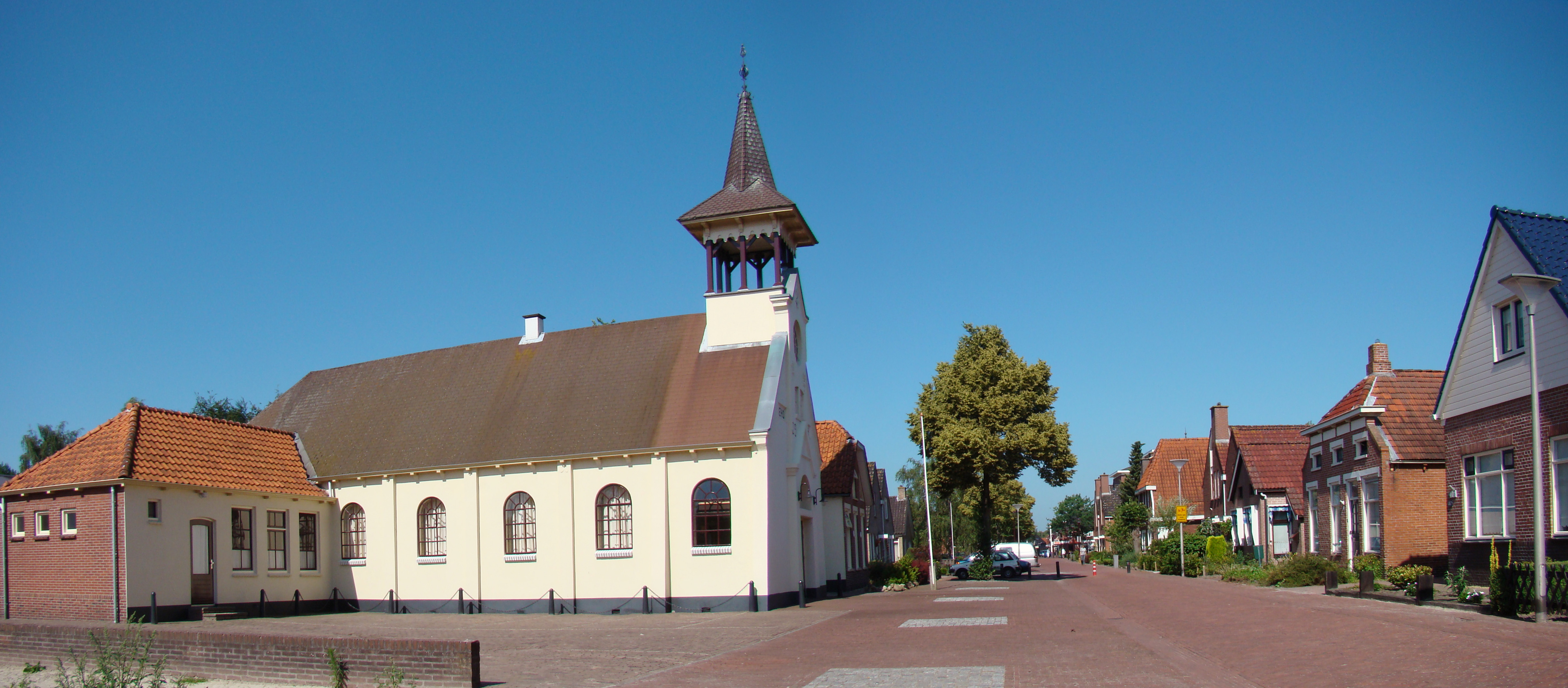
Muntendam
For a long time, the village of Muntendam called itself the reddest municipality in the Netherlands. The label had nothing to do with paint or sunsets. It described an eleven-seat council where seven members were Labour and two were Communist - a parliamentary blush that, by Dutch standards, was practically scarlet. Nearby Reiderland might have been redder still, but Muntendam liked the title and held onto it.
Politics in a Peat Village
Muntendam sits a few kilometres north of Veendam, in the long stretch of peat colonies that defined eastern Groningen's economy for centuries. Cutting peat, drying peat, shipping peat - it was hard, wet, year-round work, and the men and women who did it tended to vote for parties that promised them a better deal. The Communist Party of the Netherlands and the Labour Party (PvdA) both built deep roots here. By 1980, the council reflected that history almost perfectly: a working-class village solidly aligned with the working-class left. Mayors of Muntendam had, by long tradition, come from Labour.
The Wiegel Decision
Then came the unfortunate matter of how Dutch mayors got appointed. In 1980, municipalities had no real say. The choice belonged to the Minister of the Interior. That minister happened to be Hans Wiegel of the VVD, a charismatic and intensely conservative liberal who had spent his career sparring with the left. Wiegel looked at this red corner of Groningen and decided it needed a change. He sent Muntendam a mayor from D66 - a centrist, progressive-liberal party, but emphatically not Labour. The village did not take the news warmly. For the first time in modern Dutch memory, a mayor was denied a formal installation. The council refused to inaugurate him.
An Unlikely Affection
What happened next surprised everyone. The mayor showed up anyway. He did the work. He listened. Over months, then years, the icy reception thawed. People started to like him. When the time came for him to leave for a larger municipality, the village mounted a campaign to keep him - a small, doomed effort that nevertheless said something about how thoroughly opinion had turned. Politics, in Muntendam, turned out to be less about the party badge than about whether the man behind it would actually pay attention to the place.
The Quiet Reform That Followed
The whole affair embarrassed The Hague enough that the system was reformed soon after. Municipalities now submit a formal preference; ministers usually honour it. The era when a national minister could simply post a stranger into a town's highest office, and dare the council to object, is gone. Muntendam played a small but pointed role in that change. The village merged into the larger municipality of Menterwolde in 1990, and then again into Midden-Groningen in 2018 - administrative scales that swallowed the old red identity but did not quite erase it.
What's Here Now
Today Muntendam has about 4,600 residents and the unhurried look of any well-kept Groningen village: a Protestant church, the old town hall standing as a memory of independent self-rule, brick rowhouses with neat front gardens, the bus from Winschoten coming through once an hour. The N33 expressway is close by. The land is as flat as anywhere in Groningen, and the streets carry names like Egypteneinde - Egypt's End - which is the kind of poetic Groningen oddity that history occasionally throws up without explanation. The reddest village in the country has, in most respects, faded to ordinary. Which is, perhaps, what its residents wanted all along.
From the Air
Coordinates 53.13°N, 6.87°E. A few kilometres north of Veendam, sitting just west of the N33 expressway. From 3,000-5,000 ft you'll see a typical Groningen peat-colony ribbon village - a long, narrow strip of houses along the old canal axis, with farmland on both sides. Nearest airport: Groningen Airport Eelde (EHGG, 30 km west-southwest). Visual landmarks: the spire of the Protestant church, the green corridor of the Muntendammerdiep canal, and the larger Veendam built-up area immediately to the south.