Murakami Castle: The Fortress That Would Not Fall
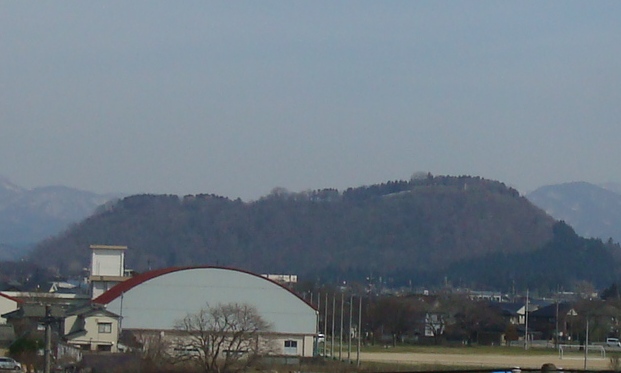
Honjo Shigenaga revolted twice and was pardoned twice. That fact alone tells you something about Murakami Castle -- the fortress atop Mount Gagyu was simply too valuable to destroy and its commander too dangerous to ignore. Perched on a 135-meter peak at the northern edge of the Echigo Plain, the castle guarded the only viable route between Echigo Province and Dewa to the north. Whoever held this isolated hilltop controlled the passage. Over four centuries, the castle passed through the hands of the Honjo, Murakami, Hori, Honda, Matsudaira, Sakakibara, Manabe, and Naito clans -- seven families and one constant: the mountain itself, watching the Miomote River empty into the Sea of Japan from a position no army could easily take.
The General Who Rebelled Twice
The Honjo clan, a cadet branch of the Taira, had seized this corner of northern Echigo during the Kamakura period and fortified Mount Gagyu with earthen ditches and wooden palisades in the early sixteenth century. When Honjo Shigenaga reunited the fractious clan around 1540, he caught the attention of Uesugi Kenshin, the warlord consolidating power across southern Echigo. Kenshin forced Shigenaga to submit and then put him to use -- Shigenaga fought at the Battle of Kawanakajima against Takeda Shingen and captured Sano Castle during a 1563 campaign against the Odawara Hojo, earning a ranking as second among Kenshin's generals. But Shigenaga was dissatisfied with his rewards. In 1568, encouraged by Takeda Shingen, he revolted. Kenshin laid siege to Murakami Castle and could not take it. Shigenaga surrendered in 1569 and was pardoned. Ten years later, backed by Oda Nobunaga, he revolted again. Another bloody siege, another surrender, another pardon. The mountain held every time.
Stone Walls and Seven Clans
After Uesugi Kagekatsu was transferred to Aizu by Toyotomi Hideyoshi in 1598, the castle was awarded to Murakami Yorikatsu, who transformed it from a medieval earthwork into a proper stone-walled fortress and gave it the name it still carries. The Hori clan followed in 1618, adding a three-story tenshu -- the main keep -- and rebuilding the surrounding town into the jokamachi (castle town) that would grow into the modern city of Murakami. Under the Tokugawa shogunate, the castle changed hands with striking frequency: the Honda in 1643, a Matsudaira branch in 1649 who rebuilt the tenshu and added yagura watchtowers, the Sakakibara in 1667, the Honda again in 1704, the Matsudaira again in 1710, the Manabe in 1717, and finally the Naito clan, who held on until 1868. In 1667, lightning struck the castle and destroyed most of its buildings. The tenshu and yagura were never rebuilt, leaving the stone ramparts to stand alone on the summit.
The Boshin War and Dismantlement
When Japan fractured during the Boshin War of 1868, the samurai of Murakami Domain were divided between loyalty to the Tokugawa shogunate and support for imperial restoration. The domain ultimately joined the pro-Tokugawa Ouetsu Reppan Domei -- the alliance of northern domains resisting the new Meiji government. The castle's strategic position at the gateway to Dewa Province made it a military target, and imperial forces attacked and destroyed what remained. What the armies did not finish, the townspeople completed during the Meiji period. The stone ramparts -- carefully fitted blocks that had held the mountain's shape for centuries -- were dismantled and sold as building materials. The castle that had survived two revolts, a lightning fire, and a civil war was undone by commerce.
Samurai Descendants Stand Guard
Fearing that every trace of the castle would vanish, descendants of former Murakami domain samurai formed a preservation society and petitioned for official protection. In 1960, the ruins received status as a Niigata Prefectural Historic Monument. In 1993, the site was elevated to a National Historic Site. In 2017, it was named one of the Continued Top 100 Japanese Castles. Today, the stone walls of the inner bailey still follow the original contours of Mount Gagyu's summit, their masugata gate -- a defensive box-gate design -- still framing the approach. The castle's layout is readable on the ridgeline: the inner bailey at the top, a beak-shaped terrace extending northward to a narrow secondary bailey, and a third bailey in the saddle of the ridge once used for drilling troops. The total site exceeded five hundred square meters, making it the second-largest castle in Echigo Province after Kasugayama Castle. The tenshu is gone, the yagura are gone, but the mountain and its stone bones remain.
From the Air
Murakami Castle ruins sit at 38.22N, 139.49E atop Mount Gagyu, a 135-meter isolated peak in the center of modern Murakami city, northern Niigata Prefecture. The hill is visible from altitude as a forested mound rising above the flat coastal plain near the mouth of the Miomote River. The Sea of Japan coastline is immediately to the west. The nearest major airport is Niigata Airport (RJSN), approximately 70 km to the south. The ruins are about 30 minutes on foot from Murakami Station on the JR East Uetsu Line. Best viewed at 2,000-4,000 feet AGL approaching from the west over the Sea of Japan, where the castle hill stands in relief against the Echigo Plain and the mountains beyond.