Murder of Ahmaud Arbery
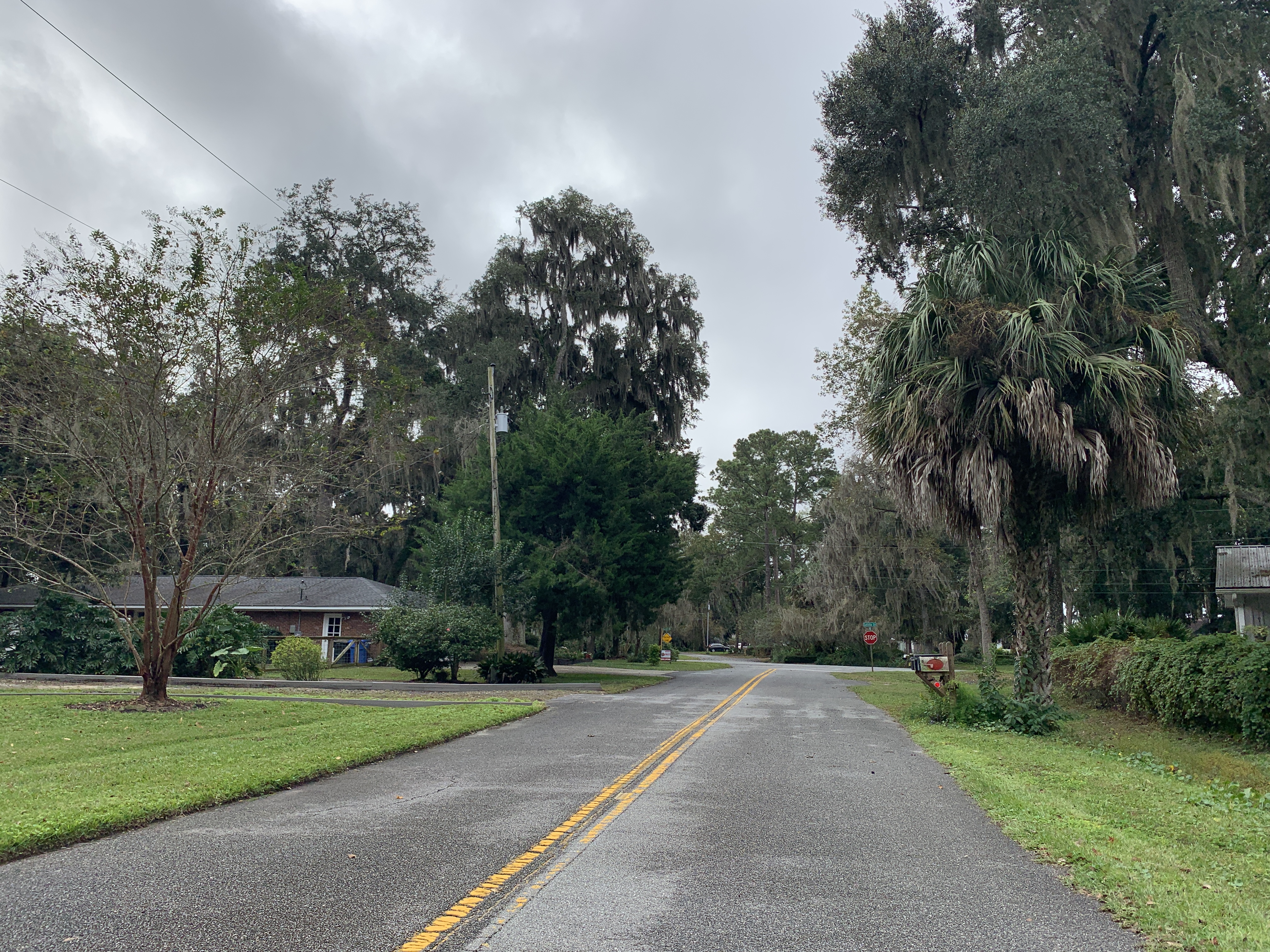
Satilla Shores looks like any number of subdivisions along coastal Georgia -- ranch houses set back from the road, live oaks shading the yards, pickup trucks in the driveways. On February 23, 2020, a 25-year-old man named Ahmaud Arbery was jogging through this neighborhood, something he did regularly. He had paused briefly at a house under construction, an open-framed building with no doors or windows that neighbors had wandered through on multiple occasions. Within minutes, two pickup trucks were pursuing him. Five minutes later, he was dead. What followed -- 74 days without an arrest, a leaked video that shocked the nation, and a trial that laid bare the mechanics of racial assumption -- would turn this unremarkable stretch of road into a landmark in the ongoing American reckoning with racial violence.
The Chase on Holmes Road
Ahmaud Arbery grew up in Fancy Bluff, a traditionally Black neighborhood just across U.S. Route 17 from Satilla Shores. He graduated from Brunswick High School in 2012, where he was a football star known for his speed and agility as a linebacker. On that February afternoon, a neighbor saw Arbery walk through a house under construction and called the non-emergency police number. He chose not to call 911 because, as he later testified, he did not see an emergency. But Gregory McMichael, a 64-year-old former police officer and prosecutor's investigator, saw Arbery running past his yard and grabbed a .357 Magnum revolver. His son Travis took a shotgun. They climbed into their pickup truck and gave chase. A neighbor, William Bryan, saw the pursuit from his driveway, got into his own truck, and joined in. For five minutes, two vehicles pursued Arbery through the residential streets, using their trucks to cut off his escape routes. Bryan later admitted he tried to corner Arbery with his vehicle five times. Arbery, exhausted from running, encountered Travis McMichael standing in the road with a shotgun pointed at him. Travis fired three times. Arbery collapsed in the street.
Seventy-Four Days of Silence
No arrests were made that afternoon. The case fell first to Brunswick District Attorney Jackie Johnson, who recused herself because Gregory McMichael had worked as an investigator in her office. Two Glynn County commissioners later accused Johnson of directing police not to arrest the McMichaels to protect her former colleague. The case transferred to Waycross District Attorney George Barnhill, who told police the day after the shooting -- before he was even officially assigned -- that it was justifiable homicide. Barnhill cited Georgia's Civil War-era citizen's arrest law as legal cover, claiming the McMichaels were within their rights to chase a burglary suspect. He wrote a memorandum recommending no arrests, despite the fact that surveillance cameras showed Arbery never took anything from the construction site and the property owner had told police Arbery had never stolen from his property. For 74 days, nothing happened. Then Bryan's cellphone video of the shooting was provided to a local radio station. On May 5, 2020, the video went public. Within 36 hours, the Georgia Bureau of Investigation found probable cause and arrested the McMichaels.
The Reckoning in the Courtroom
The state trial began in October 2021 in the Glynn County Superior Court in Brunswick. Every local judge had recused from the case. Testimony revealed the full scope of what happened: Bryan told police at the scene he was not sure if Arbery had done anything wrong. Gregory McMichael described cornering Arbery "like a rat." Travis McMichael testified that until the moment he raised his shotgun, Arbery had never threatened him or displayed any weapon. The prosecution's case was direct: the defendants had no immediate knowledge of any crime, and Arbery -- unarmed, without even a cell phone -- had run from them for five minutes. On November 24, 2021, all three men were convicted. Travis McMichael was found guilty of malice murder. Both McMichaels received life without parole; Bryan received life with parole eligibility after 30 years. A federal trial followed in February 2022, where FBI testimony revealed extensive racist language in the defendants' messages and social media. All three were convicted of federal hate crimes. Their appeals were denied in November 2025.
Laws Rewritten
Arbery's murder prompted a fundamental reexamination of Georgia law. The state's citizen's arrest statute, which dated to the Civil War era and had been cited by Barnhill as justification for the pursuit, was repealed by the Georgia legislature with bipartisan support and signed by Governor Brian Kemp on May 10, 2021. The replacement law narrowly limited arrest authority to licensed security professionals and specific commercial situations. Georgia also passed a hate crimes law, becoming one of the last states to enact such legislation. The law requires enhanced sentencing for crimes motivated by race, religion, sexual orientation, gender, or disability. Former District Attorney Jackie Johnson was indicted on charges of violating her oath of office and obstruction for her handling of the case, though both charges were ultimately dismissed in February 2025. On February 2, 2022, the Georgia General Assembly designated February 23 as Ahmaud Arbery Day, encouraging Georgians to run 2.23 miles on that date each year to advocate for racial justice.
The Road Where Maud Ran
The streets of Satilla Shores still look the way they did on that February afternoon. The house that was under construction has long since been completed. But on what would have been Arbery's 26th birthday, May 8, 2020, thousands of people across the country ran 2.23 miles and posted their efforts to social media with the hashtag #IRunWithMaud. In Brunswick, city officials designated a stretch of Albany Street as Honorary Ahmaud Arbery Street. The case became a catalyst alongside the murders of George Floyd and Breonna Taylor in the national movement against racial violence in 2020. Arbery's family attorney Benjamin Crump said after the verdict: "Today certainly indicates progress, but we are nowhere close to the finish line. Keep marching. Keep fighting for what is right. And never stop running for Ahmaud."
From the Air
Located at 31.124N, 81.556W in the Satilla Shores neighborhood near Brunswick, Georgia. The area is a residential subdivision visible as a grid of streets between U.S. Route 17 and the marshes along the Turtle River. Nearest airports: Brunswick Golden Isles Airport (KBQK, 4nm north), McKinnon St. Simons Island Airport (KSSI, 7nm east). Best viewed at 2,000-3,000 feet AGL. The neighborhood sits on the western edge of the coastal marsh system, with the distinctive U.S. 17 causeway visible as a straight line running north-south nearby.
Sources
- Murder of Ahmaud Arbery - Wikipedia
- Ahmaud Arbery killers sentenced - NBC News
- Georgia Repeals Citizen's Arrest Law - NPR
- Jackie Johnson case dismissed - NPR
- Appeals court upholds hate crime convictions - CNN
- Ahmaud Arbery Day - Georgia General Assembly resolution
- Ahmaud Arbery biography and Brunswick High School