Murder of Gabriel Kisch
The first body parts surfaced in the waters around central Stockholm in November 1998. Then more appeared. Forensic examiners noted something unusual: the head had been exposed to extreme heat. When investigators finally matched a round imprint in a roasting pan to the severed neck bone, measured to the millimeter, they understood they were dealing with a killer who had planned meticulously. The victim was 81-year-old Gabriel Kisch, a Romanian-born widower. The prime suspect was his wife Maria, who had already fled Sweden. What followed became one of the country's most scrutinized criminal cases, culminating in the first life sentence ever given to a woman in Sweden for a dismemberment homicide.
Two Lives Seeking Escape
Maria had grown up in poverty outside Timisoara, Romania, under the Ceausescu dictatorship. Trained as an electrical engineer, she worked in an industrial plant, married, had a daughter, and divorced. Even after communism fell in 1989, hardship persisted. Gabriel Kisch represented another path. Wealthy, stable, a fellow Romanian who had built a life in Sweden. They were introduced in autumn 1995, when he was 78 and she was 42. After a year of correspondence and visits, they married in January 1997. By April 1998, Maria had navigated the paperwork and permits to join Gabriel in his two-room apartment at Sjosavagen 24 in Bandhagen, a quiet Stockholm suburb. Six months later, Gabriel was dead.
The Apartment Speaks
Police searched the apartment the same evening the first body parts were found. Maria had already left the country. What investigators discovered told its own story. The bathroom had been scrubbed with chemical agents in a manner no experienced plumber had ever witnessed, the bathtub drain and waste pipes cleaned with obsessive thoroughness. A kitchen knife with a 195mm blade yielded Gabriel's blood hidden beneath the fixed plastic handle. On the balcony sat plastic bags identical to those wrapping the body parts. Gabriel's son recalled giving his father a meat saw from a hardware store as a Christmas gift. Investigators ordered an identical blade from Germany and matched its tooth pattern precisely to cut marks on the spine. The roasting pan imprint that matched the neck bone completed the picture. The murder and dismemberment had occurred exactly where Gabriel had lived.
Justice Twice Attempted
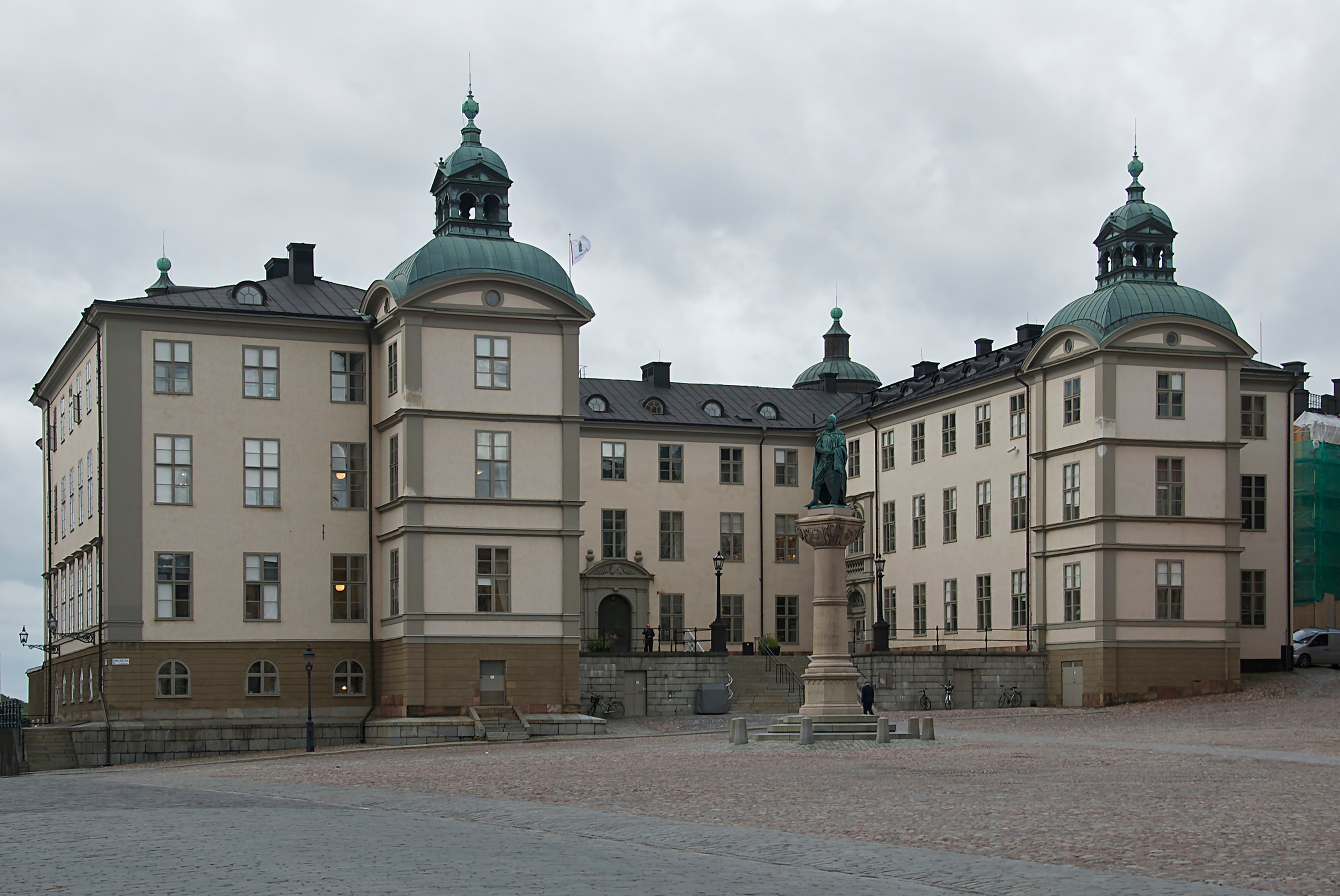
Maria's trial at Stockholm District Court ended in unexpected acquittal on October 4, 1999. The prosecutor appealed within three days, arguing the court had failed to evaluate the totality of evidence. Between trials, the Legal Council questioned whether dismemberment necessarily indicated murder, while Maria maintained her husband had simply left to travel to Aland on the morning the body parts appeared. The appellate court took a different view. A psychiatric evaluation confirmed she could stand trial. On March 29, 2000, the Svea Court of Appeal delivered its verdict: life imprisonment and permanent expulsion from Sweden. The court cited brutal violence before death, the victim's vulnerability, evidence of sadistic elements, the heated head, the impossibly clean drains, and witness testimony of a woman matching Maria's description throwing something into the waters of Riddarfjarden.
A Case That Endures
Maria Kisch served part of her sentence in Sweden before being transferred to Romania, where she was released early. Gabriel's family members criticized the decision. But the case itself refused to fade. Swedish television revisited it in 2015 on Veckans brott, then again in 2017, 2019, and 2020 on various programs. Podcasts including Fallen jag aldrig glommer and Scandinavian Crimes examined the evidence anew. The apartment in Bandhagen, the waters around central Stockholm, the Svea Court of Appeal all became landmarks in Swedish true crime memory. The case raised lasting questions about circumstantial evidence, forensic interpretation, and the challenges of prosecution without eyewitnesses. It demonstrated that meticulous cleaning can become evidence itself, and that some imprints, measured to the millimeter, speak louder than confessions.
From the Air
Located at 59.27N, 18.04E in Bandhagen, a residential suburb in southern Stockholm. The area is characterized by mid-rise apartment blocks typical of Swedish postwar housing. Central Stockholm and the waterways of Riddarfjarden where body parts were discovered lie approximately 6km north. Stockholm Bromma Airport (ESSB) is 10nm northwest; Stockholm Arlanda (ESSA) is 25nm north. The location appears as typical suburban development from altitude, indistinguishable from surrounding neighborhoods.