Murder of John Lennon
Earlier that afternoon, Annie Leibovitz had photographed John Lennon curled naked around Yoko Ono in their apartment at the Dakota, an image that would become one of the most reproduced photographs of the twentieth century. On their way out around 5:00 p.m. to mix an Ono track called "Walking on Thin Ice" at the Record Plant, Lennon stopped to sign an autograph for a young man holding a copy of Double Fantasy. Paul Goresh, an amateur photographer standing nearby, captured the moment: Lennon inscribing his name on his latest album for the man who would murder him five hours later.
The Man with the Paperback
Mark David Chapman was 25, a former security guard from Honolulu with no criminal record and a consuming obsession with J. D. Salinger's The Catcher in the Rye. He had come to see Lennon as the embodiment of everything Holden Caulfield despised -- a phony, a man who sang "Imagine no possessions" while living in a luxury apartment overlooking Central Park. Chapman had purchased a five-shot Charter Arms revolver chambered in .38 Special in October 1980. He flew to New York, checked into the Upper West Side YMCA, then moved to a Sheraton in Midtown. On the morning of December 8, he stationed himself outside the Dakota, talking to fans and the doorman. He met Lennon's five-year-old son Sean, shaking the boy's hand and quoting "Beautiful Boy" back at him.
Five Shots in the Archway
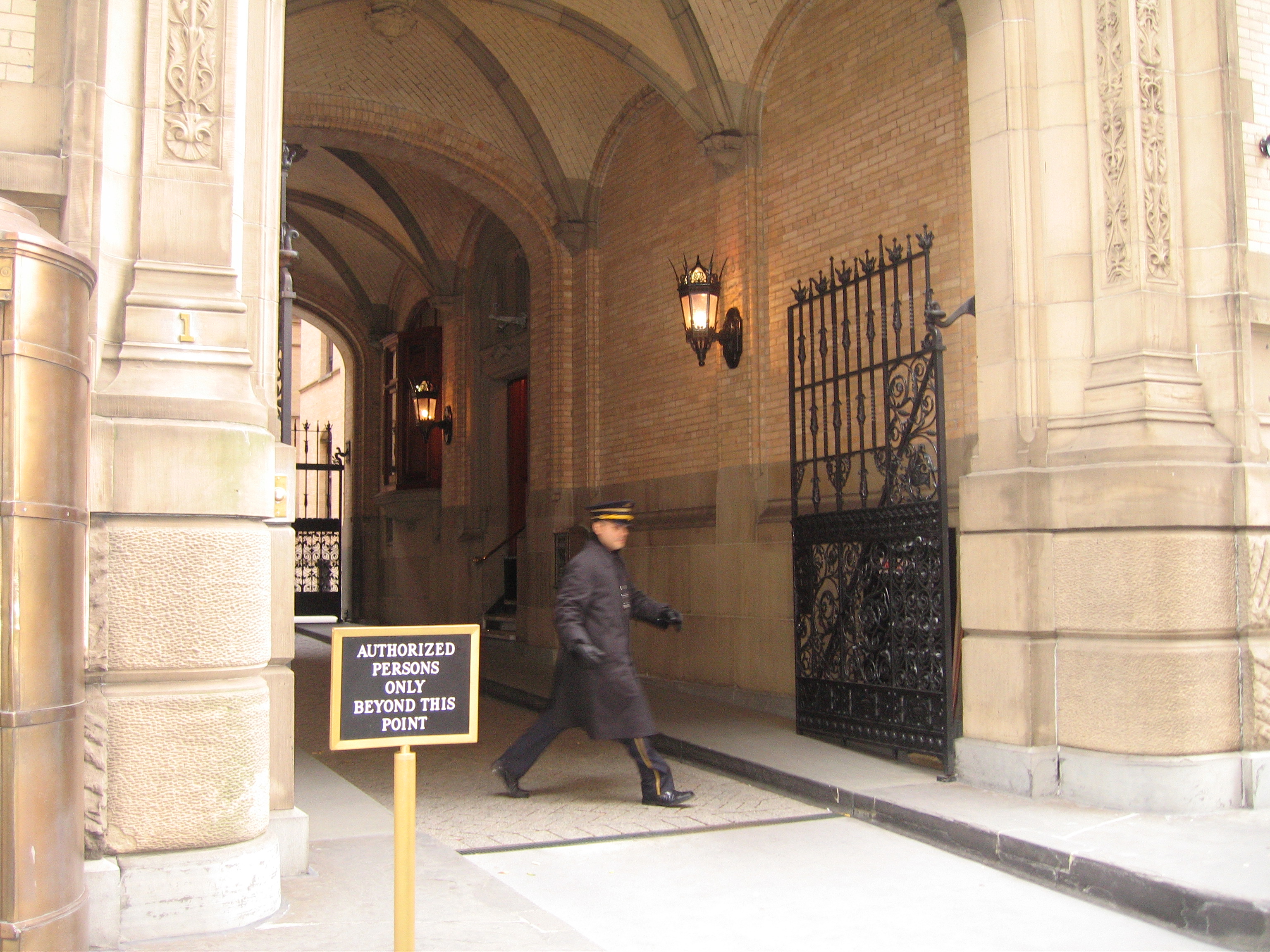
The Lennons returned to the Dakota around 10:50 p.m. As they walked through the archway entrance, Chapman nodded at Ono. Lennon glanced at Chapman, apparently recognizing him from earlier. Chapman fired five hollow-point bullets. Four struck Lennon -- two in the left side of his back, two in his left shoulder. One round missed and shattered a window of the Dakota. Lennon staggered up five steps into the lobby, crying "I'm shot! I'm shot!" before collapsing, scattering the cassette tapes he had been carrying. Concierge Jay Hastings ripped open Lennon's shirt, saw the severity of the wounds, covered his chest with a jacket, and called for help. Outside, doorman Jose Perdomo shouted at Chapman: "Do you know what you just did?" Chapman replied calmly, "I just shot John Lennon," and sat down on the curb with his copy of The Catcher in the Rye.
A Monday Night in America
Officers Steven Spiro and Peter Cullen arrived within two minutes and loaded the bleeding Lennon into the back of their squad car. At Roosevelt Hospital, three doctors, a nurse, and several attendants worked on Lennon for up to twenty minutes, ultimately attempting a resuscitative thoracotomy. The damage was beyond repair -- each of the four bullets had ruptured vital arteries around his heart, and his left lung was virtually destroyed. He was pronounced dead on arrival at 11:15 p.m. Witnesses reported that the Beatles song "All My Loving" was playing over the hospital sound system at that moment. The news reached the broadcast booth at Monday Night Football, where Howard Cosell interrupted the New England Patriots-Miami Dolphins game to tell the country. Frank Gifford had persuaded a reluctant Cosell to break the story on air: "It's a tragic moment, and this is going to shake up the whole world."
The World Responds
Yoko Ono asked the hospital not to announce the death until she could tell Sean, who was home at the Dakota possibly watching television. But a WABC-TV news producer, Alan Weiss, happened to be in the same emergency room after a motorcycle accident and called his station. The news spread before Ono could reach her son. Radio stations across the country suspended regular programming. Crowds gathered outside the Dakota and at Roosevelt Hospital. Paul McCartney, doorstepped by reporters outside his Sussex home the next morning, managed only: "Drag, isn't it?" -- a response widely condemned but later explained as the inadequacy of language in the face of genuine shock. Ringo Starr flew from the Bahamas to be with Ono and Sean. Keith Richards later claimed he obtained a firearm and roamed the streets looking for the killer.
The Silence and After
Lennon was cremated the next day at Ferncliff Cemetery in Hartsdale, New York. There was no funeral. Ono asked instead for ten minutes of silence around the world on December 14. On that day, an estimated 100,000 people gathered in Central Park, just steps from the Dakota, and fell quiet. Chapman pleaded guilty to second-degree murder and received a sentence of twenty years to life. He has been denied parole repeatedly since becoming eligible in 2000, most recently because the board determined his release would be "incompatible with the welfare and safety of society." The archway of the Dakota, where Lennon signed his last autograph and took his last steps, remains an ordinary entrance to a residential building. There is no plaque. Across the street in Central Park, the Strawberry Fields memorial offers a single word inlaid in mosaic: Imagine.
From the Air
Located at 40.7766N, 73.9763W at the Dakota apartment building, northwest corner of 72nd Street and Central Park West on Manhattan's Upper West Side. The Dakota is a distinctive yellow-brick Victorian building visible from the air at the western edge of Central Park. Strawberry Fields memorial is directly across the street in the park. Nearest airports: KJFK (14 nm SE), KLGA (7 nm NE), KEWR (10 nm W). Best viewed at 1,500-2,500 ft AGL.