Murder of Kitty Genovese
The story that entered American consciousness was simple and damning: 38 witnesses watched a woman be stabbed to death over the course of half an hour, and not one of them called the police. The New York Times published that version on March 27, 1964, two weeks after 28-year-old Kitty Genovese was murdered outside her Kew Gardens apartment in Queens. The story was wrong in almost every particular. But the myth it created -- of urban indifference so complete that neighbors would rather close their windows than save a life -- changed American psychology, reshaped emergency response systems, and haunted a quiet residential neighborhood for decades.
Kitty
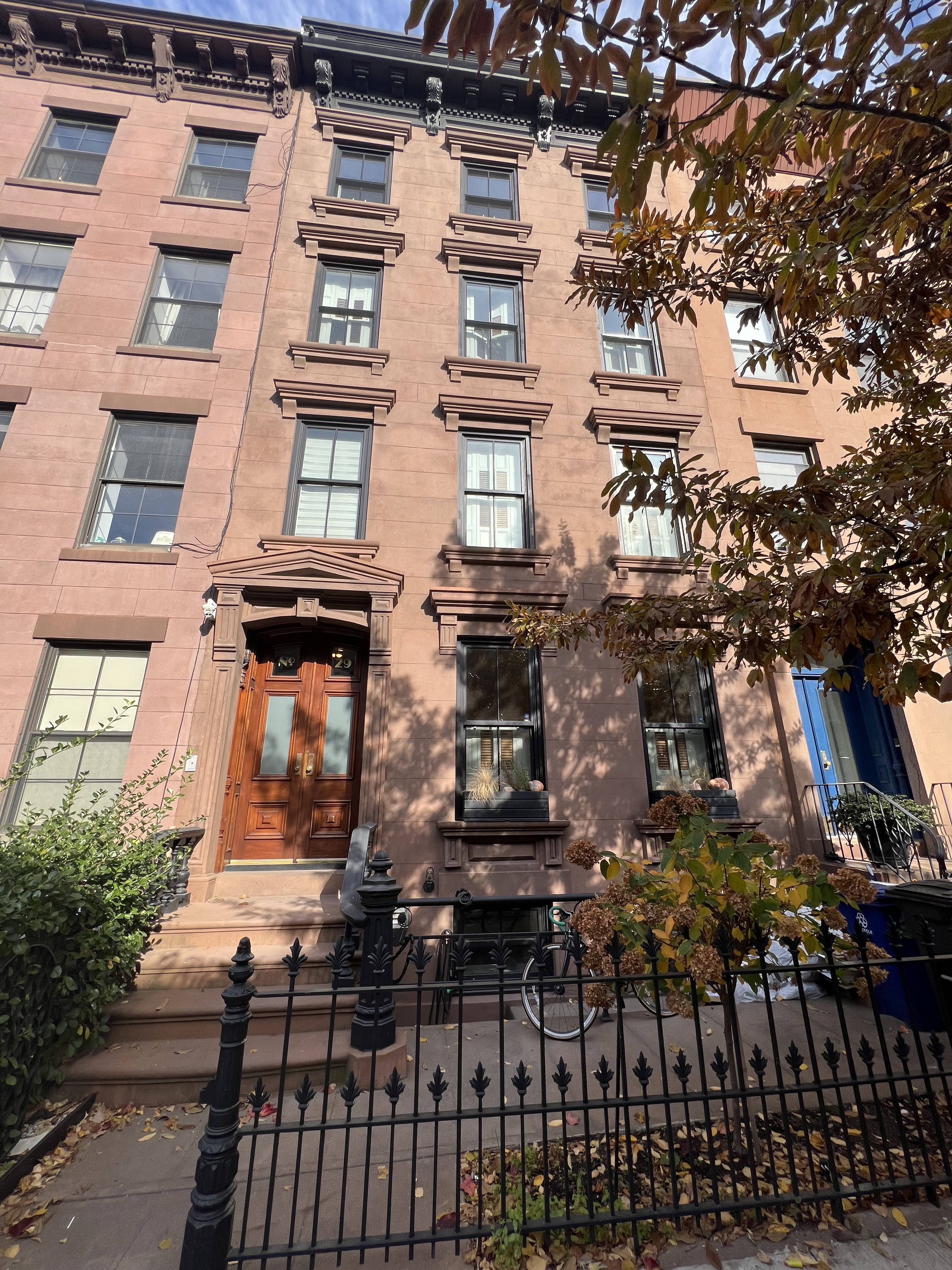
Catherine Susan Genovese was the eldest of five children born to Italian-American parents in Brooklyn. She grew up in a brownstone on St. John's Place in Park Slope, attended Prospect Heights High School, and was remembered as "self-assured beyond her years" with a "sunny disposition." After a brief marriage that was annulled in 1954, she moved through clerical jobs before finding her element as a bartender. By the early 1960s, she was managing Ev's Eleventh Hour Bar on Jamaica Avenue in Hollis, Queens, working double shifts and saving money to open an Italian restaurant. She shared an apartment at 82-70 Austin Street in Kew Gardens with her girlfriend, Mary Ann Zielonko. Genovese was 28 years old, independent, and building a life she had designed for herself.
3:15 a.m., March 13, 1964
Genovese left work around 2:30 a.m. and drove her red Fiat home, parking in the Long Island Rail Road station lot about 100 feet from her apartment entrance. Winston Moseley, a 29-year-old stranger who had followed her from a traffic light on Hoover Avenue, approached with a hunting knife. Genovese ran toward the front of her building. Moseley overtook her and stabbed her twice in the back. She screamed: "Oh my God, he stabbed me! Help me!" Neighbor Robert Mozer shouted from his window, "Let that girl alone!" and Moseley fled. Genovese, wounded, made her way toward the rear of the building, out of view of anyone who might have heard the initial attack. Moseley returned, found her, stabbed her several more times, raped her, stole $49, and left. She was picked up by ambulance at 4:15 a.m. and died on the way to the hospital.
Thirty-Eight Who Saw Nothing
The murder received little initial attention. It was a remark by Police Commissioner Michael Murphy to Times editor Abe Rosenthal over lunch -- "That Queens story is one for the books" -- that prompted the paper to investigate. Reporter Martin Gansberg's article claimed 38 witnesses saw or heard the attack and none intervened. The headline read "37 Who Saw Murder Didn't Call the Police" (an error later corrected to 38). The story ignited national outrage, crystallized around one anonymous neighbor's quote: "I didn't want to get involved." Social psychologists John Darley and Bibb Latane used the case to develop their theory of the bystander effect, and the Genovese murder became a fixture of psychology textbooks for the next four decades. What the story did not mention was that several witnesses had in fact tried to contact authorities, that the attack occurred four years before New York implemented the 911 system, and that most people who heard something that night had no idea a murder was taking place.
The Unraveling
The cracks in the narrative appeared early but were suppressed. WNBC reporter Danny Meehan discovered inconsistencies almost immediately after the story broke. When he asked Gansberg why the article did not mention that witnesses believed they were hearing a domestic dispute rather than a murder, Gansberg replied: "It would have ruined the story." Meehan, unwilling to challenge the powerful Rosenthal, kept quiet. A 2007 study in the American Psychologist found "no evidence for the presence of 38 witnesses, or that witnesses observed the murder, or that witnesses remained inactive." Only one witness, Joseph Fink, realized Genovese had been stabbed in the first attack. In 2016, the Times itself appended an editor's note to the original article, calling its own reporting "flawed" and stating that the story "grossly exaggerated the number of witnesses and what they had perceived."
What Remains on Austin Street
Moseley was arrested six days later during a burglary, confessed to three murders, and was sentenced to death -- later commuted to life imprisonment. He escaped once, in 1968, assaulting additional victims before surrendering. He died in prison on March 28, 2016, at the age of 81, after being denied parole eighteen times. Genovese was buried in Lakeview Cemetery in New Canaan, Connecticut, where her family had moved when she was a teenager. Her brother William spent years investigating what actually happened that night, producing a 2015 documentary called The Witness that revealed how much of the accepted story was fabrication. The apartment building at 82-70 Austin Street still stands in the quiet Kew Gardens neighborhood, and the question the case raised -- whether we are responsible for strangers -- still has no comfortable answer. What has changed is our understanding that the question was built on a story that was, in its most damning details, untrue.
From the Air
Located at 40.7094N, 73.8302W in the Kew Gardens neighborhood of Queens, New York City. The murder site at 82-70 Austin Street is near the Kew Gardens LIRR station. From the air, Kew Gardens is a residential area south of the Grand Central Parkway and east of Forest Park. Nearest airports: KJFK (6 nm S), KLGA (6 nm N), KEWR (16 nm W). Best viewed at 1,500-2,000 ft AGL.