The Murder of Marion Parker
The registrar at Mount Vernon Junior High School would never forgive herself for what happened on December 15, 1927. Mary Holt had released 12-year-old Marion Parker to a well-dressed young man who claimed to be a colleague of Marion's father, Perry, saying Perry had been in an automobile accident. 'I never would have let Marion go but for the apparent sincerity and disarming manner of the man,' Holt later testified. The man knew nothing of Marion's twin sister Marjorie, or he might have taken her instead. Within days, the Los Angeles Times would call what followed 'the most horrible crime of the 1920s,' and it would be considered the most horrific crime in California history.
The Fox Writes
The day after Marion vanished, telegrams began arriving at the Parker home. The first came from Pasadena: 'Do positively nothing till you receive special delivery letter.' It appeared to bear Marion's signature. More messages followed, sent from different locations around Los Angeles, demanding $1,500 in $20 gold certificates. The kidnapper signed his communications with theatrical names: 'Fate,' 'Death,' and 'The Fox.' Some included words written in Greek. In one message, he warned: 'No one will ever see the girl again except the angels in heaven.' Perry Parker, an assistant cashier at the First National Bank of Los Angeles, gathered the gold certificates and waited for instructions.
The Exchange
At approximately 8 pm on December 17, Perry Parker drove alone to the meeting point in central Los Angeles. A Chrysler coupe pulled alongside, and a man with a bandana covering his face held Perry at gunpoint with a sawed-off shotgun. Perry could see Marion in the passenger seat, her neck wrapped in a blanket, her eyes open but unresponsive. He assumed she had been drugged. When he called out to her, she did not respond. The moment Perry handed over the ransom, the kidnapper put the car in gear and pushed Marion's body out onto the street. Her eyes had been held open with piano wire to give the appearance of life. The horror of what had been done to the child was beyond description. Her limbs were discovered the next day in Elysian Park.
The Hunt for the Fox
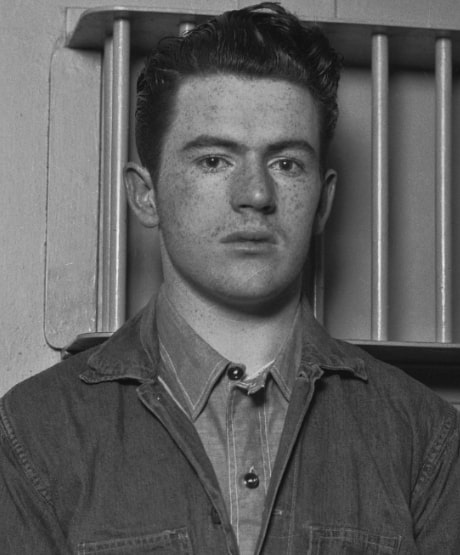
Fingerprints from the getaway car led police to a name: William Edward Hickman, 19 years old, a former bank employee who had worked with Perry Parker. The year before, Perry had filed a complaint against Hickman for stealing and forging checks totaling $400. Now Hickman was using the gold certificates from the ransom to buy gasoline as he fled north through Oregon and Washington. Shop owners recognized the distinctive currency. On December 22, 1927, police in Echo, Oregon, arrested Hickman with $1,400 of the ransom money still in his green Hudson. He made a full written confession, describing in detail what he had done.
A New Kind of Defense
Hickman became one of the first defendants in California to use what was then a new law allowing a plea of not guilty by reason of insanity. He claimed a deity named 'Providence' had told him to commit the crime. The jury did not believe him. He was convicted and sentenced to death. On October 19, 1928, William Edward Hickman was hanged at San Quentin State Prison. Marion Parker was survived by her parents, her elder brother, and her twin sister Marjorie. Murder ballads about 'Little Marian Parker' were recorded and released that same year, beginning a long folk tradition. In 2020, the HBO revival of Perry Mason opened with a storyline based loosely on this case.
From the Air
Located at 34.07N, 118.25W in the Lafayette Square neighborhood of Los Angeles. Mount Vernon Junior High School and Elysian Park, where evidence was discovered, are both in the greater downtown LA area. Nearby airports include Los Angeles International (KLAX) 12 miles southwest and Burbank Bob Hope (KBUR) 10 miles north. This is urban terrain with dense development.