Murder of Pamela Werner
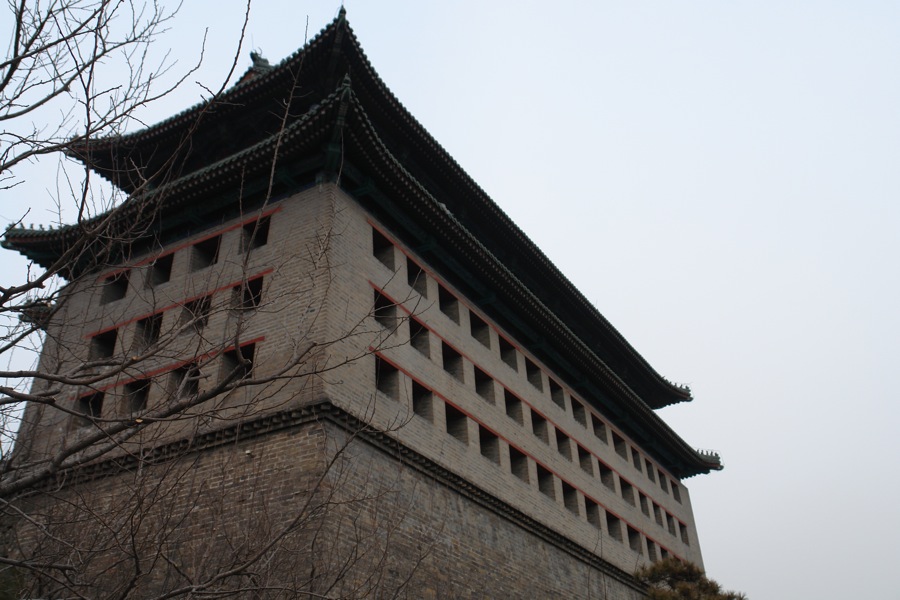
On the morning of January 8, 1937, rickshaw drivers found the body of a young woman near the Fox Tower, just outside the walls of Beijing's Legation Quarter. She was Pamela Werner, nineteen years old, the only child of E. T. C. Werner, a retired British diplomat and sinologist. Her expensive platinum jewelry was untouched, ruling out robbery. Her wristwatch had stopped shortly after midnight. No one was ever charged with her murder. The case, which consumed Beijing's foreign community in the final months before Japanese occupation, would drift into obscurity for seventy years before a bestselling book brought it back to public attention.
A City on the Edge
Beijing in early 1937 was a city bracing for catastrophe. No longer the national capital, it was still the third richest city in the Republic of China, home to 1.5 million people, both Chinese and foreign. Japanese troops were camped within miles of the Forbidden City, controlling most routes in and out. The old Legation Quarter, established after the Boxer Rebellion, housed diplomats and foreign residents behind guarded walls. Beyond those walls, the city's Badlands district operated as a lawless zone of bars, brothels, and opium dens run by Russian emigres and patronized by expatriates. The favorable exchange rate between Western currencies and the Chinese silver dollar allowed foreigners to live far more comfortably than they could at home. American journalist Edgar Snow and his wife Helen owned a racehorse on reporters' salaries. Into this precarious world, Pamela Werner moved with unusual freedom for a foreign teenager, bicycling through the city's hutongs, fluent in Chinese, navigating both worlds.
The Last Evening
Pamela's final hours can be partially reconstructed from witness accounts. She left a skating rink on the evening of January 7 and met her friend Ethel Gurevitch, the daughter of Russian emigres, at the Wagons-Lits Hotel. The two went to the Gurevitch home for tea and cake, though Pamela ate little. After that, her movements become uncertain. She never arrived home. Her father, upon realizing she had not returned, spent the night searching the city's streets. The autopsy, conducted at Peking Union Medical College, revealed that many of the wounds, including stabbings and slashings, had been inflicted after death. There was almost no blood at the scene where her body was found, confirming she had been killed elsewhere and moved. Her bicycle and ice skates were never recovered.
An Investigation Unraveled
Colonel Han Shizhong of the Beijing police and British detective Dennis led the investigation, which was hampered from the start by jurisdictional tensions and political pressures. Early leads pointed toward the expatriate community. A man named Pinfold was arrested after being spotted lingering near the crime scene and found to carry business cards from establishments in the Badlands. His arrest led investigators to Wentworth Prentice, an American dentist and Harvard graduate whose patients included wealthy diplomats, and who organized weekend gatherings that drew suspicion. But before detectives could build a case, political forces intervened. An Irish journalist sympathetic to the Japanese publicly defended Prentice and suggested the killer was Chinese. The investigation was officially closed on that basis. Within months, Japan's full occupation of Beijing foreclosed any possibility of reopening it. British diplomatic records related to the case were later weeded from the archives, a bureaucratic act that erased portions of the evidentiary record.
Theories That Won't Rest
Pamela's father never stopped investigating. Interned alongside Prentice at the Weixian camp in Shandong during the war, Werner reportedly confronted the dentist about the killing. His private research, documented in a 150-page letter found decades later in the National Archives, pointed to Prentice as the likely killer. In 2011, author Paul French published Midnight in Peking, endorsing Werner's conclusions and winning several awards. But the case remains genuinely unresolved. Descendants of Prentice created a website arguing that documentary evidence contradicts key claims in both Werner's letters and French's book. A 2018 investigation by retired British police officer Graeme Sheppard introduced additional suspects and concluded that a former Chinese student friend of Pamela was the most likely perpetrator. Other theories, including Japanese involvement as revenge for the killing of one of their officers by British soldiers, persisted in diplomatic circles through the end of the war. The truth may lie in archives that no longer exist, destroyed by war, occupation, or the quiet bureaucratic practice of weeding files that embarrass the powerful.
From the Air
Located at 39.90°N, 116.41°E, near the former Fox Tower and Legation Quarter in eastern central Beijing. The area is now part of the dense Dongcheng District urban fabric. Best viewed at 3,000-5,000 feet. Nearest airport: Beijing Capital International (ZBAA), approximately 24 km northeast.