Murders of Chaney, Goodman, and Schwerner
"Sir, I know just how you feel." Those were Michael Schwerner's last words, spoken to the man holding the gun. It was the night of June 21, 1964, on a dark stretch of County Road 515 in Neshoba County, Mississippi. Schwerner, 24, from New York City; Andrew Goodman, 20, also from New York; and James Chaney, 21, from Meridian, Mississippi, had been pulled over, arrested on a false speeding charge, held for hours, then released into the waiting hands of a Ku Klux Klan mob that included the deputy sheriff who had arrested them. Within minutes all three were dead. Their bodies would not be found for 44 days. The search for them, and the long pursuit of justice that followed, reshaped the civil rights landscape of America.
Freedom Summer's Front Line
The three men were workers for the Congress of Racial Equality, part of the 1964 Freedom Summer campaign to register Black voters across Mississippi. Chaney was African American; Goodman and Schwerner were Jewish. Schwerner and Chaney had been working together for months, trying to establish a Freedom School in Neshoba County to help Black residents pass the literacy tests the state required for voter registration. On May 25, 1964, they spoke at Mount Zion Methodist Church in Longdale, Mississippi, urging the congregation to register. Three weeks later, on June 16, White Knights of the Ku Klux Klan attacked the church, beating congregation members and burning the building to the ground. When Schwerner, Chaney, and the newly arrived Goodman drove north from Meridian on June 21 to visit the burned church and speak with the congregation, they were driving into a trap.
The Longest Night
Deputy Sheriff Cecil Price arrested the three men on Highway 19 near Philadelphia, Mississippi, on a pretext of speeding. He held them in the Neshoba County jail until roughly 10:30 that evening, then released them. Price followed them south in his patrol car. Behind him came two more cars carrying members of the White Knights, a Klan faction led by Samuel Bowers of Laurel. The conspirators included law enforcement officers, mechanics, salesmen, and a Baptist preacher named Edgar Ray Killen, who had organized the operation. Price caught the civil rights workers heading west on Road 492, stopped them, and escorted them back north toward Philadelphia. The caravan turned onto County Road 515. At a secluded intersection, the three men were pulled from their car. Alton Wayne Roberts shot Schwerner and Goodman. James Jordan shot Chaney in the abdomen; Roberts then shot him in the head. The bodies were loaded into the station wagon and driven to an earthen dam under construction at a nearby farm, where they were buried with a bulldozer.
Forty-Four Days of Searching
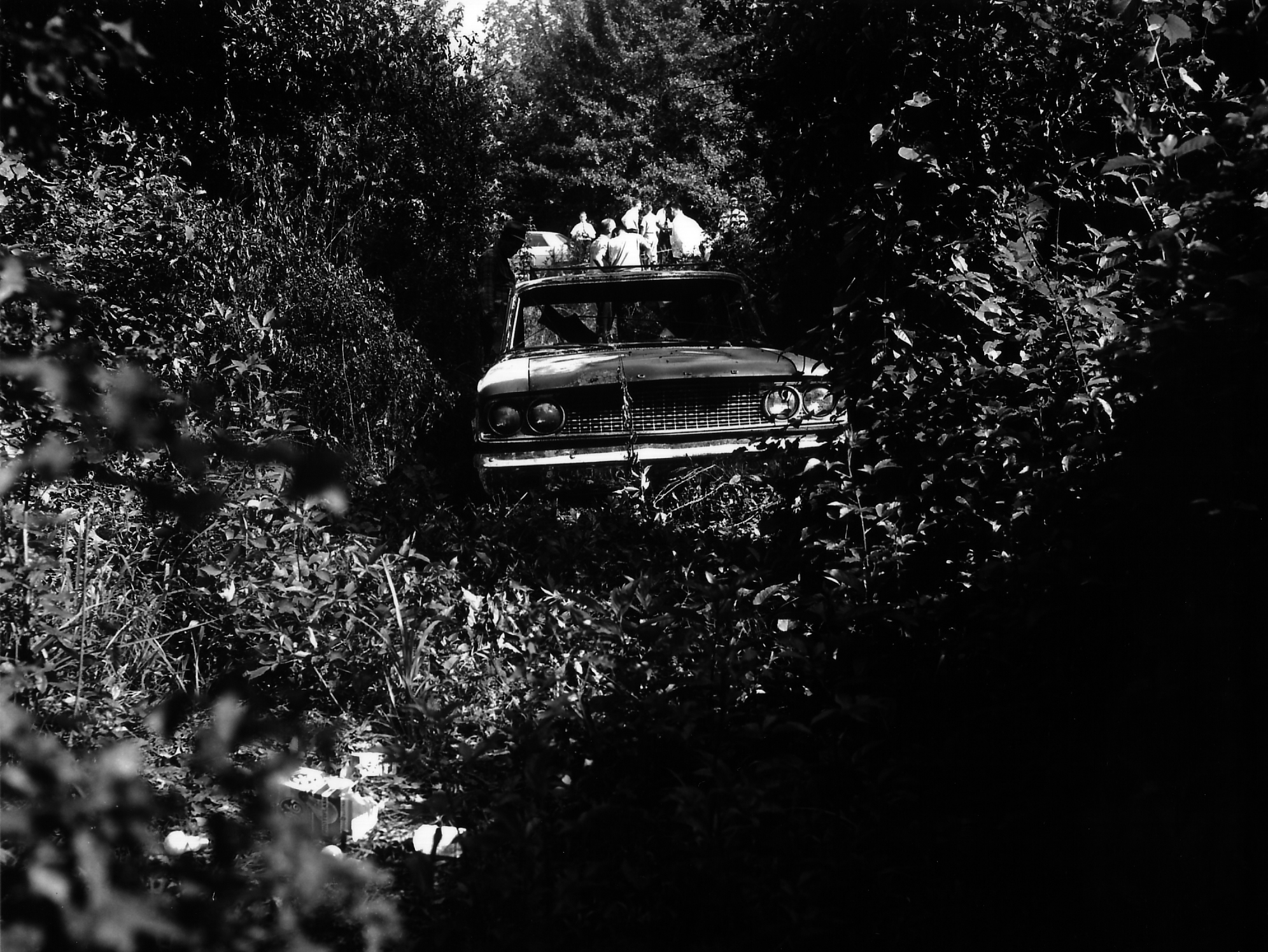
The disappearance became national news within days. President Lyndon Johnson pressured FBI Director J. Edgar Hoover into action. Attorney General Robert F. Kennedy ordered 150 federal agents to Mississippi. Four hundred Navy sailors from Naval Air Station Meridian combed the swamps of Bogue Chitto. Walter Cronkite called it 'the focus of the whole country's concern.' Mississippi officials pushed back. Sheriff Lawrence Rainey insisted the three men were hiding to generate publicity. Governor Paul B. Johnson Jr. suggested they 'could be in Cuba.' During the search, investigators found the bodies of Henry Hezekiah Dee and Charles Eddie Moore, two Black college students murdered by the Klan in May 1964, as well as the remains of five other unidentified African Americans. The three civil rights workers were found on August 4, buried beneath the earthen dam, only after a tip from an informant identified in FBI files as 'Mr. X,' later revealed to be Mississippi Highway Patrol officer Maynard King.
Justice Delayed, Not Denied
Mississippi refused to prosecute the killers for murder. The federal government charged 18 men with conspiracy to deprive the victims of their civil rights. The case, United States v. Cecil Price, et al., went to trial in October 1967 before Judge William Harold Cox, an ardent segregationist. Defense attorneys used peremptory challenges to exclude all seventeen potential Black jurors. Seven defendants were convicted, representing the first-ever convictions in Mississippi for the killing of a civil rights worker. For decades, that was the end of it. Then investigative journalist Jerry Mitchell of The Clarion-Ledger, aided by Illinois high school teacher Barry Bradford and three of his students, developed new evidence and pressured the state to act. In January 2005, a Neshoba County grand jury indicted Edgar Ray Killen on three counts of murder. On June 21, 2005, exactly 41 years after the killings, Killen was convicted of three counts of manslaughter and sentenced to 60 years in prison. He died there in January 2018.
What Remains
The murders helped propel passage of the Voting Rights Act of 1965. In 2014, Chaney, Goodman, and Schwerner were posthumously awarded the Presidential Medal of Freedom by President Barack Obama. Historical markers stand at the murder site and near the burned Mount Zion church in Longdale. In New York City, a four-block stretch of Manhattan's Upper West Side is named Freedom Place in their honor. A stained glass window at Cornell University's Sage Chapel depicts the three men; Schwerner was a Cornell graduate. The intersection of County Road 515 and County Road 284, where the men were shot, is quiet rural Mississippi now: red clay, pine forest, the hum of insects in summer heat. A roadside marker was erected there in 2008, vandalized, and rededicated in 2013. The case was officially closed in 2016, but the place itself refuses to let the story end.
From the Air
Coordinates: 32.8817N, 88.9380W. The murder site is located at the intersection of County Road 515 and County Road 284 in rural Neshoba County, Mississippi, a few miles southwest of Philadelphia, Mississippi. The nearest airport is Philadelphia-Neshoba County Airport (KPHD), approximately 5nm to the northeast, and Meridian Regional Airport / Key Field (KMEI) is roughly 35nm to the south. From 3,000 feet AGL, the area is a patchwork of pine forest, farmland, and small rural roads. The town of Philadelphia is visible as a small cluster of buildings at the intersection of Highways 16 and 19.