Murie Ranch Historic District
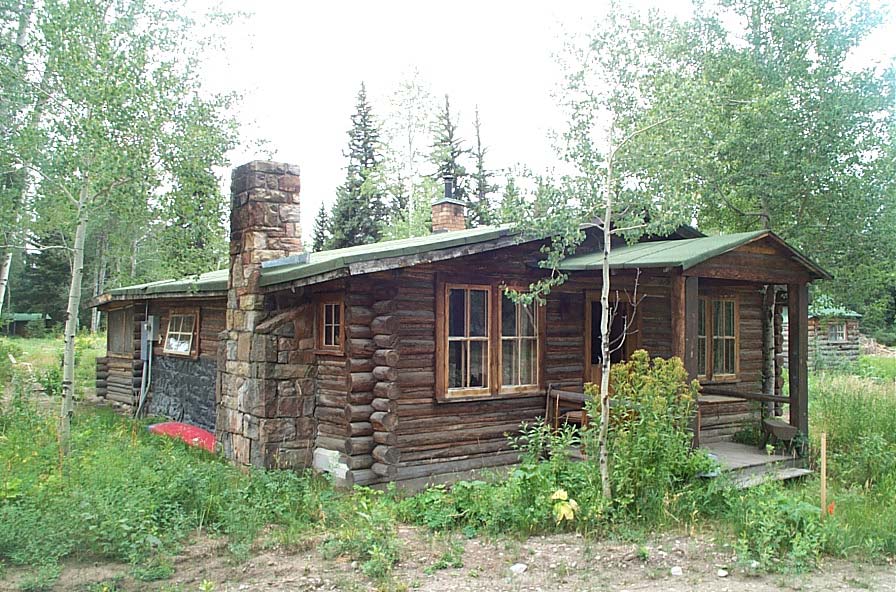
The doors of the STS Lodge are too short. Buster Estes, who homesteaded here in 1925, built them to his own diminutive height. This quirk of architecture perfectly captures the character of the Murie Ranch Historic District, where nothing was designed for show. Nestled in Grand Teton National Park near the village of Moose, this modest collection of log cabins became the intellectual headquarters of the American wilderness movement. From these weathered structures, some of the most consequential conservation victories of the twentieth century were plotted and won.
A Family of Scientists
Olaus Murie arrived in Jackson Hole in 1927, already a respected field biologist with the U.S. Bureau of Biological Survey. He had spent years tracking caribou across Alaska, pioneering an ecological approach that viewed animals not as isolated specimens but as threads in a complex web of relationships. His brother Adolph joined him, and both married sisters: Olaus wed Margaret "Mardy" Thomas in 1924 in Fairbanks, while Adolph married Mardy's half-sister Louise. This intertwined family would spend decades reshaping how America thought about wild lands. Olaus's 1927 study of Jackson Hole's elk herd proved controversial. He concluded that artificial feeding had pushed the population beyond what the range could sustain. The finding challenged prevailing wildlife management practices and helped establish the holistic ecosystem thinking that defines modern conservation biology.
The Coyote Defender
From 1937 to 1940, Adolph Murie conducted research in Yellowstone that would prove equally revolutionary. At a time when the National Park Service actively encouraged killing coyotes, Adolph's studies demonstrated these predators were essential to ecosystem health. His report directly contradicted official policy and led to a reversal of predator control in the park. He followed this work with The Wolves of Mount McKinley in 1944, which achieved a similar victory for wolves in Alaska. The Muries were not simply observing nature; they were fundamentally changing how government agencies understood and managed it.
Headquarters of the Wild
In 1945, Olaus left government service to become president of the Wilderness Society, moving his family to the STS Ranch property. The rustic cabins quickly became a gathering place for conservationists. The 1948 Wilderness Society Council met here. Supreme Court Justice William O. Douglas visited, as did pioneering grizzly bear researchers John and Frank Craighead and future U.S. Fish and Wildlife Service Director John Turner. Books flowed from these cabins: Olaus wrote The Elk of North America and A Field Guide to Animal Tracks; Adolph produced The Grizzlies of North America. Mardy contributed Two in the Far North, while she and Olaus collaborated on Wapiti Wilderness, essays about their life at the ranch.
The Arctic Victory
The most consequential expedition planned from this ranch launched in 1956. Olaus and Mardy traveled to the Sheenjek River on the south slope of Alaska's Brooks Range. Their documentation of this pristine wilderness proved instrumental in the eventual protection of the Arctic National Wildlife Refuge. Olaus died in 1963, one year before the Wilderness Act passed. That landmark legislation, which he had championed for decades, has since protected over 100 million acres of American wilderness. Mardy continued the work, joining the Wilderness Society's governing council and remaining at the ranch. Her tireless advocacy contributed to the Alaska National Interest Lands Conservation Act of 1980. In 1998, she received the Presidential Medal of Freedom for her lifetime of conservation work.
A Living Legacy
The ranch was designated a National Historic Landmark in 2006. Today, more than a dozen structures remain, including Olaus's painting studio built in 1947 and the Murie Residence with its views of Grand Teton. Most cabins date to 1925, from the original Estes homestead era. One of Olaus's first acts upon acquiring the property was to tear down all the fences. He and Mardy partially dammed a stream offshoot of the Snake River for a swimming hole, work that beavers enthusiastically completed. This detail encapsulates their philosophy: work with nature, not against it. The structures are humble, the landscape unmarred. From this unassuming place, they changed America's relationship with wilderness.
From the Air
The Murie Ranch Historic District sits at coordinates 43.6504N, 110.7295W, near the village of Moose within Grand Teton National Park. Best viewed at 2,000-3,000 feet AGL on a clear day. The collection of log cabins is visible along the Snake River, with the dramatic backdrop of the Teton Range rising to the west. Nearby airports include Jackson Hole Airport (KJAC), just 5 miles south within the park boundaries. The ranch complex appears as a cluster of small structures in a clearing surrounded by cottonwoods and willows near the river.