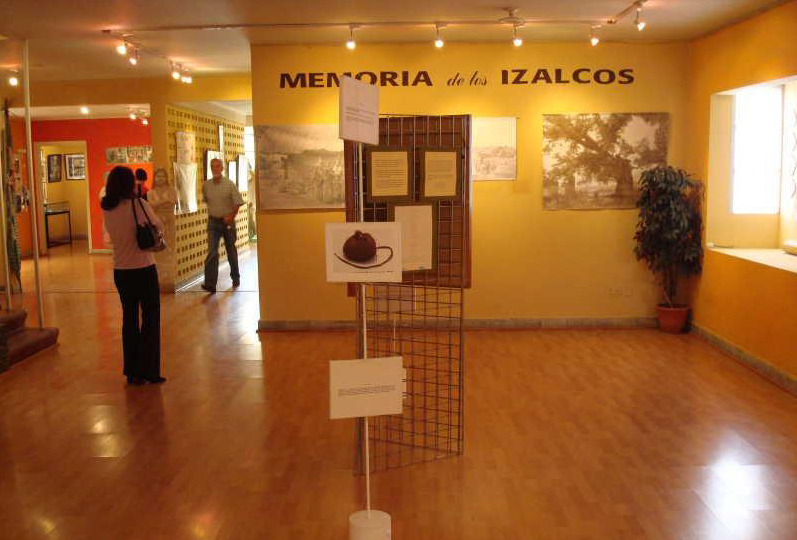
Museo de la Palabra y la Imagen
Carlos Henriquez Consalvi spent the Salvadoran Civil War behind a microphone. As the voice of Radio Venceremos -- the guerrilla broadcast that transmitted from hidden locations in the mountains of Morazan -- he narrated the conflict in real time for listeners across the country. When the war ended in 1992, Consalvi faced a different kind of battle: the fight against forgetting. In the late 1990s, the Venezuelan journalist founded the Museo de la Palabra y la Imagen -- the Museum of the Word and the Image -- in San Salvador. Its original mission was to collect and preserve memories of the civil war from across the political spectrum. The public had other plans. The enthusiasm was so immediate and so broad that the museum quickly expanded to encompass the full sweep of Salvadoran history.
An Archive Built from Scraps
The museum's holdings are staggering for an institution born from one journalist's determination. The photo archive alone contains more than 35,000 images dating from 1872 to the present, organized into collections that span indigenous culture from the 1890s, the 1932 peasant uprising known as La Matanza, the armed conflict of 1980 to 1992, and the lives of major cultural figures including the poet Claudia Lars, the revolutionary writer Roque Dalton, and Archbishop Oscar Romero. A separate women's collection documents figures like Prudencia Ayala, who in 1930 became the first woman in Latin America to run for president. The Kabrakan collection gathers images of El Salvador's natural disasters -- earthquakes, eruptions, tsunamis, and floods -- a visual record of a country shaped as much by geology as by politics. The movie archive is considered El Salvador's most important audiovisual collection, holding footage from the civil war alongside Salvadoran film productions.
Scars of Memory
One of the museum's most significant projects was the production of Cicatriz de la Memoria -- Scars of Memory -- a documentary directed by U.S. historian Jeffrey Gould about the 1932 Salvadoran peasant uprising. The project went beyond the film itself. The museum pioneered the concept of the "cine-forum," taking the documentary on tour throughout the country and abroad, screening it in community centers, schools, and universities. Each screening was followed by open discussion, creating a structured space for communities to confront a history that the government had suppressed for decades. The film and its traveling discussions helped break a long silence around La Matanza, particularly in indigenous communities where survivors and their descendants had learned that speaking about 1932 could be dangerous.
Voices Preserved in Tape and Testimony
The audio archive holds one of the museum's most irreplaceable collections: the surviving transmissions of Radio Venceremos. During the civil war, the guerrilla radio station broadcast news, music, and political commentary from mobile locations in the mountains, evading government attempts to destroy it. Those recordings, preserved by the museum, are now primary historical documents -- real-time accounts of a conflict that killed an estimated 75,000 people. Beyond the war recordings, the archive contains oral histories, testimonies about human rights and women's rights, and the voices of cultural figures whose words might otherwise have been lost. The museum also collaborates with other institutions: a joint exhibit with the art museum MARTE explored the work of Salarrue, the acclaimed Salvadoran writer and artist, while a separate project focused on the 1981 massacre at El Mozote.
A Living Room for National Memory
The museum occupies its own building in the capital and has grown into something more than a repository of artifacts. Multiple exhibition halls host rotating shows on identity, culture, and historic memory. A cinema hall screens documentaries and Salvadoran films. The museum produces books and audiovisual works, and its educational programs reach schools and communities throughout the country. What makes the MUPI unusual is its founding premise: that memory should be preserved from all sides of the political spectrum, not just the victors'. In a country where the civil war divided families and communities, and where the 1932 massacre was officially denied for decades, this commitment to inclusive remembrance is itself a political act. The museum's name -- the Word and the Image -- captures its method: collect every voice, every photograph, every scrap of footage, and let El Salvadorans decide for themselves what their history means.
From the Air
Located at 13.709N, 89.205W in San Salvador, slightly northwest of the historic center. The museum building is in a residential-commercial area of the capital. San Salvador sits in a volcanic valley; the San Salvador Volcano is the dominant landmark to the northwest. Nearest major airport is El Salvador International (MSLP), approximately 40 km south of the city. The museum is not individually visible from the air but is within the dense urban fabric of the capital.