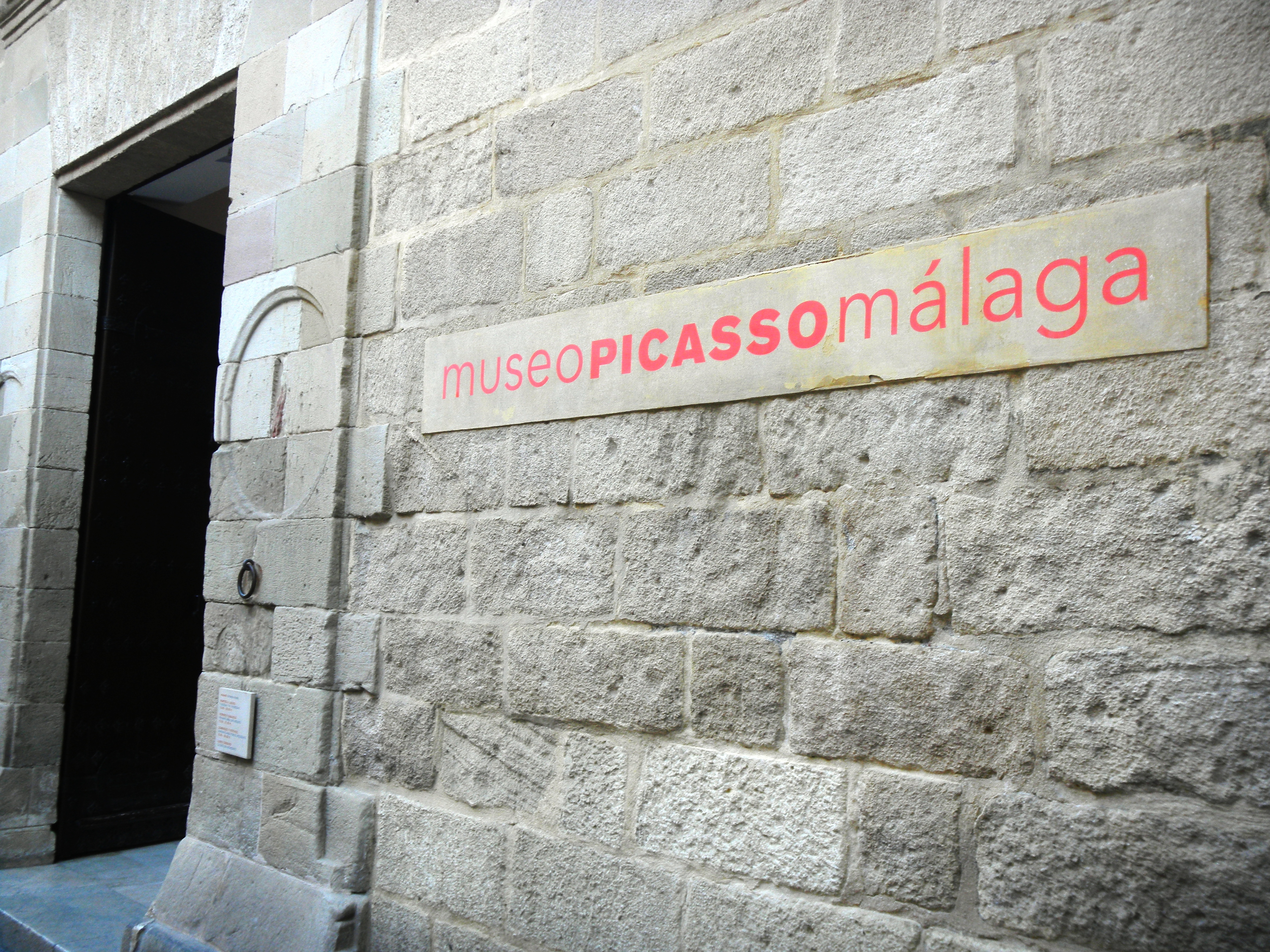
Museo Picasso Malaga
The idea first surfaced in 1953, during the Franco era. Pablo Picasso, then living in France, corresponded with Juan Temboury Alvarez, Malaga's Provincial Delegate for Fine Arts, about creating a museum in his birthplace. Nothing came of it. Picasso died in 1973 without ever returning to the city on the Plaza de la Merced where he was born. It took another thirty years, a donation of 155 works by his family, and the transformation of a 16th-century palace into a modern exhibition space before the Museo Picasso Malaga finally opened in 2003. The wait was worth it, not least because the renovation uncovered layers of history even older than the artist.
A Palace on Top of History
The Buenavista Palace was built in the first half of the 16th century for Diego de Cazalla, on the remains of a Nasrid palace whose fragments still survive in the foundations. Declared a National Monument in 1939, it housed a previous fine arts museum from 1961 to 1997. When American architect Richard Gluckman began converting the palace for the Picasso museum, the excavations revealed an astonishing sequence beneath the floor: remnants of Phoenician city walls and towers, a Roman factory that once produced garum, the fermented fish sauce that was a staple of the ancient Mediterranean diet, and the earlier Nasrid palace. The basement became an archaeological museum in its own right, visible through transparent panels in the floor above. Visitors looking at Picasso's art can literally see through the ground to civilizations that preceded him by millennia.
Modern Technology in Ancient Disguise
Converting a 450-year-old palace into a climate-controlled museum presented problems that a purpose-built gallery would never face. Temperature, humidity, and air quality must be precisely managed to protect the collection, but the ductwork must be hidden without weakening walls that have stood for centuries. Gluckman's team solved this by crafting air conditioning vents from white marble slabs with pseudo-Mudejar design elements, integrating them into the existing walls so seamlessly that most visitors never notice them. Similar techniques disguised modern lighting systems. The museum complex ultimately encompassed the palace and several adjacent buildings, totaling 8,300 square meters of floor space, with skylights providing the natural illumination that Gluckman made a signature of the design. Not everyone approved. Historian Maria Salinas Ruiz criticized the sacrifice of two historic houses and the modifications to the palace itself, lamenting the loss of its original winding passages and fountains.
The Collection Comes Home
The museum's 155 works were donated by Christine Ruiz-Picasso, the artist's daughter-in-law, and her son Bernard. The collection spans Picasso's career, from early academic studies through his revolutionary Cubist and Surrealist periods to the vigorous late works. A library and archive containing over 800 titles on Picasso support scholarly research. The museum merged with the Fundacion Picasso, which operates the Museo Casa Natal on the Plaza de la Merced, the house where Picasso was born and which is now a separate museum dedicated to his early life. From the windows of the new staircases Gluckman added to the Buenavista Palace, visitors can see the tower of the Church of Santiago, where Picasso was baptized. The city that failed to build him a museum during his lifetime now has two, along with a constellation of sites that trace his first years.
Under the Surface
What makes the Museo Picasso Malaga exceptional is not just what hangs on the walls but what lies beneath them. The transparent floor panels in the basement offer a cross-section of Malaga's past that mirrors Picasso's own habit of layering and reworking. Phoenician stone, Roman industrial infrastructure, Nasrid decorative arts, Renaissance palace architecture, and 21st-century museum engineering occupy the same vertical column of space. Picasso was born eight blocks away. He left Malaga at age ten and spent the rest of his life elsewhere, but the city never stopped claiming him. The museum's full name tells the story: Fundacion Museo Picasso Malaga, Legado Paul, Christine y Bernard Ruiz-Picasso. A legacy brought home, housed in a building whose own legacy reaches back three thousand years.
From the Air
Located at 36.72N, 4.42W in the historic center of Malaga, near the Alcazaba and the Cathedral. The Buenavista Palace is not individually distinguishable from the air, but the historic quarter cluster of the Alcazaba, Cathedral, and Roman Theatre serves as a reference. Nearest airport: Malaga-Costa del Sol (LEMG), approximately 8 km southwest.