Museo Popol Vuh
The pottery is nine thousand years old, and it sits behind glass in a building that could pass for a corporate office. That tension — between the deep antiquity of the objects and the clean, geometric modernism of the space that holds them — defines the Museo Popol Vuh. Located on the campus of Universidad Francisco Marroquin in Zone 10 of Guatemala City, this private museum houses one of the most significant collections of Maya art anywhere in the world. Its neutral-colored walls and advanced display technology deliberately recede, directing attention entirely to what the Maya made: painted ceramics depicting gods and kings, hieroglyphic texts recording political alliances, plumbate pottery traded across Mesoamerica, and colonial sculptures that mark the collision between two civilizations.
One Collector's Obsession
The museum began as one man's private collection. In 1975, Jorge Castillo hired Maro Tejada, an archaeology student at Universidad del Valle, to classify the archaeological and colonial pieces he and his wife Ella had been accumulating for years. Once catalogued and arranged in chronological order, the collection was opened to the public in Zone 1 of Guatemala City. After Jorge Castillo's death in 1977, the Castillos donated their holdings to Universidad Francisco Marroquin, and the museum was formally established to house them. It occupied its first university location on La Reforma Avenue and 16th Street, then moved after three years to the Galerias Reforma building in Zone 9. Sixteen years later, it reached its current home in Zone 10 — the third address for a collection that kept outgrowing its quarters. Jorge and Ella Castillo could not have predicted it, but their private passion for pre-Columbian objects seeded an institution that became one of Guatemala's most important repositories of cultural memory.
The Book and the Museum
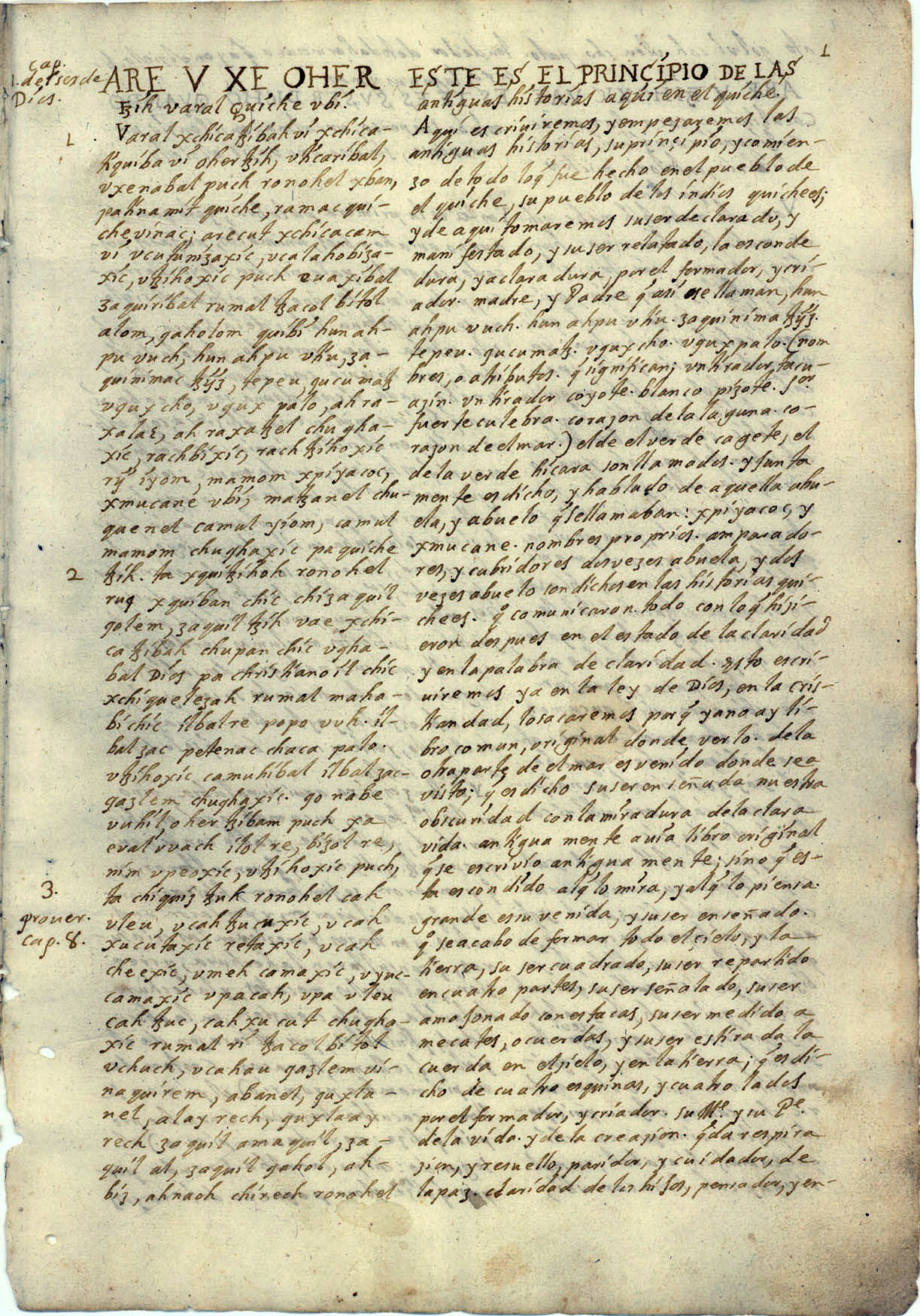
The museum takes its name from the Popol Vuh, a book written shortly after the Spanish conquest of Guatemala that narrates the mythology and pre-Columbian history of the K'iche' Maya. The K'iche' kings had dominated much of Guatemala's western highland plateau, and their creation epic — with its hero twins descending into the underworld, its gods shaping humanity from maize dough, its cosmic ballgame between life and death — is one of the foundational texts of Mesoamerican literature. Many objects in the museum's collection relate directly to narratives in the Popol Vuh, creating a dialogue between the written word and the material culture it describes. A painted ceramic vessel might depict the same scene a K'iche' scribe recorded in alphabetic text centuries later. The museum makes that connection visible, placing artifacts alongside the stories they illustrate.
Nine Millennia on Display
The collection spans an almost incomprehensible range of time. Archaic-period pieces from 9000 to 1500 BC, excavated from the central highlands and the eastern Pacific coast, include the ceramics of communities making the transition from nomadic life to permanent agricultural settlement. Late Classic works from 600 to 900 AD — the period of the Maya civilization's greatest population growth — feature painted vessels of extraordinary sophistication, with hieroglyphic texts identifying the artist, the owner, and the mythological scene depicted. Postclassic artifacts from 900 to 1500 AD document the civilization's decline through distinctive plumbate pottery — fired to orange and grey tones, depicting animals and supernatural beings, and heavily influenced by Mexican trade networks that spread the style across Mesoamerica. The colonial collection, spanning the sixteenth through nineteenth centuries, includes Renaissance, Baroque, and Neoclassical sculptures produced during a period when artistic expression in Guatemala was shaped almost entirely by the Catholic Church and its educational mission.
A Modern Vessel for Ancient Things
The Museo Popol Vuh is among the most modern museums in Guatemala in terms of its physical design. Its geometric architecture deliberately contrasts with both the Maya ruins and the Spanish Renaissance structures scattered across Guatemala City. Inside, artifacts are displayed behind clear walls with careful lighting, and the interior walls maintain neutral colors to keep focus on the objects rather than the building. The museum operates as a private, nonprofit scientific institution, supported by its own funds and external donations and governed by a board of Guatemalan citizens dedicated to preservation and public education. There are no bus routes to the campus — visitors arrive by walking downhill from Sexta Avenida or by taxi. That slight inconvenience of access means the museum rewards intention. The people who come here come on purpose, and what they find is a collection that makes three thousand years of Maya civilization tangible — not as ruins in a jungle, but as the work of human hands preserved behind glass in the heart of a living city.
From the Air
The Museo Popol Vuh sits at 14.625°N, 90.533°W on the Universidad Francisco Marroquin campus in Zone 10 of Guatemala City. From 3,000-5,000 feet AGL, Zone 10 is identifiable as one of the more modern commercial districts in the southern part of the city, with the university campus visible as a green enclave. La Aurora International Airport (MGGT) lies approximately 2 km to the southwest. Guatemala City occupies a highland valley at roughly 4,900 feet elevation. The volcanic peaks of Agua, Fuego, and Acatenango mark the western and southwestern horizon on clear days.