Museum Angkut
A crashed electric car sits in a museum on the side of a volcano. The Tucuxi -- nicknamed "the Dolphin" -- was Indonesia's homegrown prototype for an electric future, built under the direction of media mogul and former state minister Dahlan Iskan. It rolled off the slopes of Mount Lawu in Magetan during a test drive, its crumpled body a testament to ambition that outran engineering. Rather than hide the failure, Museum Angkut displays the wreck with something like pride. In a country building its industrial identity at breakneck speed, even the crashes tell a story worth preserving.
A Hillside of Continents
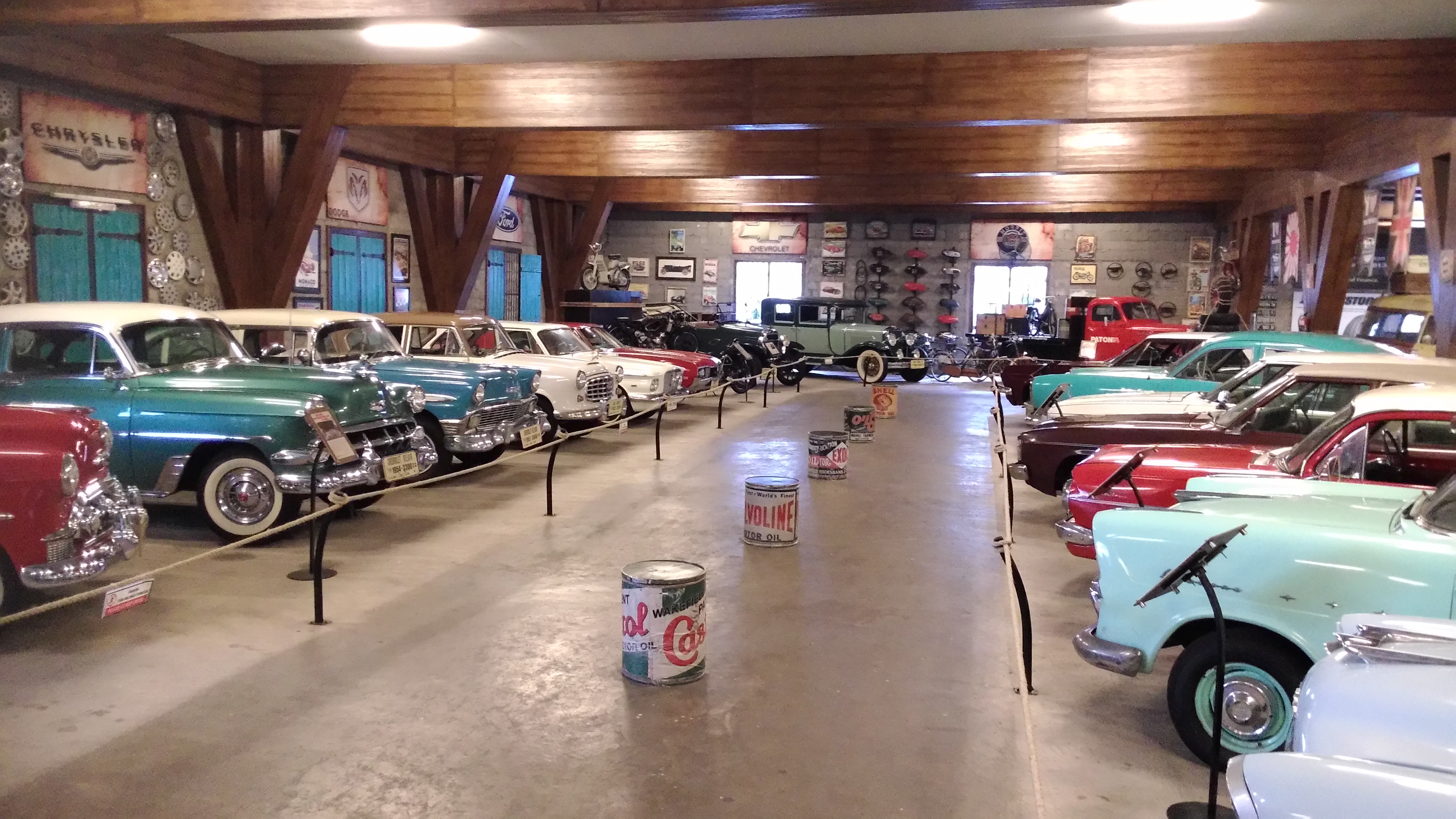
Museum Angkut -- "angkut" means transport in Indonesian -- opened on March 9, 2014, on the hillside of Mount Panderman in the highland city of Batu, about ninety kilometers south of Surabaya. The site climbs the lower slopes of the Kawi-Butak volcanic complex, and the museum's designers used that natural elevation to theatrical effect. More than 300 vehicles are arranged across zones designed to evoke entire continents: an Asian quarter, a European boulevard, an American streetscape. The European Zone is the most elaborate, its halls dressed in the style of 1800s and 1900s Paris, with vintage carriages and early automobiles posed against facades that might fool you into thinking you had wandered into a French arrondissement -- if not for the tropical humidity and the volcanic peak looming through the windows.
From Ox Carts to Flight Simulators
The collection spans the full arc of human movement. Traditional ox carts and becaks share floor space with gleaming European sports cars and American muscle. Horse-drawn carriages give way to early motorized tricycles, which yield to the streamlined coupes of the mid-twentieth century. On the third floor of the main building, a flight simulator lets visitors take the controls themselves, adding a dimension that most transport museums leave to the imagination. The breadth of the collection earned Museum Angkut a distinction it holds to this day: it was the first museum in Indonesia and Southeast Asia to cover every mode of transportation under one roof. That scope reflects something genuinely ambitious about the project -- not merely cataloging vehicles, but tracing the ways that the desire to move faster, farther, and more freely has shaped civilizations across continents.
The Jawa Timur Park Empire
Museum Angkut is one piece of a larger entertainment ecosystem built by the Jawa Timur Park Group, which has transformed the cool highland city of Batu into East Java's premier tourist destination. The same company operates Batu Secret Zoo, Eco Green Park, a wildlife museum, and Batu Night Spectacular, turning this small mountain town into a cluster of attractions that draws millions of domestic visitors each year. Batu sits at roughly 800 meters elevation, its climate noticeably cooler than the sweltering lowland cities, and the Jawa Timur Park Group has leveraged that natural advantage into something approaching a tropical theme park district. Museum Angkut fits this vision perfectly: education wrapped in spectacle, history made accessible through immersive staging rather than glass cases and placard text.
Volcanoes and Velocipedes
The setting is as much a draw as the collection. Batu nestles in a valley between some of Java's most dramatic volcanic landscapes -- Mount Arjuno and Mount Welirang to the north, the Tengger caldera and Mount Bromo to the east. On clear mornings, the peaks frame the museum like a diorama backdrop, and visitors stepping outside between zones find themselves looking across terraced hillsides thick with apple orchards and flower farms. The juxtaposition is striking: inside, a century of industrial ambition arranged in climate-controlled halls; outside, the ancient geological forces that built the island itself. For travelers passing through East Java on the well-worn route between Surabaya and Mount Bromo, Museum Angkut offers something unexpected -- a reason to stop in the highlands and consider how far the machinery of movement has come, displayed on a mountainside that predates all of it by millions of years.
From the Air
Located at 7.88°S, 112.52°E on the slopes of Mount Panderman near the highland city of Batu, East Java. The museum complex is visible from low altitude as a large built-up area on the western hillside above the city. Abdul Rachman Saleh Airport (WARA) in Malang is approximately 25 km to the east. Juanda International Airport (WARR) in Surabaya is roughly 90 km to the north. The surrounding terrain rises steeply to the west toward the Kawi-Butak volcanic complex, with elevations exceeding 2,800 meters. Approach with caution in the mountainous terrain; best views from the east.