Museum Boijmans Van Beuningen
For most of museum history, the storerooms were the part nobody saw. Crated paintings, climate-controlled racks of textiles, the seven-eighths of any major collection that lives off-stage. In November 2021, the Museum Boijmans Van Beuningen inverted that arithmetic. While the main museum sat closed for a renovation now budgeted at 359 million euros and not scheduled to finish until 2030, its art moved into a mirror-clad bowl across the street called the Depot. Designed by Winy Maas of MVRDV, it became the first publicly accessible art storage facility in the world. Visitors don't tour a curated exhibition. They walk through the closet.
A Bowl That Reflects the Park
The Depot reads, from the lawn of the Museumpark, as a 40-meter-tall reflective egg. Its facade is paneled in 1,664 mirrored panels that throw back fractured pictures of trees, sky, and the city around it. Climb the central staircase that zigzags upward through the atrium and you cross five levels of art storage where roughly 151,000 works sit on open racks: paintings hung on movable mesh walls, sculptures shelved like books, textiles in temperature-controlled vaults visible through glass. The pink-glass rooftop garden offers a panorama of Rotterdam and a restaurant for those willing to take a meal at the top of a building shaped like a salad bowl. MVRDV worked with garden designer Piet Oudolf on the planting; Oudolf, who designed New York's High Line, brought 75 native birch trees and a meadow of grasses to the roof.
The Original House Still Stands
Across the park, the original museum building waits. Adriaan van der Steur began work on it in 1931 and finished it in 1935, having toured European museums and conducted long studies of natural light to understand how galleries should be illuminated. He believed museums exhausted their visitors, and he designed every staircase to be discreet, every level change subtle, every wall a quiet backdrop for the paintings hung against it. "When I was able to say: This museum is a background for the artworks," he wrote, "I knew for myself that I had succeeded." His lighting studies were influential enough that the Rijksmuseum's 1952 renovation borrowed from them. The 1971 exhibition wing by Alexander Bodon and the 2003 galleries by the Flemish firm Robbrecht en Daem layered around Van der Steur's original. All of it now sits behind scaffolding.
Bosch, Bruegel, Rembrandt
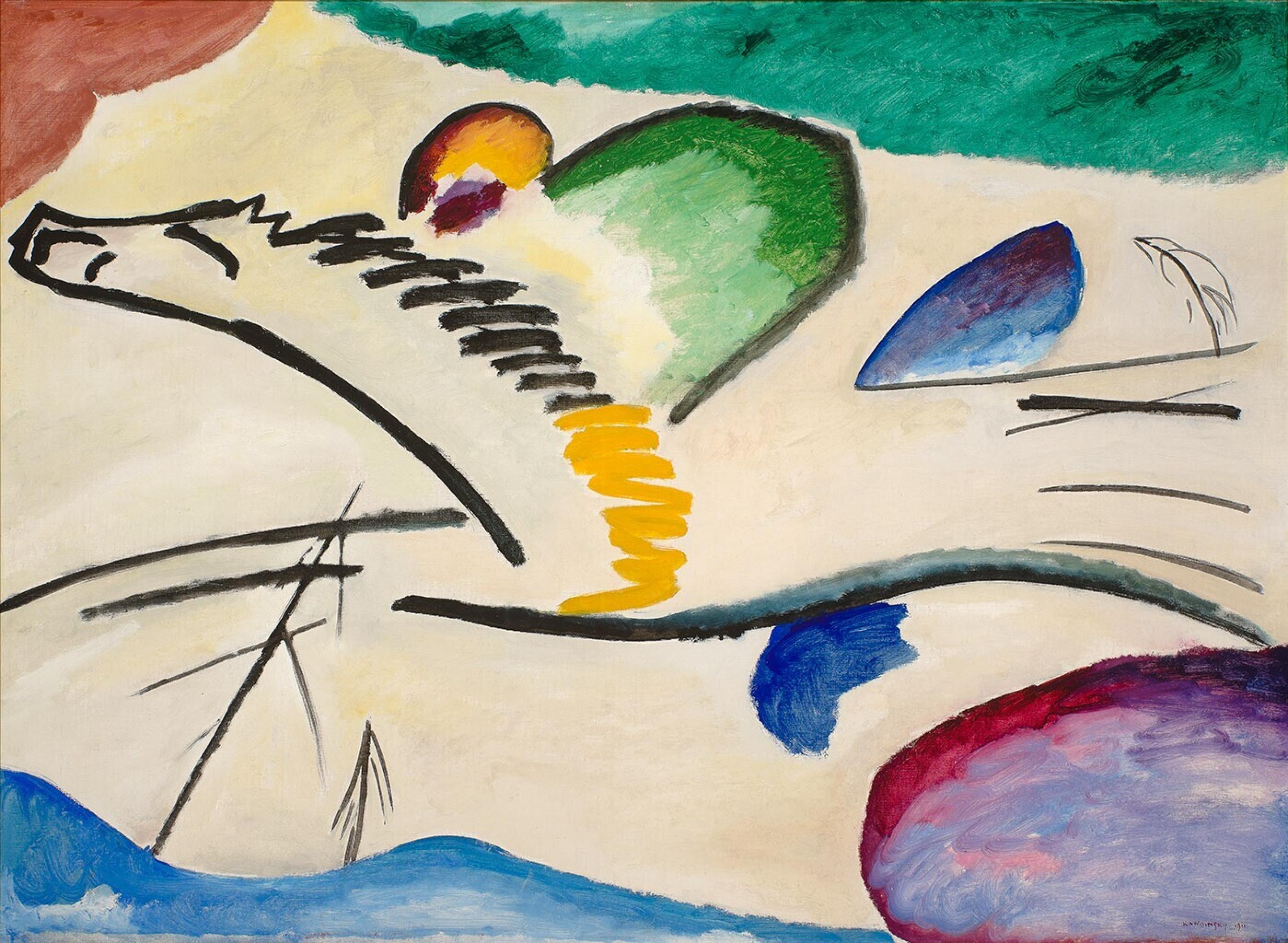
The collection that fills the Depot stretches from medieval altarpieces to last year's contemporary art. Hieronymus Bosch's The Wayfarer hangs alongside Pieter Bruegel the Elder's smaller Tower of Babel, sometimes called the Rotterdam Tower to distinguish it from the larger version in Vienna. Rembrandt's Titus at His Desk, painted in 1655 of the artist's only son, sits in the same building as Salvador Dali's Face of War from 1940, its eye sockets filled with smaller skulls filled with smaller skulls. The museum holds Van Gogh's Portrait of Armand Roulin, René Magritte's Not to be Reproduced, and a Rubens tapestry from the Achilles series. There is also a Mark Rothko that, in April 2025, was lightly scratched in the lower paint layer by a child during a visit to the Depot - a reminder that opening the storeroom to the public means accepting some of the risks the storeroom was designed to prevent.
The Hannema Shadow
Dirk Hannema directed the museum from 1921 to 1945, the years during which it took its present form. He was also a man whose collecting practices during the German occupation of the Netherlands remain a permanent stain on the institution. Hannema acquired works that had been seized from Jewish collectors, families who in many cases were deported to Auschwitz and murdered. Some of those works have since been returned to descendants. Many cases remain open. The museum mounted an exhibition in 2018 examining its own wartime conduct, an unusual act of institutional self-scrutiny. Today the website lists ongoing restitution claims, an acknowledgment that a great collection can be built from terrible sources, and that the work of acknowledging it is not finished. The Depot's radical transparency - everything visible, nothing hidden - takes on extra weight in that context.
From the Air
The museum and its Depot sit in the Museumpark at 51.9142 N, 4.4733 E, in Rotterdam's Centrum district about 1 km northwest of the Erasmus Bridge. The Depot reads from the air as a small reflective oval next to the larger rectangular footprint of the main museum building. Nearest airport is Rotterdam The Hague (EHRD), 5 km northwest. The Museumpark also contains the Kunsthal and the Natural History Museum Rotterdam, forming a clear cultural cluster visible at lower altitudes. The mirror finish of the Depot can flash distinctly in oblique sunlight.