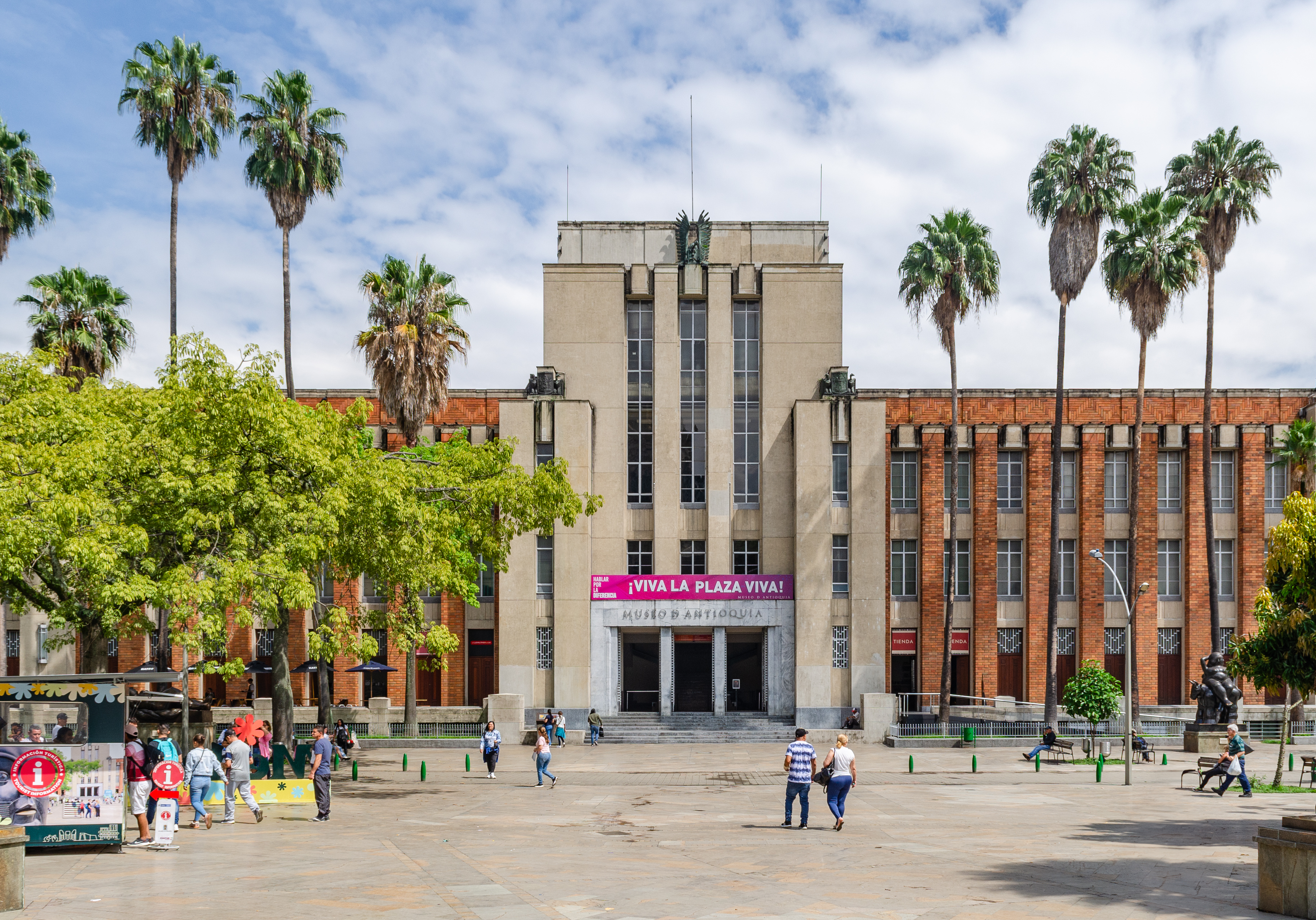
Museum of Antioquia
Twenty-three bronze figures stand in the open air outside the Museum of Antioquia, each one impossibly round -- a fat bird, a plump Roman soldier, a reclining woman whose curves seem to defy metallurgy. They belong to everyone. No ticket required, no velvet rope, no hushed gallery voice telling you to step back. Fernando Botero, Medellin's most famous son, donated these sculptures to his hometown in 2000, along with a vast collection of paintings and drawings that would fill the museum behind them. It was one of the most generous artistic gifts in Latin American history, and it turned a struggling institution into one of the continent's most visited cultural landmarks.
Five Names and a Century of Reinvention
The museum's roots reach back to 1881, when physician Manuel Uribe Angel and a group of civic leaders founded the Zea Museum, named for the independence-era statesman Francisco Antonio Zea, at the Library of the Sovereign State of Antioquia. Its first collection was modest: books, pre-Columbian artifacts, rocks, minerals, coins, and documents spanning the era from Colombian independence through the Thousand Days' War. But political turbulence intervened. When a constitutional reform in 1886 downgraded Antioquia from a sovereign state to a department, the museum lost its autonomy. It eventually closed entirely, its building converted into a governor's palace, its collection scattered between the University of Antioquia and the Historical Academy.
Rescued from Oblivion
The museum might have disappeared permanently if not for Teresa Santamaria de Gonzalez and Joaquin Jaramillo Sierra. In 1946, alarmed that Medellin lacked a proper museum, they organized its resurrection as a private nonprofit -- a structure deliberately designed to shield the institution from the political whims that had killed it before. Legal status came in 1953, and the museum finally reopened in 1955 inside the Casa de la Moneda, a former aguardiente factory next to the Church of the Veracruz. The space was humble, but the museum was alive again. In 1977 it changed its name to the Francisco Antonio Zea Museum of Art, a title that confused tourists and locals alike -- visitors expected a wax museum ("cera" sounding like "Zea" in Spanish).
Botero Changes Everything
In 1978, Fernando Botero made his first donation of works to the museum, and with that gesture the institution's trajectory shifted permanently. Botero, who had grown up poor in Medellin before becoming one of the world's most recognizable living artists, offered a deal: he would give a sculpture room, a painting room, and a drawing room if the museum relocated to a worthy space. The city obliged. The museum moved to its current home on what became Botero Plaza, and in 2000 Botero delivered on a staggering scale -- 23 monumental bronze sculptures for the plaza and 188 works for the galleries inside, making the Museum of Antioquia the largest collection of his art anywhere in the world. The outdoor sculptures became an instant public gathering place, alive with street vendors, families, and tourists rubbing the bronze belly of the famous fat bird for luck.
A Museum Without Walls
Since 2016, the Museum of Antioquia has pushed beyond its physical boundaries through the Museo 360 initiative, which seeks to make the museum a space for encounters and reflections that, in the institution's own words, recognize the reality of the city instead of hiding it. Collaborative projects with groups like Las Guerreras del Centro -- a collective of sex workers from Medellin's downtown -- have produced exhibitions that challenge stigma and center voices typically excluded from gallery walls. The museum now draws over a thousand visitors daily. What began in 1881 as a doctor's collection of rocks and coins has become something more ambitious: a living institution that insists art belongs not in storage or behind velvet ropes, but in the open air, at street level, where anyone walking past can touch it.
From the Air
Located at 6.253N, 75.569W in the heart of downtown Medellin, adjacent to Botero Plaza and Parque Berrio. The museum building and its surrounding plaza of bronze sculptures are at the valley floor, surrounded by dense urban development. Recommended viewing altitude: 3,000-5,000 feet AGL. Olaya Herrera Airport (SKMD) is approximately 1.5 nautical miles south-southwest. Jose Maria Cordova International (SKRG) is about 18 nautical miles southeast in Rionegro. The Medellin River runs roughly 2 blocks west of the museum.