Museum of Art and Digital Entertainment
It started with a box of EPROMs at a flea market. In July 2008, technology journalist Alex Handy was browsing the Laney College swap meet in Oakland when he spotted a collection of programmable memory chips for the Atari and ColecoVision. They were not finished games. They were drafts -- different revisions capturing the iterative process of game development, the digital equivalent of a novelist's marked-up manuscript pages. Handy recognized what he was holding: artifacts that most of the gaming industry had already thrown away, evidence of how games were actually made before version control and cloud storage made such things routine. From that accidental discovery grew the Museum of Art and Digital Entertainment -- The MADE -- a place that insists the best way to preserve a video game is to keep it playable.
From Flea Market to First Exhibition
Handy spent the next three years building a collection and recruiting allies. By the time he organized a volunteer crew to exhibit the museum's holdings at the 2011 Game Developers Conference, the board included Dr. Henry Lowood, curator of Stanford University's History of Science and Technology Collections -- a scholar who understood that digital culture needed physical stewardship. At GDC, the MADE displayed a large poster tracing the lineage of video game companies, and industry professionals signed their names next to the studios where they had worked. It was part exhibit, part living document, part reunion. A successful Kickstarter campaign followed, and the museum opened its doors, initially targeting a space in San Francisco's historic 3rd and Market area. But Oakland would prove to be the MADE's true home, and the museum settled into the kind of shoestring, community-rooted existence that defines the city's cultural institutions.
Survival Mode
When the COVID-19 pandemic forced the MADE to close in March 2020, the museum entered its most precarious chapter. A landlord dispute compounded the crisis, and volunteers moved the entire collection into temporary storage in West Oakland -- crates of vintage consoles, cabinets of cartridges, shelves of hardware spanning four decades of gaming history, all waiting in a warehouse for a future that was far from guaranteed. The documentary team at NoClip featured the museum's predicament in a video that helped raise funds and awareness. Volunteers launched the MADECast podcast, keeping the community alive through conversations with legends of game design: Tim Schafer, Ron Gilbert, Roberta Williams. These were not distant celebrities dispensing wisdom from on high. They were peers in a small, passionate world, and the podcast captured the informality of an industry that still remembers when it fit inside a single convention hall.
Rebooting on Washington Street
In the fall of 2021, Shem Nguyen took over as Executive Director, and Handy moved into the role of Board President. The MADE brought its collection out of storage for the first time at a summer festival in East Oakland's Little Saigon district -- a neighborhood far from the tech corridors of San Francisco, which said something about who the museum was really for. By May 2022, the MADE had secured a lease at 921 Washington Street through a partnership with the East Bay Asian Local Development Corporation. One month later, the museum threw a reopening party. Matt Householder, the producer of Diablo II, showed up, signed a copy of the original Diablo sitting on a shelf, and told stories about its production. Over a hundred visitors packed the space. It was not a grand gala. It was a neighborhood party with game controllers.
Playable Preservation
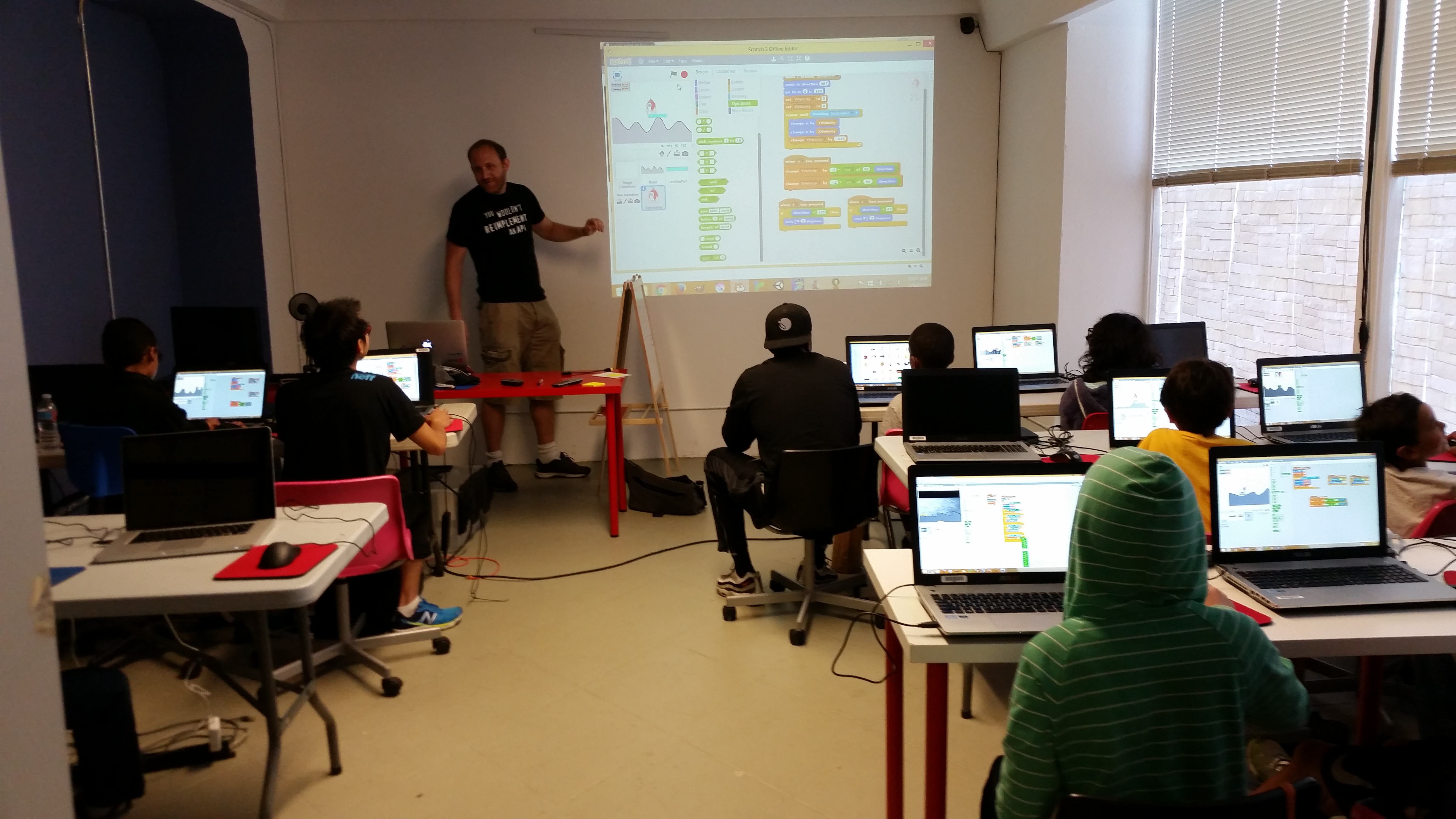
The MADE's philosophy is deceptively simple: games should be played, not just cataloged. Every Saturday morning, the museum runs free programming workshops where kids as young as nine learn game design using Scratch and the museum's own collection as teaching tools. There are no entrance exams or prerequisites -- just show up and start building. The museum also leads NeoHabitat, an open-source project to resurrect Habitat, a pioneering online world from 1986 that prefigured everything from Second Life to Fortnite. The project lives on GitHub, maintained by volunteers who believe that preserving a virtual world means keeping its servers running, not just archiving its code. Game jams, speaker series, and Super Smash Bros tournaments fill out the calendar. In July 2024, the museum hired its first full-time Executive Director, Mason Young, while Nguyen moved into the Board President role and Handy became founder emeritus. Sixteen years after a flea market find, the scrappy museum was still running -- still insisting that digital art deserves the same curatorial care as oil paintings and marble sculptures.
From the Air
Located at 37.822N, 122.260W in downtown Oakland, near the intersection of Washington Street and 9th Street. The museum sits within Oakland's Chinatown district, identifiable from the air by the tight grid of streets between Broadway and the I-880 freeway. Best viewed below 2,000 feet AGL. Nearest airports: Oakland International (KOAK, 8 nm south), Buchanan Field (KCCR, 18 nm northeast). The Jack London Square waterfront lies about half a mile to the southwest.