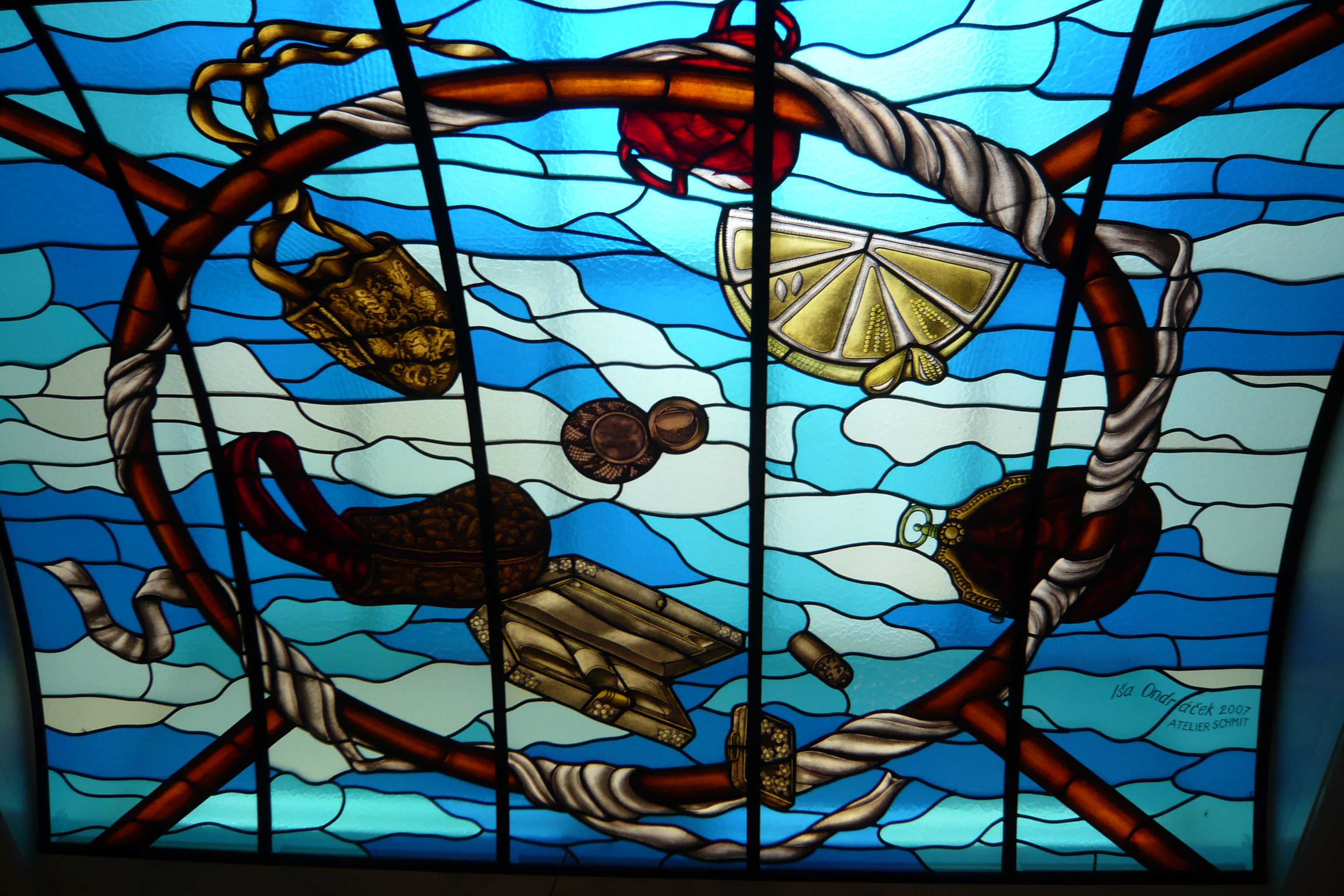
Museum of Bags and Purses
It started with a single bag. In the mid-1960s, an Amstelveen antique dealer named Hendrikje Ivo bought a small tortoiseshell purse inlaid with mother of pearl, dating from the 1820s. She kept buying. Three thousand bags later, she and her husband Heinz opened two rooms of their house to visitors who wanted to see what they had assembled - a private obsession that would grow into the world's largest collection of handbags and, eventually, into a museum on the Herengracht. The Museum of Bags and Purses closed in April 2020, the first Dutch cultural institution to announce permanent closure because of the coronavirus pandemic.
A Canal House With Centuries
The museum's final home was Herengracht 573, a building older than almost any object in its collection. Cornelis de Graeff - statesman of the Dutch Golden Age, nine-time burgomaster of Amsterdam, uncle of Grand Pensionary Johan de Witt - bought the plot at auction in 1664 and made a peculiar agreement with his neighbours: every new house on the row would share a single height, a single facade, a single gable. Nowhere else along Amsterdam's UNESCO-listed canal belt does such uniformity survive. The first stone was laid on 17 April 1665. The de Graeffs filled it with painted ceilings and tall windows; later occupants included Jeltje de Bosch Kemper, a nineteenth-century suffragist who argued that upper-class Dutch women deserved meaningful work. By the time the museum arrived in 2007, the house had cycled through merchants, insurers, and businesses for a century. The two period rooms on the first floor still glowed with ceiling paintings by Paulus de Fouchier from around 1682, depicting Amsterdam surrounded by allegorical figures of Europe, Asia, Africa, and the Americas - Oceania omitted because the West had not yet found it.
What Pockets Could Not Hold
Walk the museum's chronology and you walk through the history of what women, and to a lesser extent men, were allowed to carry. The earliest piece was a sixteenth-century goatskin pouch a man would have worn at his belt. Then pockets arrived in menswear, and men's bags vanished into specialised forms - tobacco pouches, doctor's bags. Women kept carrying. Through the eighteenth century, ladies tied separate pockets at the waist beneath their skirts, and the museum displayed a flame-stitched example from 1766, dense with embroidery. When the Empire waistline rose under the bust and gowns thinned to muslin, those hidden pockets became impossible to wear. The reticule - small, dangled from the wrist - was the workaround. Aristocratic women, the museum explained, carried almost nothing in them: a handkerchief, smelling salts. Footmen handled the rest. Money was rarely needed. They bought on credit, like ghosts.
Beads and Beasts
Some pieces stopped visitors cold. A wedding pouch embroidered with more than fifty thousand sable beads - so tiny they had to be strung on horsehair instead of thread - would have taken a master beader more than two weeks to complete. Gambling bags from the seventeenth and eighteenth centuries stood upright on stiffened bases, mouths agape so any winnings inside would be visible from across the table. The twentieth-century rooms held a different kind of object lesson: bags made from the skins of stingrays, leopards, armadillos. Many of these had been donated by collectors who no longer wanted them in their houses. There were Chanel quilteds, early Gucci bamboo handles, a Hermes Kelly, a 1996 Judith Leiber novelty bag shaped to look like a pair of socks, and a 2016 Balenciaga Bazar Shopper - the It Bag of its year, and one of the museum's last acquisitions.
The Last Closure
When the Dutch lockdown began in March 2020, the museum closed like everyone else. A month later, director Manon Schaap announced the closure would be permanent. The grants and sponsorships needed for long-term operation had not materialised, and the pandemic had erased what perspective remained. "It makes me very sad that I have to close the doors," she wrote in a statement on the museum's website. "We were working on bringing the vision of the bag, identity, fashion, craft and society to life. Unfortunately, reality has caught up with us." The collection - more than five thousand objects - was dispersed. The canal house remains. Pieter de Graeff's ceiling still shows Amsterdam at the centre of a world that did not yet include Oceania.
From the Air
Herengracht 573, Amsterdam (52.365 N, 4.897 E). The canal belt forms an unmistakable concentric arc from the air; Herengracht is the innermost. Schiphol (EHAM) lies about 12 km southwest. Amsterdam city centre is best viewed at 2,000-4,000 ft AGL on a clear morning, with the IJ to the north and the green ring of the Vondelpark visible to the southwest.