Museum of Byzantine Culture
Thirty thousand coins. One thousand wooden icons. Two thousand sculptures. Seven thousand small finds, mostly from organized excavations under Macedonian soil. Two hundred wall paintings, including some of the finest tomb paintings in Greece. The Museum of Byzantine Culture in Thessaloniki gathers a quietly enormous collection in a building designed specifically to hold it, which is rarer than it sounds. Most museums of late antiquity make do with palaces or warehouses repurposed for the task. This one was built from scratch, by an architect who won a national competition in 1977 and lived just long enough to see his work completed.
A Building for the Work
Greece announced an architectural competition in 1977 to design a museum dedicated to the Byzantine heritage of Thessaloniki and the wider Macedonian region. Kyriakos Krokos won. Construction did not begin until March 1989, more than a decade later, in a delay typical of Greek state projects of that era. The building was completed in October 1993. Antiquities were transferred from the Byzantine and Christian Museum in Athens in June 1994, displayed in an inaugural exhibition with the title Byzantine Treasures of Thessaloniki: The Return Journey. The museum opened to the public on 11 September 1994. In 2005 it received the Council of Europe Museum Prize, an annual award given to a single European museum for outstanding contribution to cultural heritage. The building is intentionally low-profile, a brick and concrete complex set back from the road, organized around a quiet atrium courtyard.
The Second City
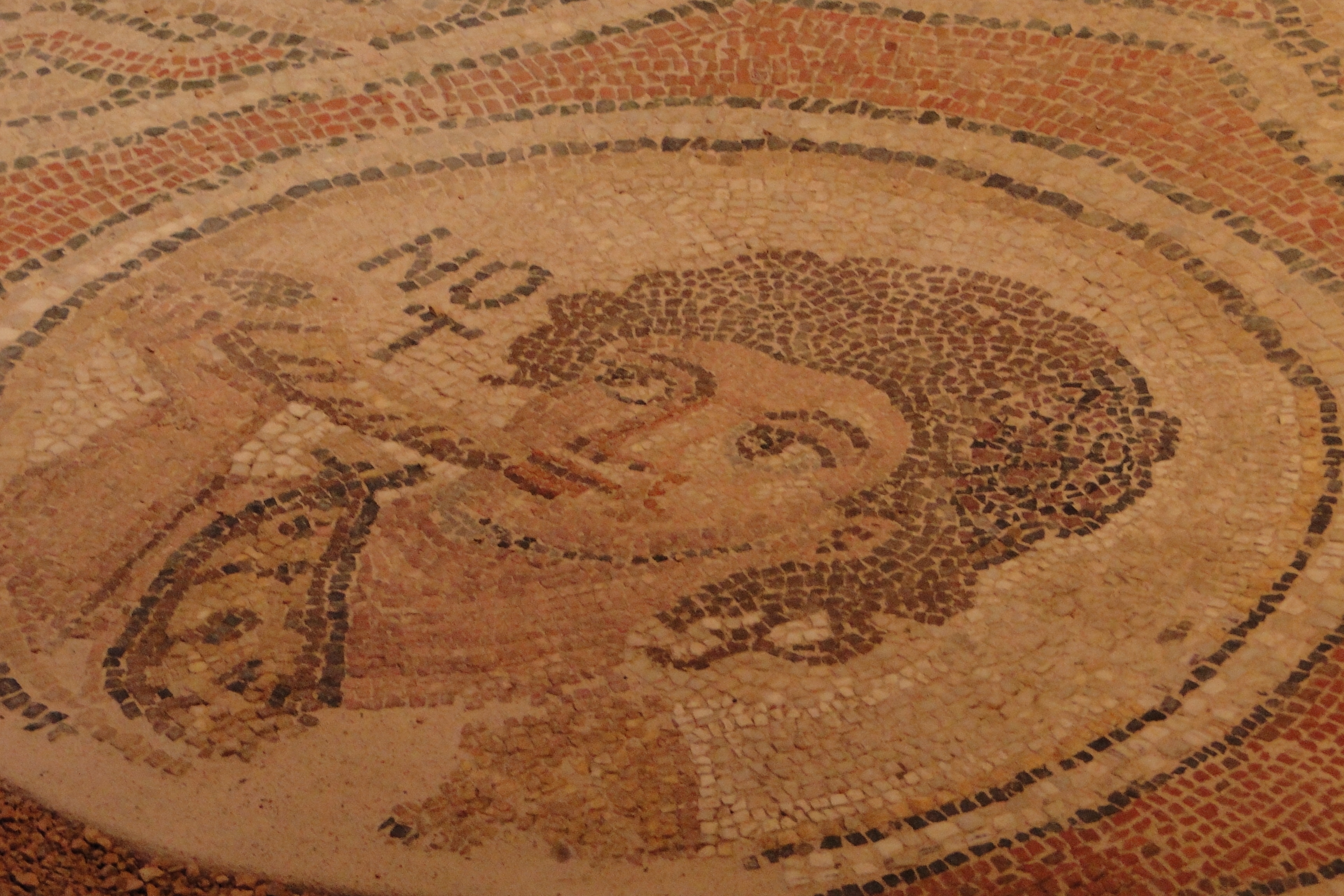
Thessaloniki was the second city of the Byzantine Empire after Constantinople for most of its long history, and the largest urban center in the empire's European territories. The museum's eleven permanent exhibitions follow the Byzantine story from its beginning to its ends, plural. The Early Christian Church room shows the artifacts of the centuries after Constantine the Great founded the empire in 330. The Early Christian City and Dwelling room reconstructs the reception hall of a wealthy Thessaloniki household. From the Elysian Fields to the Christian Paradise, opened in 1997, traces how burial customs shifted from late antiquity into the Christian era. Later rooms cover the Macedonian and Komnenian dynasties, the Byzantine emperors from Heraclius to the fall of Constantinople in 1453, the fortified castles of medieval Macedonia, and the twilight of Byzantium between the Crusader sack of 1204 and the Ottoman conquest two and a half centuries later.
Byzantium After Byzantium
The museum's most distinctive room is Room 10, opened in 2004 and titled Byzantium after Byzantium: The Byzantine Legacy in the Years after the Fall. The room argues that the Byzantine cultural tradition did not end in 1453 with the Ottoman conquest of Constantinople. Greek Orthodox communities under both Venetian and Ottoman rule continued to produce icons, illuminated books, embroideries, silverwork, and gold work in styles directly descended from Byzantine practice. The rooms beside it hold two important private collections: more than 200 prints from the 18th and 19th centuries donated by Dori Papastratos in 1994, and 1,460 artifacts left to the museum by Demetrios Economopoulos, exhibited since 2001 and dominated by icons from the 14th to 19th centuries. The 27 books and manuscripts in the museum's collection include some pages of the Quran and an Ottoman manuscript, reminders that the Greek Orthodox and Ottoman Muslim worlds were not as separate as later nationalist histories sometimes pretended.
The Workshops Below
What makes the museum distinctive among Greek institutions is the seven conservation workshops housed in 2,750 square meters of climate-controlled space beneath the public galleries. The icon conservation workshop, the museum's oldest, has used X-ray, ultraviolet, and infrared imaging since 1993 to reveal underlying paintings beneath the visible surface of icons. When the older painting is in good condition and significantly older than the surface above it, conservators can sometimes preserve both. The work takes months for a single icon, performed only rarely. Other workshops handle paper and parchment conservation, ceramic and glass restoration, metals cleaning, mosaic preservation, stone restoration, and the painstaking transfer of mural paintings onto fiberglass-backed supports for museum display. Storage rooms occupy another 1,200 square meters. Sculptures sit on movable pallets. Icons and mosaics rest in horizontal sliding frames. After studying a Byzantine shipwreck, conservators learned to stack amphorae the way the original sailors had, a small detail of practical knowledge that survived 1,500 years to be useful again.
From the Air
Museum of Byzantine Culture: 40.6239 N, 22.9550 E, in central Thessaloniki, near the seafront and the Archaeological Museum. Best viewed below 2500 feet. Identifiable as a low brick-and-concrete complex set among trees, less imposing from the air than the nearby White Tower or Galerius Arch. Thessaloniki Airport (LGTS) is about 8 nm southeast. The Aegean Sea is immediately south. Class C airspace; coordinate with Thessaloniki approach. Mount Olympus is visible 50 nm southwest in clear weather, a useful navigational reference.