Museum of Contemporary Tibetan Art
The Rensenpark in Emmen used to smell like elephants. For decades it was the Noorder Dierenpark, the famous Dutch zoo whose closure in 2016 left a leafy ring of empty enclosures in the heart of town. Most of the animals moved on to a new park outside the city. The buildings stayed, and the municipality decided to fill them with artists instead. One of the first to arrive was Lama Tashi Norbu, a Bhutanese-born Tibetan Buddhist monk who painted, performed, and dreamed of a museum for the contemporary art of a country he could not return to. In June 2017 he opened it in a former zoo pavilion, and called it MOCTA.
A Museum for an Exile
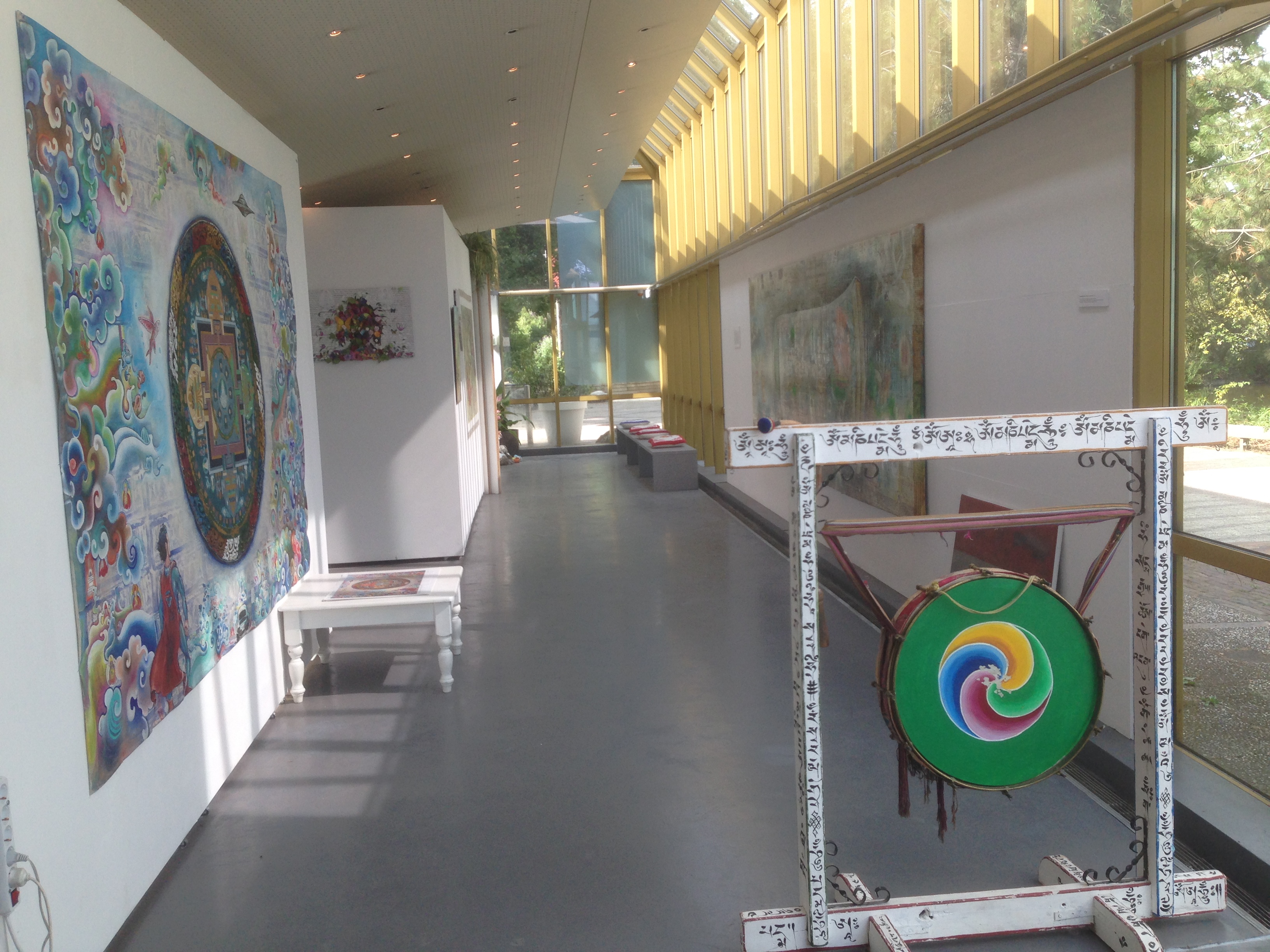
Contemporary Tibetan art has nowhere obvious to live. The historic monasteries of Tibet hold thangkas and ritual objects but not the living, experimental work of artists shaped by exile, migration and the modern world. Major Western museums collect Tibet's past more eagerly than its present. Lama Tashi Norbu, working with the artist Leela Eleni Skitsa, built MOCTA to fill that gap. The collection mixes traditional thangka painting and altar pieces with newer work, including his own performance-driven canvases, and panels telling the story of the 14th Dalai Lama. The intent, the museum says plainly, is to give a voice to Tibet, its cause, its land and its culture.
From Zoo to Sanctuary
The Rensenpark sits in central Emmen, in the southeastern corner of Drenthe near the German border, and the contrast with its former life is part of the charm. Where lions once paced behind glass, prayer flags now flutter between trees. Where the orangutan house stood, galleries and workshops have moved in. Emmen Municipality turned the old zoo grounds into a creative industry hub when the animals left, knitting together a colony of independent studios, galleries and small museums. MOCTA is among the more striking residents, its calm rooms decorated with mandalas and butter-lamp altars in a building still recognizably zoological in its bones.
Tashi Norbu's Way
Lama Tashi Norbu is not a typical museum founder. Trained in the rigorous discipline of thangka painting in Bhutan and India, he made his name internationally for live-painting performances in which he produces large, color-soaked Buddhist images in front of an audience, sometimes accompanied by music and chanting. He calls the approach a form of meditation made visible. MOCTA reflects that sensibility. It is part gallery, part retreat center, hosting workshops, lectures, festivals and the occasional small-scale ceremony, with the explicit goal of inviting Dutch and international visitors to encounter Tibetan culture as a living practice rather than a museum exhibit behind glass.
What You See Inside
Walk in and the first thing you tend to notice is a Tibetan altar, full of butter lamps, brass bowls and the small precise objects of daily ritual. Around it hang thangkas in tight gold-edged borders, scenes from the Buddha's life crowded with figures and symbols. Panels along the walls trace the life of the 14th Dalai Lama, from his recognition as a child in eastern Tibet to his flight into Indian exile in 1959. Cases hold talismans, ornaments and small artifacts brought out of Tibet by communities who carried them across the Himalayas. Other rooms hold newer paintings by Tashi Norbu and the contemporary artists he has gathered around him, where traditional motifs collide with abstraction and the colors of a Dutch summer.
Why Emmen, Why Here
Drenthe is not the most likely host for a museum of Tibetan art. It is famous for prehistoric dolmens, peat-cutting villages and a flat, open horizon. That unlikeliness is part of why MOCTA works. A small museum in a former zoo in a quiet provincial town gives visitors space to slow down and actually look. The lighting is good, the rooms are uncrowded, and the founder is often somewhere on site. For the Tibetan diaspora it is a small piece of home in northern Europe. For everyone else it is a chance to meet a culture mostly known through headlines on the artists' own terms.
From the Air
Located at 52.78 N, 6.90 E in central Emmen, in the southeastern corner of the Netherlands close to the German border. From cruise altitude the Rensenpark reads as a small green oval of mature trees set in the urban grid of Emmen, between the town center and the larger expanse of the Hondsrug. Nearest airports: Groningen Airport Eelde (EHGG) about 50 km north, Munster/Osnabruck (EDDG) about 60 km southeast.