Museum of History of Panama
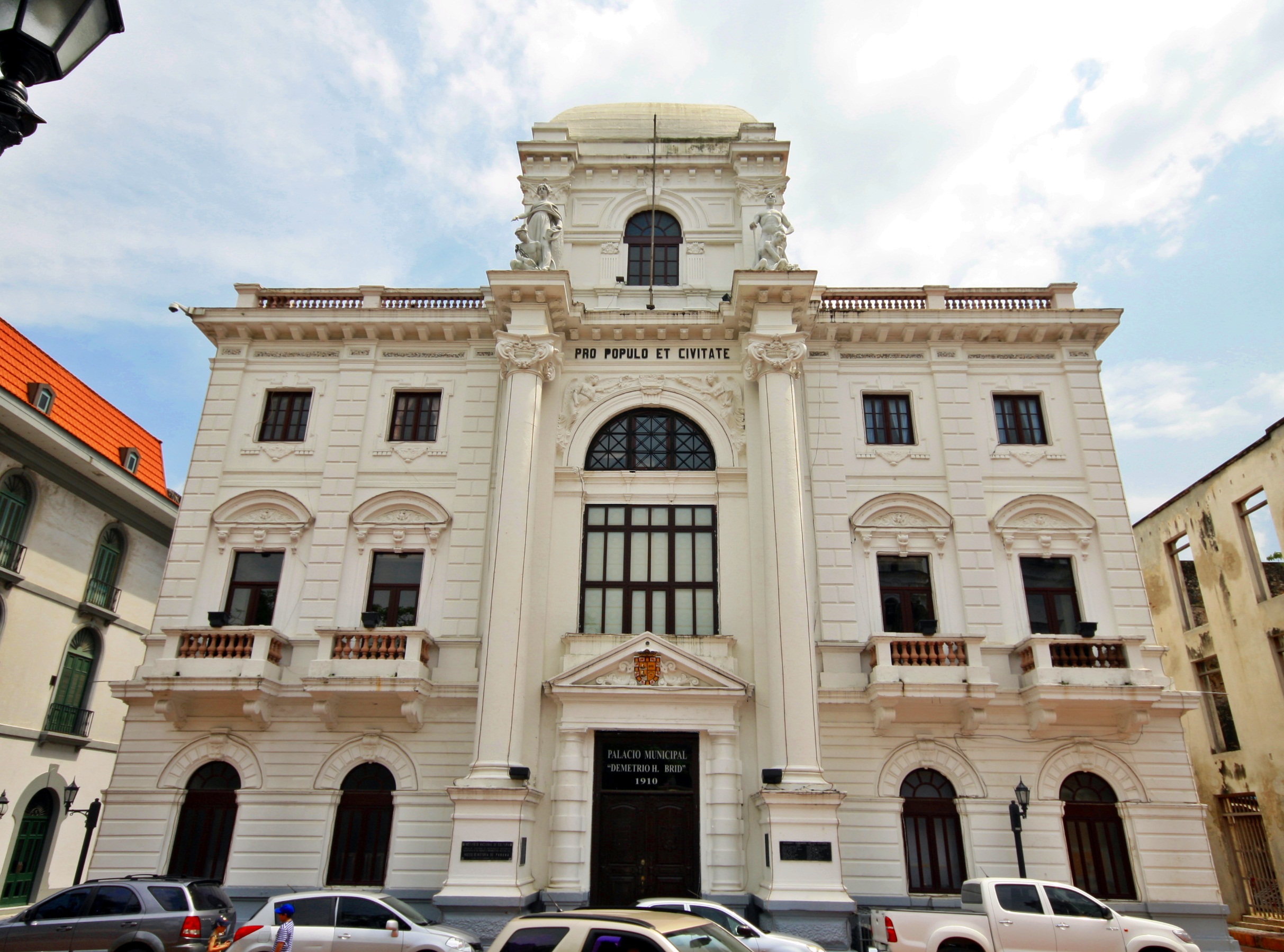
The flag is a replica, but the story it tells is real. In the ground-floor galleries of the Municipal Palace in Panama City's Casco Antiguo, a hand-sewn banner sits behind glass -- a copy of the first Panamanian flag, stitched by Maria Ossa de Amador, wife of Manuel Amador Guerrero, the hero of Panama's separation from Colombia and the country's first president. Nearby, the original score of the national anthem rests alongside the evolving designs of the coat of arms. The Museum of History of Panama is small, just three rooms on a single floor, but it holds the physical evidence of how a nation stitched itself together from colonial threads, revolutionary acts, and hard-won sovereignty.
Three Rooms, Five Centuries
Each of the museum's permanent galleries covers a distinct chapter. The Colonial History Room traces the arrival of the Spanish to the Isthmus of Panama, from the founding of Santa Maria la Antigua del Darien -- one of the earliest European settlements on the American mainland -- through the establishment of Panama City and its eventual relocation to the Casco Antiguo. Route maps, old engravings, and replicas of European and indigenous weapons fill the cases. The Departmental History Room covers the long period when Panama was part of Colombia, from 1821 to November 3, 1903, including the construction of the Trans-Isthmian Railroad, the disastrous French attempt to build the canal, the Thousand Days' War, and the rejected Hay-Herran Treaty that hastened the break. The Republican History Room picks up with independence and carries through to the present, covering the events of January 9, 1964, the military period, and the Torrijos-Carter Treaties.
A Woman, a Flag, a Nation
The museum's most celebrated artifact is the replica of that first flag, and its story says as much about Panama's birth as any treaty or battlefield. Maria Ossa de Amador sewed the original in secret, before the separation from Colombia was even certain. Her husband, Manuel Amador Guerrero, was one of the conspirators plotting independence. The flag she made became the symbol carried through the streets on November 3, 1903, the day Panama declared itself a sovereign nation. Beside it in the museum is the original design of the national coat of arms by Nicanor Villalaz, and the original and current scores of the anthem, once called the Himno Istmeno. Together these objects form a kind of national birth certificate -- not in legalese, but in cloth, ink, and music.
The Palace and Its Guardian
The museum was inaugurated on December 14, 1977, by Dr. Reina Torres de Arauz, an anthropologist who founded several of Panama's cultural institutions under the National Institute of Culture. Her timing was deliberate: 1977 was also the year of the Torrijos-Carter Treaties, which guaranteed Panama's eventual control over the canal. Restoring the Municipal Palace and filling it with the nation's founding documents was an act of cultural sovereignty to match the political kind. The building itself had been restored in 1975, with a library and meeting room for the Panamanian Academy of History added to the ground floor. In 2000, the Friends of the Museums funded another restoration, and the museum was formally handed to the National Institute of Culture. Today the Ministry of Culture administers it.
Where the Isthmus Remembers
The Casco Antiguo around the museum is itself a kind of exhibit -- cobblestone streets, colonial facades, and churches layered over the site where Panama City was refounded in 1673 after the pirate Henry Morgan destroyed the original settlement at Panama Viejo. Walking from the museum to the waterfront takes five minutes and five hundred years. The collections inside are modest by the standards of national museums, but they carry weight disproportionate to their size. Maps that trace routes across the isthmus. Photographs of railroad construction that prefigured the canal. Documents that record the moment Panama stopped being a department of Colombia and started being itself. For a country whose geography has always attracted the ambitions of larger powers, these small objects are proof that Panamanians were writing their own story all along.
From the Air
The Museum of History of Panama is located in the Casco Antiguo (8.952N, 79.535W), the historic district of Panama City on a small peninsula jutting into the Bay of Panama. The Casco Antiguo is a UNESCO World Heritage Site and clearly visible from the air as a dense cluster of colonial-era buildings distinct from the modern high-rise skyline to the east. Marcos A. Gelabert International Airport (MPMG) is approximately 3 km southwest. Tocumen International Airport (MPTO) is 24 km east. Best viewed at 1,500-2,500 feet AGL from the south over the bay.