Museum of Human Evolution
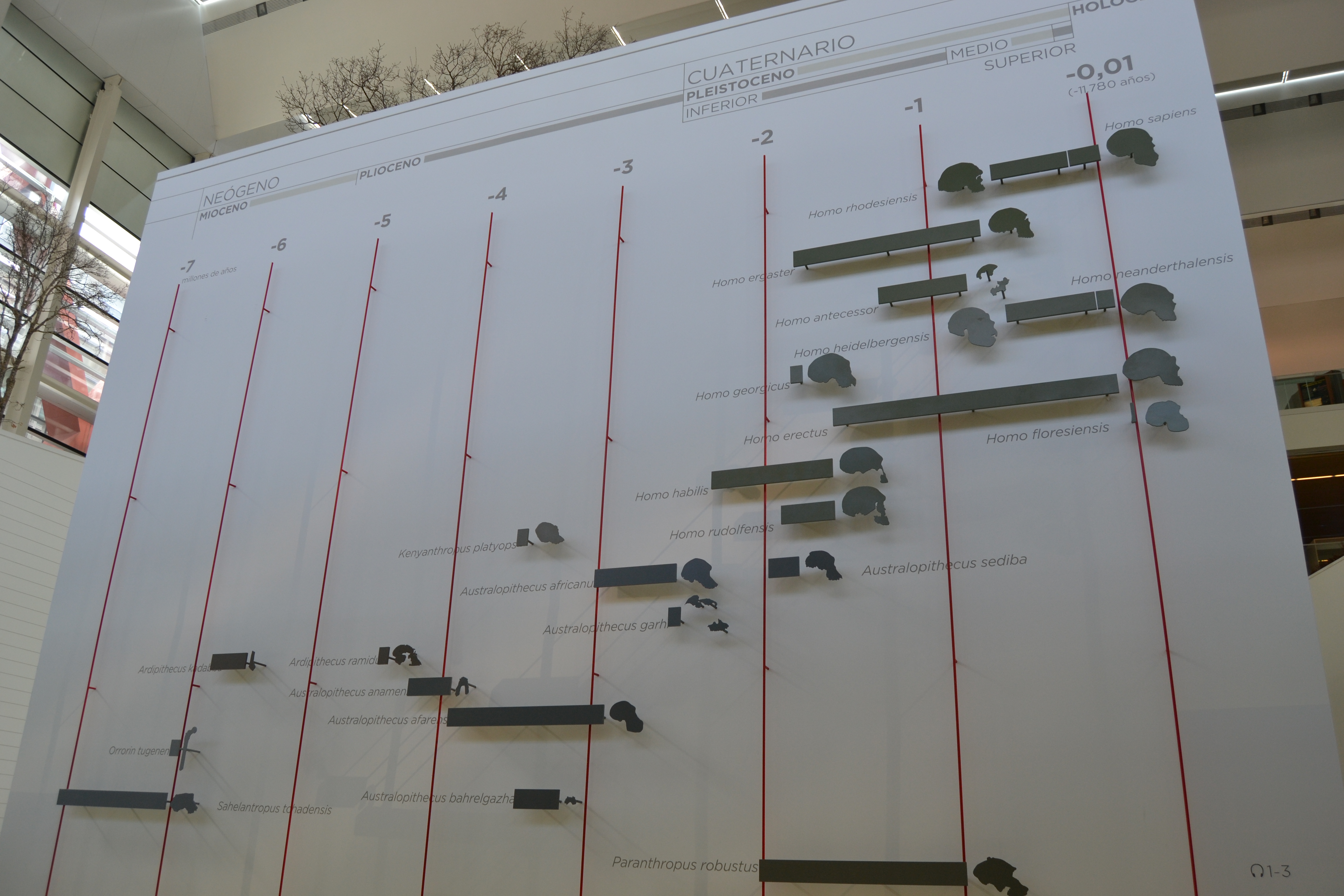
Ten faces stare back at you from the ground floor of the Museum of Human Evolution in Burgos. They are not masks or mannequins -- they are hyperrealistic sculptures by French artist Elisabeth Daynes, each one reconstructed from fossil evidence to show what our ancestors actually looked like. Lucy, the Australopithecus afarensis, stands barely a meter tall with dark, intelligent eyes. A Homo neanderthalensis, broad-shouldered and heavy-browed, gazes past you with an expression that looks uncomfortably like recognition. The museum opened in 2010, and within its first year, 279,000 people came to meet their relatives.
From Barracks to Ancestors
The museum sits on the south bank of the Arlanzon River on land with a layered history of its own. A Dominican convent, the Convent of San Pablo, once stood here -- one of the most important houses of the Order of Preachers in Castile. After its dissolution in the mid-nineteenth century, military barracks replaced it. When those were demolished in the twentieth century, the plot became a car park, a purposeless void in central Burgos. The decision to build a museum of human evolution came in 2000, inspired by the extraordinary fossil finds at the Archaeological Site of Atapuerca, just 16 kilometers to the east. An international architectural competition drew entries from Steven Holl, Arata Isozaki, and Jean Nouvel, but the prize went to Spanish architect Juan Navarro Baldeweg.
Descending Through Time
Navarro Baldeweg designed the museum as a journey downward through time. Level -1 recreates the archaeological sites of the Sierra de Atapuerca, including a reproduction of the Sima de los Huesos -- the Pit of Bones where more than 5,500 skeletal fragments of Homo heidelbergensis were found. The Gran Dolina and Sima del Elefante excavation sites are also portrayed. Level 0 is where the ten hyperrealistic ancestors stand, each reconstructed with forensic precision from the fossil record: Australopithecus, Paranthropus, Homo habilis, Homo antecessor, Homo heidelbergensis, and Homo neanderthalensis among them. On the same floor, a reproduction of the stern of HMS Beagle recalls the voyage that gave Charles Darwin the observations he needed to formulate the theory of evolution.
Culture and Climate
The upper floors shift from bones to behavior. Level 1 traces milestones in the evolution of human culture -- the development of tools, language, art, and social organization. Level 2 displays three ecosystems that shaped human evolution: the tropical jungle where our earliest ancestors lived, the African savannah where bipedalism proved its worth, and the tundra-steppe of the last glaciation where Homo sapiens demonstrated the adaptability that would carry the species to every continent. The museum uses more than 25 large-format projections, a 360-degree circular projection system, and over 50 video sources to immerse visitors in these environments. The interior landscaping recreates the terrain of the Sierra de Atapuerca itself, blurring the line between museum and field site.
The Human Evolution Compound
The museum is the centerpiece of what Burgos calls the Complejo de la Evolucion Humana -- the Human Evolution Compound -- which also includes a convention center and the CENIEH research institution, where scientists continue to study the Atapuerca finds. By 2022, the museum had recovered its pre-pandemic visitor numbers, drawing nearly 143,000 people to the permanent exhibition alone and placing it among the most visited museums in Spain. From the air, the building is a long, low-slung glass and concrete structure on the river's south bank, its modern lines contrasting sharply with the medieval spires of Burgos Cathedral visible just blocks to the north. Together, the cathedral and the museum bookend eight centuries of human ambition -- one reaching toward heaven, the other reaching into the deep past.
From the Air
Located at 42.34°N, 3.70°W on the south bank of the Arlanzon River in Burgos, Spain. The museum is a large modern glass building visible near the historic center. Burgos Cathedral's spires are prominent landmarks nearby. Nearest airport: Burgos (LEBG), approximately 4 km northeast. The Sierra de Atapuerca archaeological site is 16 km to the east. Flat Castilian meseta terrain surrounds the city.