Museum of Neon Art
Los Angeles has always communicated in light. Drive Sunset Boulevard at dusk and what you see is a century of electric signage — the vocabulary of a city that built its identity in part through spectacle, that understood drawing attention was its own form of art. For most of the twentieth century, signs were disposable: when a business closed, the sign came down, went into a dumpster, and disappeared. In 1981, an artist named Lili Lakich and a gallery director named Richard Jenkins decided to stop letting that happen.
What Was Being Lost
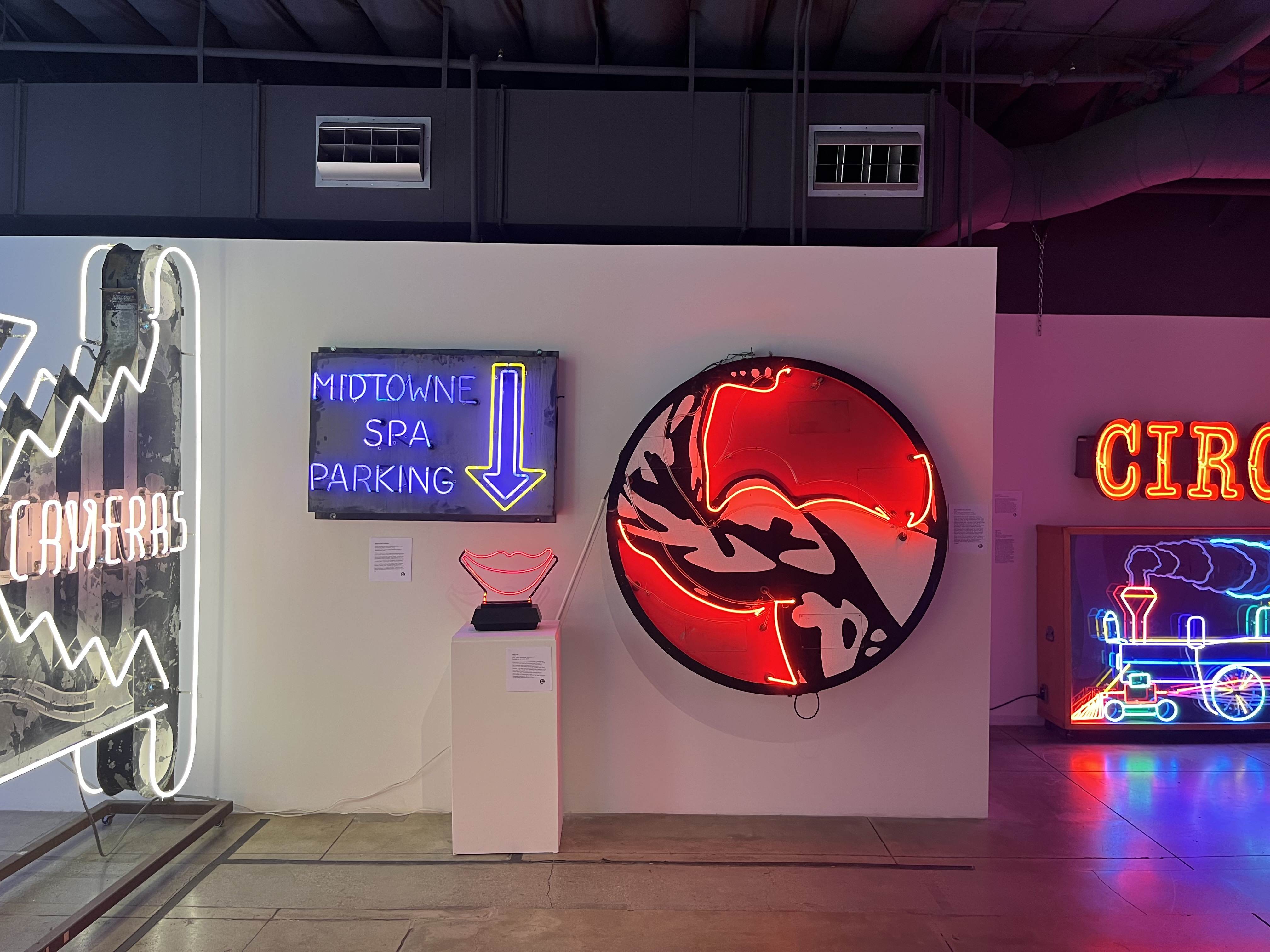
The Museum of Neon Art was founded in Los Angeles's Arts District with a straightforward premise: neon and electric signage is art, it is historically significant, and it deserves to be preserved. The premise was not self-evident in 1981. Neon signs were commercial objects, built to sell things, not to last. When a business failed or moved, its sign was typically junked. The craftsmanship required to bend glass tubing into letters and figures, to fill it with gas, to wire it to transformers that kept it glowing — none of that was considered relevant to whether the object had cultural value worth preserving.
Lakich had been making neon art herself since the 1960s, drawn to the medium's combination of craftsmanship and glow. She understood what was being made and what was being lost. The museum she co-founded began collecting signs that would otherwise have been discarded, documenting their histories and the businesses they had marked, and treating them as artifacts worthy of study and display.
The Collection
Among the most significant objects in MONA's collection is the Brown Derby's derby hat sign, made in 1929. The Brown Derby was one of the defining restaurants of Hollywood's golden era — the place where celebrities went to be seen, where gossip columnists stationed themselves, where deals were made over lunch. The restaurant building was shaped like an enormous hat; the sign that replicated that hat in neon became one of the most recognizable images of 1920s Los Angeles. The restaurant closed in 1994. The sign survived because MONA acquired it.
Another major piece is the dragon sign from Grauman's Chinese Theatre, created in 1957. Grauman's (now TCL Chinese Theatre) is the most famous movie palace in Hollywood — the one with the handprints and footprints in concrete outside. Its dragon sign, a fire-breathing creature in neon and chasing metal, was a landmark of Hollywood Boulevard for decades before age and renovation removed it. MONA preserved it.
The collection has grown to more than 500 signs, representing a cross-section of Los Angeles commercial life from the 1920s through the late twentieth century. Gas stations, bowling alleys, motels, diners, nightclubs — the full range of what a city sells to itself, rendered in glass and gas and electricity.
Glendale, and Why It Matters
MONA operated in various downtown Los Angeles locations for its first three decades. In 2016, the museum moved to its current location at 216 South Brand Boulevard in Glendale, at the edge of the city's active commercial district. The Glendale location gave the museum more space for its growing collection and closer proximity to the suburban business corridors where much of the surviving historic signage actually exists.
The museum's work goes beyond preservation. MONA hosts neon-bending classes — instruction in the craft of shaping heated glass tubing into letters and figures — and maintains an educational program around the history of electric signage. The museum also conducts night bus tours of Los Angeles, visiting historic and contemporary neon throughout the city, treating the streets themselves as an outdoor collection.
The medium MONA preserves is genuinely dying. Neon signs require skilled fabricators to repair; the expertise required to bend and fill glass tubing is increasingly rare. LED lighting is cheaper, more energy-efficient, and easier to maintain, and it has largely replaced neon in new commercial signage. What MONA holds are not just old signs but the artifacts of a craft era that has largely ended — the physical record of what a city looked like before it changed the way it spoke to itself.
From the Air
The Museum of Neon Art is located at 216 South Brand Boulevard in Glendale at approximately 34.14°N, 118.25°W, in the heart of Glendale's commercial district along the Brand Boulevard corridor. Glendale is visible as a dense urban center between Burbank and Pasadena on east-west approaches. Nearest airports: Burbank (KBUR, 3 miles NW), El Monte (KEMT, 8 miles SE). Best viewed at 2,000–3,500 ft AGL.