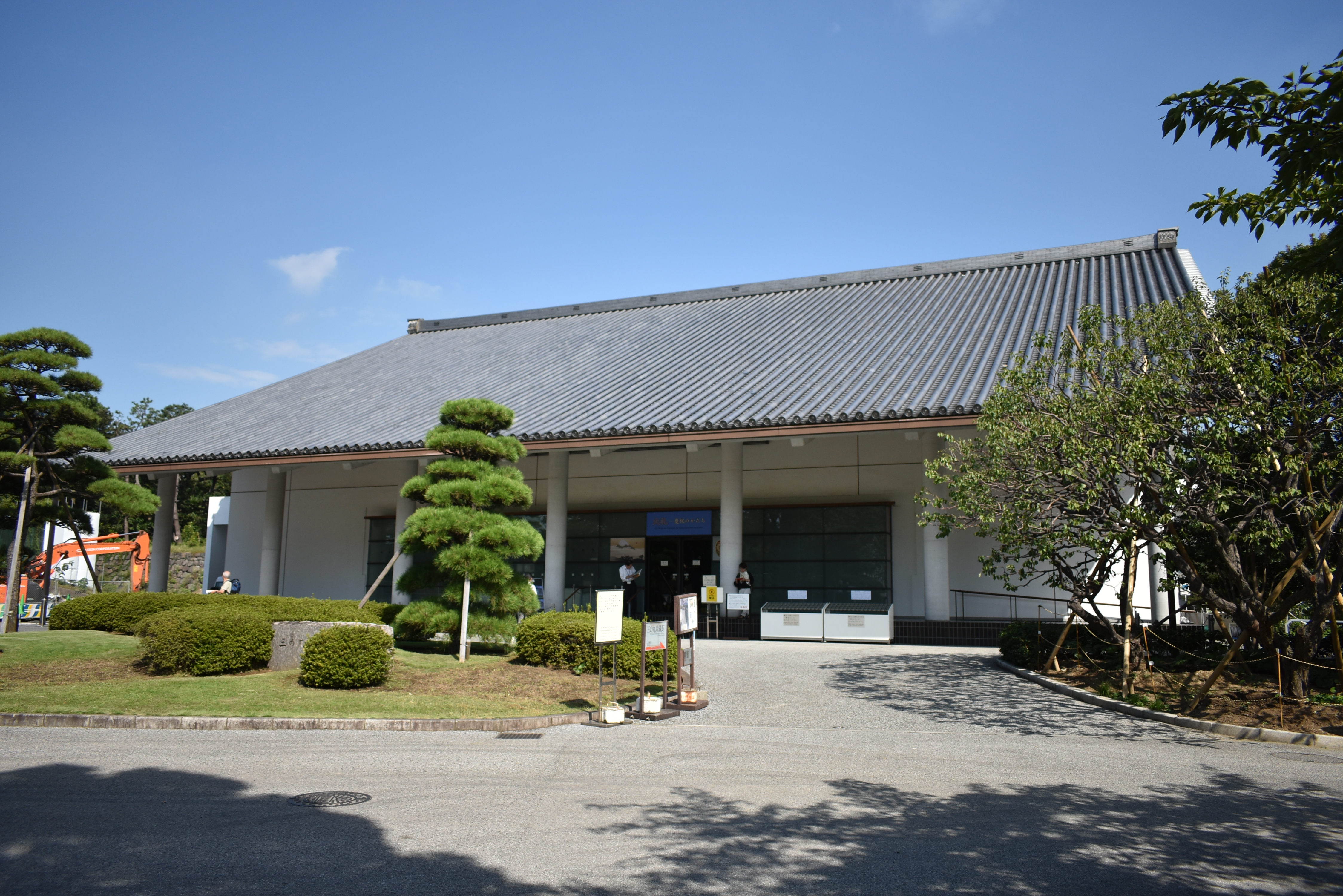
Museum of the Imperial Collections
For decades, some of Japan's greatest masterpieces existed in a legal gray zone. Paintings by Ito Jakuchu, calligraphy attributed to Wang Xizhi, folding screens by Kano Eitoku -- works that any curator in the world would call national treasures, but which could not officially receive that designation. The reason was simple and absurd: Japan's Law for the Protection of Cultural Properties did not apply to art owned by the Imperial Family. The Museum of the Imperial Collections, tucked inside the East Garden of the Tokyo Imperial Palace, holds the extraordinary results of that imperial generosity and the slow bureaucratic reckoning that followed.
A Gift Between Eras
The museum's origin story begins at one of the most symbolically charged moments in modern Japanese history: the transition from the Showa era to the Heisei era in 1989. As the nation mourned Emperor Hirohito and welcomed a new reign, the Imperial Family donated 6,000 pieces of art to the Japanese government. Many of these works had been created by Imperial Household Artists, painters, sculptors, and craftspeople appointed to serve the court. The donation was an act of cultural generosity on an enormous scale, transferring centuries of accumulated beauty from private imperial possession to public trust. The Museum of the Imperial Collections opened in 1993 to house, study, and display these works in a setting worthy of their stature -- on the grounds of the Imperial Palace itself.
Princes and Princesses of Patronage
The collection kept growing. In 1996, the art collection of Prince Chichibu, Emperor Hirohito's younger brother, was added. In 2005, the collection of Kikuko, Princess Takamatsu, joined the holdings. Prince Mikasa's family contributed their collection in 2014. Each donation layered new depth onto the museum's holdings, which now number approximately 20,000 artworks. The range is staggering: Kano Eitoku's fierce painted lions on folding screens from the 16th century. Ito Jakuchu's luminous silk paintings of roosters and plum blossoms from his celebrated Colorful Realm of Living Beings series. Calligraphy by Kukai, the Buddhist monk who founded the Shingon school in the 9th century. Cloisonne vases by Namikawa Yasuyuki so detailed they look painted. Hokusai prints. Nihonga masterworks by Yokoyama Taikan. The collection spans painting, calligraphy, sculpture, ceramics, lacquerware, and textiles across more than a thousand years.
The National Treasure Paradox
Until 2021, none of these masterpieces carried official National Treasure or Important Cultural Property status. The paradox was rooted in a legal technicality: cultural properties owned by the Imperial Family or managed by the Imperial Household Agency were exempt from the Law for the Protection of Cultural Properties. In 2018, the Imperial Household Agency itself proposed a change, arguing that designating its holdings as National Treasures would help the public understand their importance. The bureaucratic wheels turned slowly, but by 2021 the first official designations were granted. The Mongol Invasion Scrolls -- vivid 13th-century paintings depicting the attempted Mongol invasions of Japan -- were among the works newly recognized as National Treasures.
A Museum Reborn
In 2019, the original museum building closed for a massive expansion. The first phase of a new building opened in 2023, and in that same year the museum was transferred from the Imperial Household Agency to the National Institutes for Cultural Heritage, with the Agency for Cultural Affairs taking over management of the collection. The second phase of construction is scheduled for completion in 2026, expanding the exhibition space to eight times its original size and storage capacity to four times what the old building held. When the renovation is complete, the Museum of the Imperial Collections will be positioned as one of Tokyo's premier art institutions, displaying imperial gifts in a setting that matches their significance -- within the stone walls and pine groves of the palace grounds, steps from the moat where herons stand motionless in the morning light.
From the Air
Located at 35.6863N, 139.7592E within the grounds of the Tokyo Imperial Palace, identifiable from the air by the large green expanse of the Imperial Palace East Gardens surrounded by the distinctive moat system in central Tokyo. The palace grounds form a prominent green rectangle amid the dense urban grid. Nearest major airport is Tokyo Haneda (RJTT), approximately 15 km to the south. Narita International (RJAA) is 65 km to the northeast. Best viewed at 2,000-4,000 ft AGL.