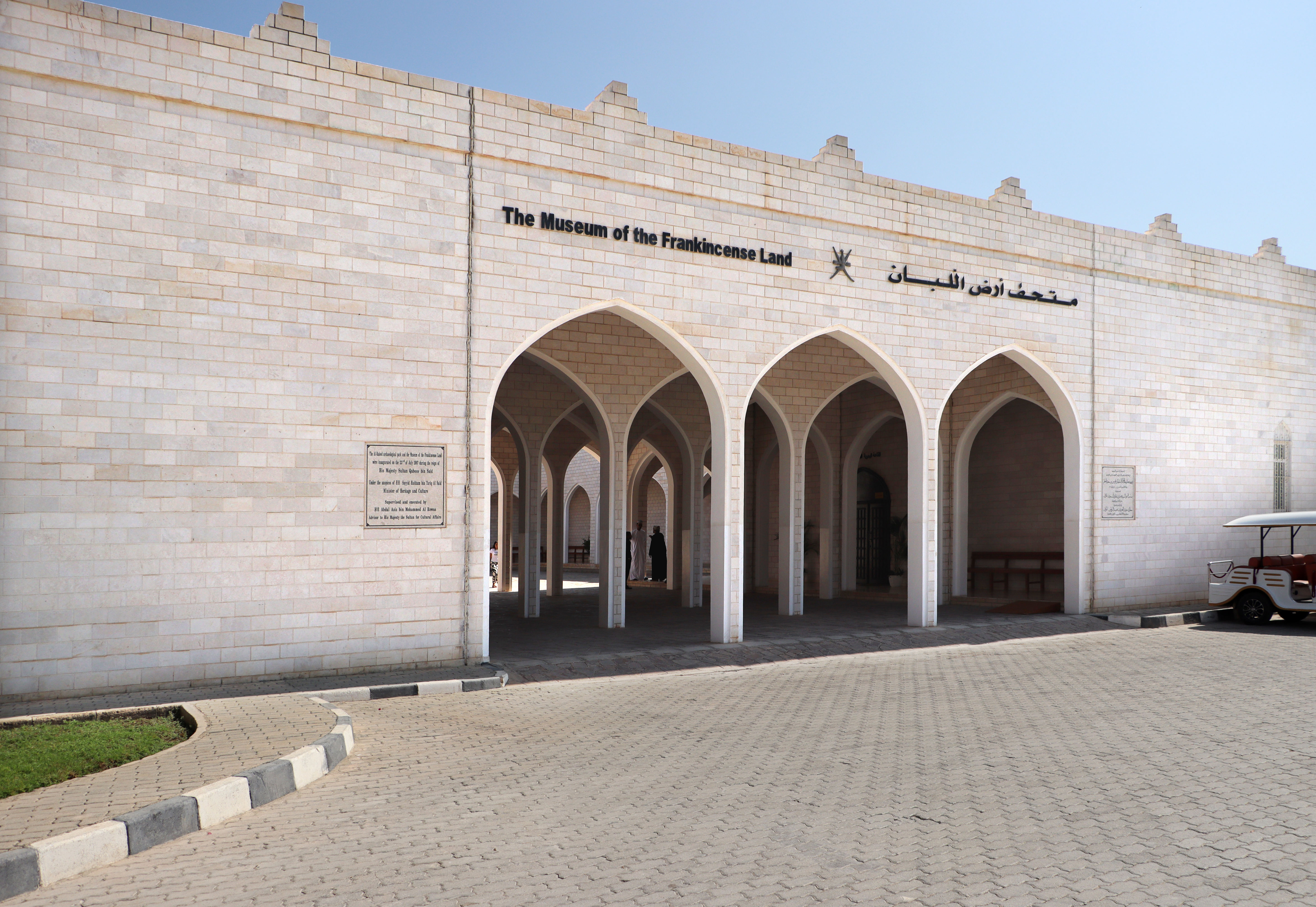
Museum of the Land of Frankincense
A living frankincense tree stands at the center of the museum, its bark scarred with the deliberate cuts that have drawn aromatic resin from Boswellia sacra for millennia. The Museum of the Land of Frankincense opened in 2007 inside the Al-Baleed Archaeological Park in Salalah, Oman, and it exists because of a simple botanical fact: the Dhofar Governorate is one of the few places on Earth where these trees grow naturally. That accident of climate and soil made this coastline one of the ancient world's most important trading grounds, and the museum sits squarely on top of the evidence.
Treasures from the Sand
The museum is divided into two halls, each pulling from a different dimension of Omani identity. The Maritime Hall displays beautifully crafted wooden models of traditional Omani vessels -- the Battil, the Boom, the Sambuq, the Ghanjah -- alongside navigational instruments that guided sailors across the Indian Ocean long before GPS. These are not abstractions. Dhofar's ports shipped frankincense to Africa, India, and China for centuries, and these boat designs evolved to serve that trade. The History Hall turns inward, displaying artifacts excavated from Al-Baleed itself and from Sumhuram and the legendary lost city of Ubar. Pottery, metalwork, and inscriptions recovered from these sites tell a story that stretches back four thousand years. Models of Omani mosques and tombs, including the Tomb of the Prophet Ayyub (Job), round out a portrait of a civilization shaped by trade and faith in equal measure.
A Port City Reborn
The museum's setting is as significant as its contents. Al-Baleed Archaeological Park preserves the ruins of ancient Zafar, a city that gave the entire Dhofar province its name. The settlement dates to roughly 2000 BC and thrived as a frankincense port from the 8th through the 16th century. Marco Polo visited. So did Ibn Battuta, the great Moroccan traveler. Both recorded their impressions of a prosperous trading hub on the Arabian Sea. The city declined when its harbor silted up and Portuguese, Turkish, and Mamluk invasions disrupted the old trade networks. What remains today are low stone walls, the outlines of mosques and palaces, and a quiet lagoon where the bay once opened to the sea. Walking from the museum into the park, you move from curated explanation into the raw archaeology itself.
The Resin That Built Empires
Frankincense was arguably the first commodity to create international trade routes. Temples in Egypt, Rome, and Mesopotamia burned it in enormous quantities. It served as medicine, perfume, and offering to the gods. The resin comes from shallow cuts made in the bark of Boswellia sacra trees, which begin producing usable sap around age eight to ten. Dhofar's particular combination of limestone soil, coastal fog, and seasonal monsoon moisture creates ideal conditions for the species. UNESCO recognized this significance in 2000, inscribing the Land of Frankincense as a World Heritage Site encompassing four locations: Al-Baleed, the ancient port of Khor Rori, the caravan oasis of Shisr, and Wadi Dawkah, home to roughly 5,000 protected frankincense trees. The museum ties these scattered sites together into a single narrative, explaining why a sticky tree resin shaped the politics and economies of the ancient world.
Sultan Qaboos's Gift
Funding for the museum came from Sultan Qaboos bin Said, who ruled Oman from 1970 until his death in 2020. The project took two years to construct and was inaugurated in 2007 as part of a broader effort to develop Salalah's cultural tourism. The museum sits in a modern building that contrasts deliberately with the ancient ruins surrounding it, a design choice that reinforces the continuity between past and present. Frankincense is still harvested in Dhofar today. The resin still burns in Omani homes and markets, its sharp, balsamic scent cutting through the humid coastal air. What the museum captures is not a dead tradition but an ongoing one -- a rare case where the artifact and the living culture occupy the same ground.
From the Air
Located at 17.009N, 54.136E on the coast of Salalah, within the Al-Baleed Archaeological Park. The park's ruins and lagoon are visible along the shoreline. Salalah International Airport (OOSA) is approximately 5.5 km northeast. Approach from the sea for the best view of the coastal archaeological site. The Dhofar coastline experiences fog and low clouds during the khareef monsoon season (June-September).