Museum van de Geest
In a 1667 painting by Jan de Bray, a boy stands holding a wooden rattle. His head is patterned with sores. He is unaccompanied, almost certainly an orphan, and he has come to the regents of the Dolhuys in Haarlem for the document he needs to walk the streets - the vuilbrief, the paper that certified him as a leper and gave him the legal right to beg for his keep. The wooden rattle, the lazarus-klep, was how the law required him to announce his approach. The boy is the reason this place is now a museum. The Museum van de Geest, opened in its current form in 2020, occupies the complex that once held him and thousands like him: people the Dutch language and the Dutch state called melaats, leproos, dol. The museum tells their story without flinching from the language used about them - and without forgetting that they were people first.
Outside the Walls
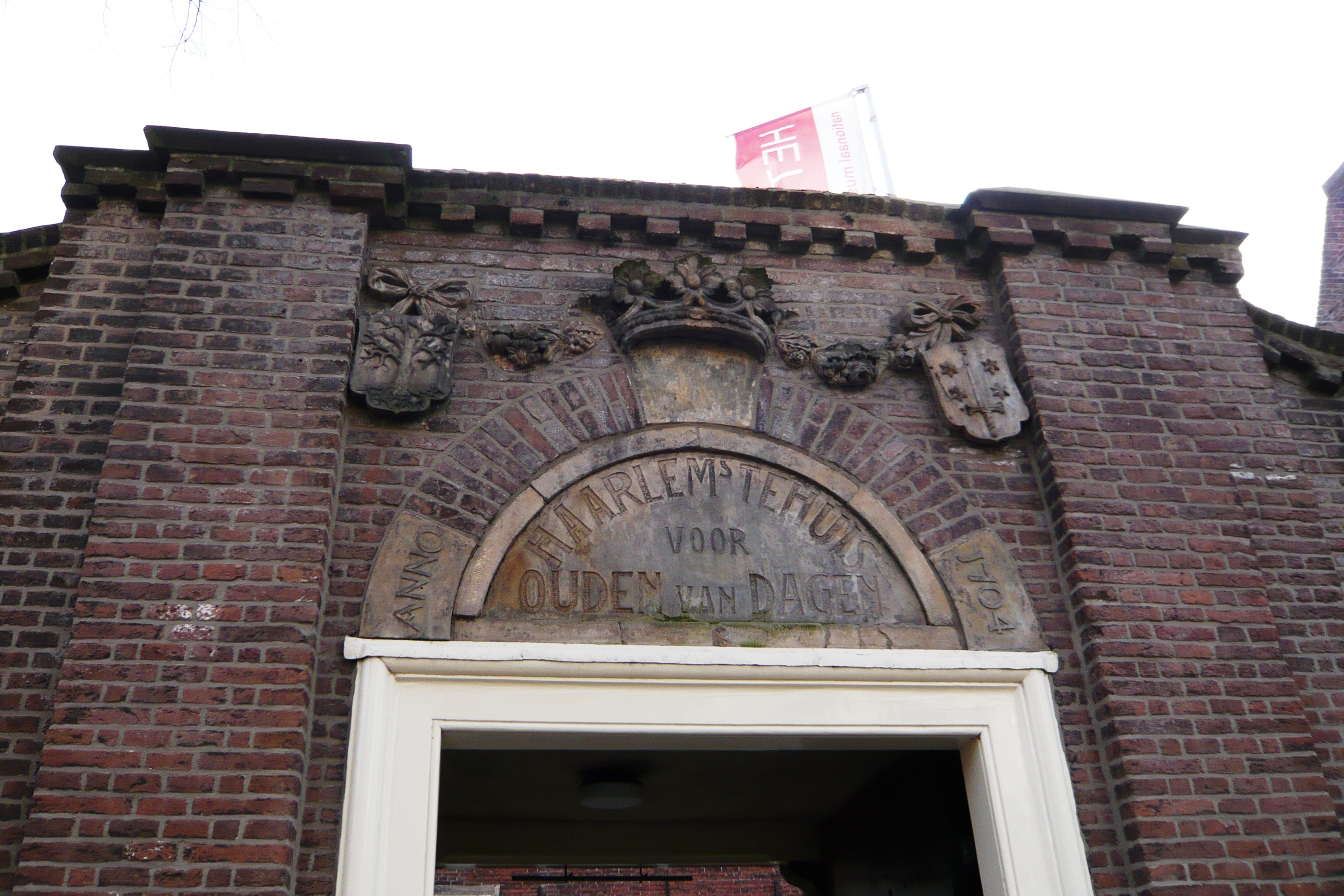
Like every medieval city, Haarlem put its most feared sick people outside the gates. The hospice rose along a street called De Siecken - the Sick - in the small town of Schoten just north of the walls, which Haarlem would not formally annex until 1927. The complex took in lepers, plague victims, the elderly poor, and orphans the city had no one else to feed. In 1413 Haarlem received an unusual royal privilege: the right to examine and certify lepers from across the provinces of Holland and Zeeland. The certificate the regents issued - the vuilbrief - was an instrument of exclusion and survival at once. With it, the bearer was barred from ordinary commerce and city life. Without it, they could not legally beg. The chapel that served the complex was dedicated to Saint James, and stands today as the oldest St. James chapel in Haarlem.
Lazerij
Leprosy was poorly understood. Any disease that seemed both fatal and contagious - smallpox, certain skin conditions, untreatable wasting - was grouped under the catch-all term lazerij, taken from the biblical Lazarus. A person diagnosed was called leproos or melaats and was, in the dry phrase of medieval Dutch law, dead for the state. Property was forfeited. Family ties were severed. The person was still alive, still feeding, still suffering and hoping, but officially gone. Some recovered and were released. Many did not. One inmate who lived for years in this complex was a woman whose name has come down to us as Malle Babbe; she was painted by Frans Hals, probably during a period when his son Pieter was also a resident here. The painting hangs now in Berlin; the woman, and what her life was like behind these walls, the museum tries to make less invisible.
Plague and a Painter
When plague struck Haarlem in 1664, the building was pressed back into use as a Pest-huis. The painter Jan de Bray lost much of his family in that outbreak - they had likely been cared for, and died, inside this complex. Three years later he was commissioned to paint the regents and regentesses of the Dolhuys. He painted them well: dignified, serious, recognisably individual. The names of the people in the paintings are recorded in the archives, but at some point the matching of names to faces was lost. The regents' meeting room itself survives, with hand-painted wall decorations installed by Jan Augustini in 1756. One regent in particular has not been forgotten - Willem Janszoon Verwer, who kept a detailed Catholic diary of his experiences during the brutal 1572-1573 Spanish siege of Haarlem, when soldiers were stationed near the Dolhuys and he witnessed hangings carried out close by his door.
Dol
By later centuries the building's primary role had shifted from leprosy and plague to madness. Dol simply meant crazy. The complex acquired a name it would carry into living memory: Het Dolhuys, the Madhouse. Holland's approach to mental illness, like Europe's everywhere, evolved through cycles of confinement, neglect, reform, hope, and disappointment. The museum draws its collection from the archives of seven psychiatric hospitals across the country - among them GGZ Noord-Holland-Noord, De Geestgronden, and Rivierduinen - and exhibits the objects that survived: a former lockup cell with its small barred window; a winter coat whose patient occupant embroidered the lining as a private act of self; a 19th-century gable stone reading SinnelooseeMensche, an older Dutch phrase for people who had lost their reason. The exhibitions deliberately place visitors in the role of observer or doctor, and ask them to sit with the discomfort of that position.
Listening Now
Het Dolhuys opened as a public museum in 2005, in the renovated Schoterburcht buildings just across the Schotersingel from Staten Bolwerk park. That same year it won the Dutch Design Prize for exhibition and experience design. In 2020 it merged with the Outsider Art Museum in Amsterdam to become Museum van de Geest - the Museum of the Mind - extending its remit beyond psychiatric history to include the art made by people working entirely from their own interior voices. In 2022 it received the European Museum of the Year Award. A visitor walks through the old leper and plague complex, picks up a stethoscope, and listens to recorded oral histories of former patients. The clapper, the vuilbrief, the lockup cell, the embroidered coat: each is an artefact of a real person who lived here. The point of the museum is to make sure you hear them.
From the Air
Coordinates 52.390°N, 4.638°E, in northern Haarlem just across the Schotersingel canal from Staten Bolwerk park and a short walk north of Haarlem central station. From 1,500-2,500 ft AGL the museum complex appears as a cluster of red-tiled gabled buildings on the canal's north bank, with the small former St. James chapel - now a restaurant - adjoining. The dense centre of Haarlem with St. Bavo's Cathedral lies to the south. Schiphol (EHAM) lies about 7 nm east-southeast; the Amsterdam control zone covers most of this area, so transits typically require coordination.