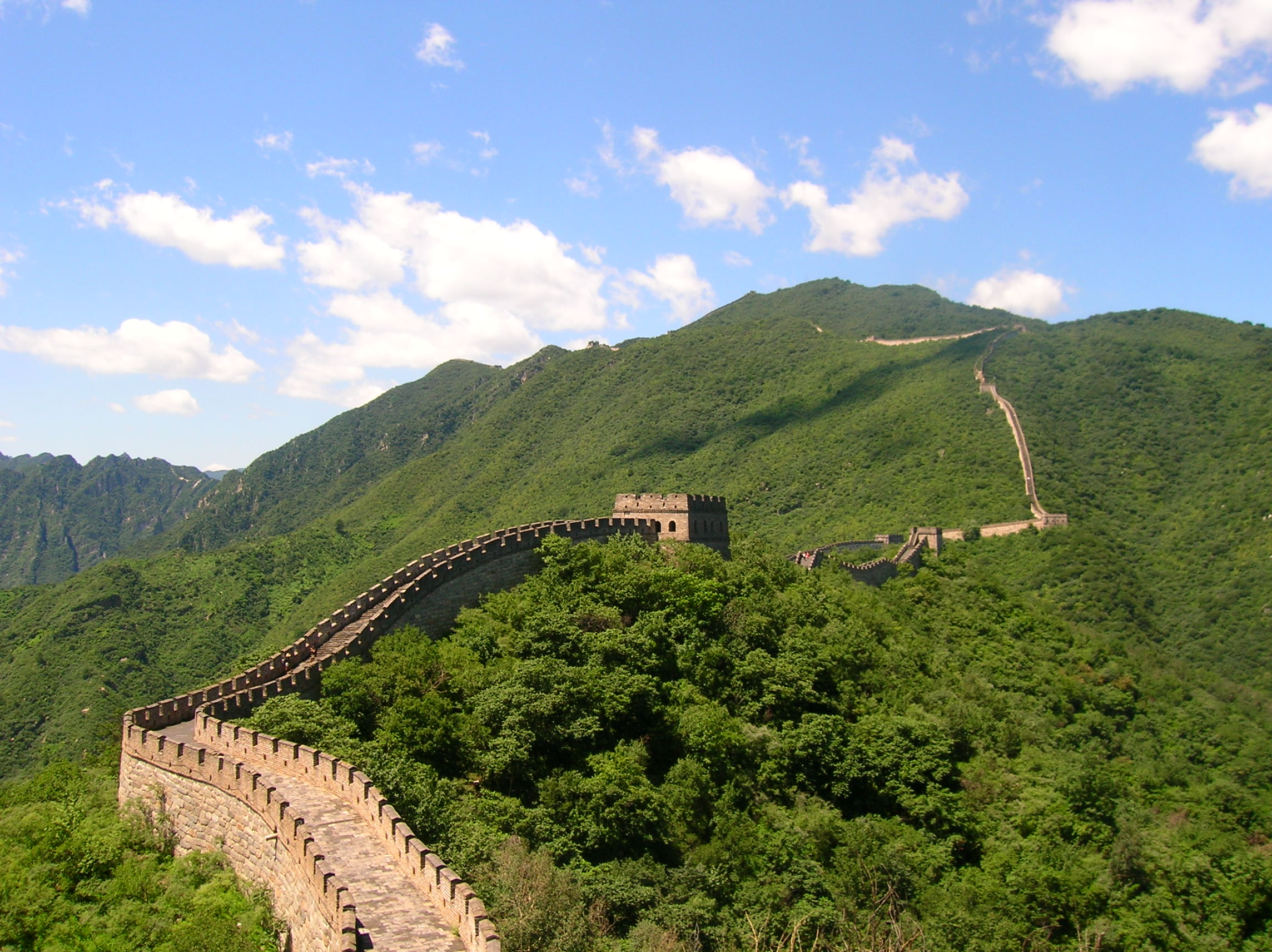
Mutianyu
Twenty-two watchtowers in 2,250 meters. That density of fortification is extraordinary, roughly one tower every hundred meters, and it tells you everything about what the Ming dynasty's military engineers thought of this particular stretch of terrain. Mutianyu sits 70 kilometers northeast of central Beijing in the Huairou District, and it has been defending the northern approach to the capital and the imperial tombs since the Northern Qi dynasty first built walls here in the mid-sixth century. The Ming builders did not start from scratch. They built over the earlier wall, making it higher, wider, and far more lethal.
The General's Wall
In 1568, the Longqing Emperor appointed Qi Jiguang as military governor of Jizhou, Changping, and Baoding, tasking him with defending the empire's northern border. Qi Jiguang was one of the Ming dynasty's most capable military commanders, and he approached the Great Wall the way a modern engineer might approach a failing bridge: he assessed its weaknesses and fixed them. Noticing that the wall lacked abutments, he petitioned officials for their installation. His suggestion was approved, and by 1572, he had overseen the maintenance of a 2,000-li section of the wall. The Mutianyu section bears his influence in its construction quality, which contemporary assessments rank as the highest of any section of the Great Wall. The 1569 rebuild that Qi Jiguang supervised is the wall that visitors walk today.
Double-Sided Defense
Most sections of the Great Wall have crenelated parapets on the outer, enemy-facing side only. Mutianyu has them on both sides. This seemingly small detail reveals a sophisticated military understanding: walls can be captured, and defenders need to fight in both directions. The merlons on both inner and outer parapets allowed archers to fire while protected whether the enemy was attacking from the north or had already breached the wall and was coming from behind. The Mutianyu Pass itself consists of three watchtowers standing on a single terrace, the central tower flanked by two smaller ones, all connected internally. This triple-tower configuration is extremely rare along the Great Wall and created a defensive strongpoint that could continue fighting even if one tower fell. Built primarily from granite, the wall stands 7 meters high with a top surface 4 meters wide, broad enough for soldiers to move in formation.
From Fortress to Destination
The transformation of Mutianyu from military ruin to tourist attraction followed a precise timeline. In 1983, the State Council approved restoration. In 1985, the Huairou District government established management under Mutianyu village's leadership. Select tourists were admitted in 1986, and in 1987, the Great Wall received UNESCO World Heritage status. By 1992, Mutianyu was rated Beijing's best tourist spot. Today, visitors choose between 4,000-plus stone steps, a two-rider chairlift, or a four-rider gondola to reach the wall from the foothills. A single-rider toboggan offers a winding metal-track descent back to the valley. The adjacent Mutianyu Village has been hailed by the Chinese government as a model village, reborn through tourism and its glassware industry, and twinned since 2007 with the village of Shelburne Falls in Massachusetts.
Where Restoration Meets Ruin
Mutianyu's most popular modern hike connects it to the Jiankou section to the west, combining two radically different experiences of the Great Wall. Mutianyu offers the restored version: cleaned stonework, rebuilt watchtowers, safety railings, and the infrastructure of mass tourism. Jiankou offers the unrestored version: crumbling stairs, collapsed walls, and trees growing through the masonry. Walking from one to the other is like watching centuries of neglect reverse themselves in real time. The contrast is the point. Surrounded by woodland with over 90 percent forest coverage, the wall at Mutianyu is enveloped by greenery that softens its military severity. In autumn, when the leaves turn, the granite wall cuts through a landscape of gold and rust, and the 22 watchtowers stand above the canopy like sentries watching over a world that no longer needs their protection.
From the Air
Located at 40.44N, 116.56E in the Huairou District, approximately 70 km northeast of central Beijing. The restored wall section is visible from moderate altitude, following a mountain ridgeline with distinctive closely-spaced watchtowers. Nearest major airport is Beijing Capital International Airport (ZBAA/PEK), about 45 km to the south. The wall connects westward to the unrestored Jiankou section, creating a visible contrast between restored and wild Great Wall segments.